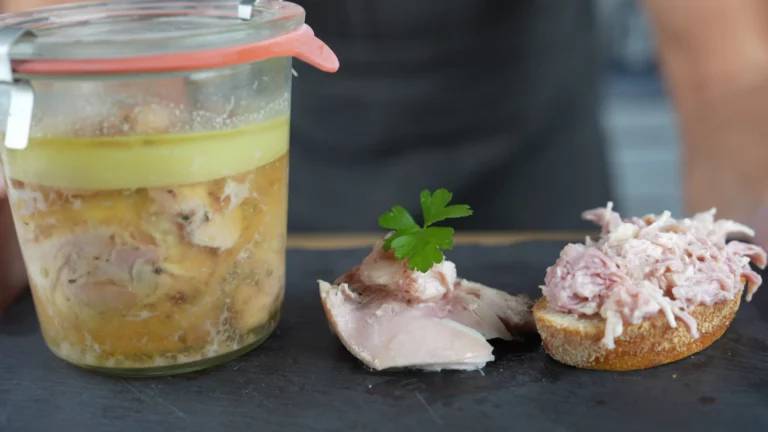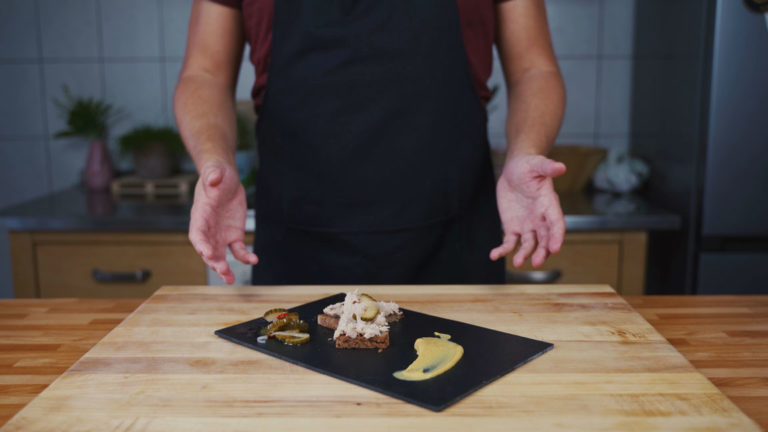
Goose Rillettes Recipe (Rillettes d’Oie)

- Type
- Pâté & terrine
- Level
- Easy
- Rating
- Rate this recipe
In this post I’ll show you how to make goose rillette yourself.
My charcuterie board guide has ideas for serving your rillettes.
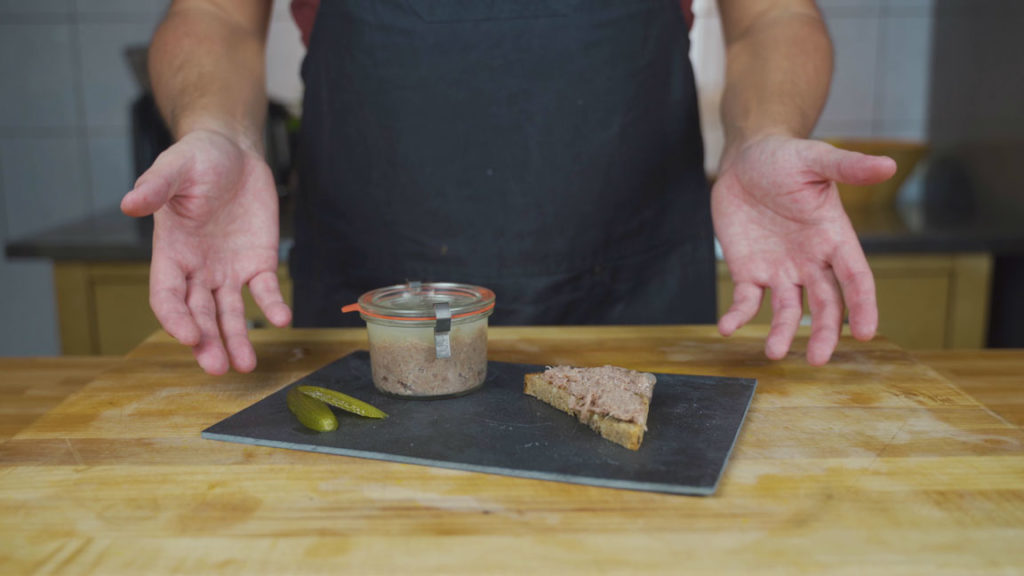
A goose rillette is a classic French spread and part of charcuterie. It almost makes itself, all you need is a little time and a few ingredients.
The goose rillette goes great with an apéritif, picnic or supper. It also makes a great gift.
You can find the full goose rillette recipe as video or to read through.
Have fun and good luck making it!

Table of Contents
Goose rillette – What do you need to make it?
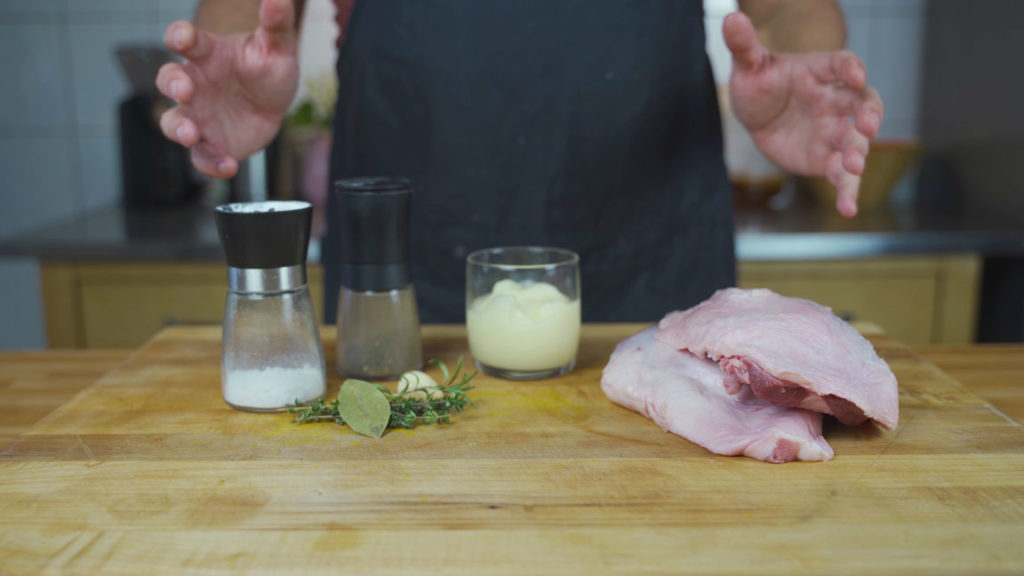
Ingredients per 1 kg
| Ingredient | Grams | Percent |
|---|---|---|
| goose leg | 1,000 g |
Spices per 1 kg
| Ingredient | Grams |
|---|---|
| goose fat (about half the meat weight, so the legs stay covered while cooking) | 500 g |
| salt (starting amount, season to taste later) | 10 g |
| pepper (to taste) | 2 g |
| clove of garlic | 1 |
| sprig thyme | 1 |
| sprig of rosemary | 1 |
| bay leaf | 1 |
| water to fill up if necessary | — |
The equipment to make goose rillette
Grease separation can
This is suitable to get to the liquid as well as possible.
Jars
Fill the jars with the goose rillette.
Make goose rillette – Step-By-Step Instructions
Put some goose fat in a pot and fry the legs on medium heat on the skin side for a few minutes.
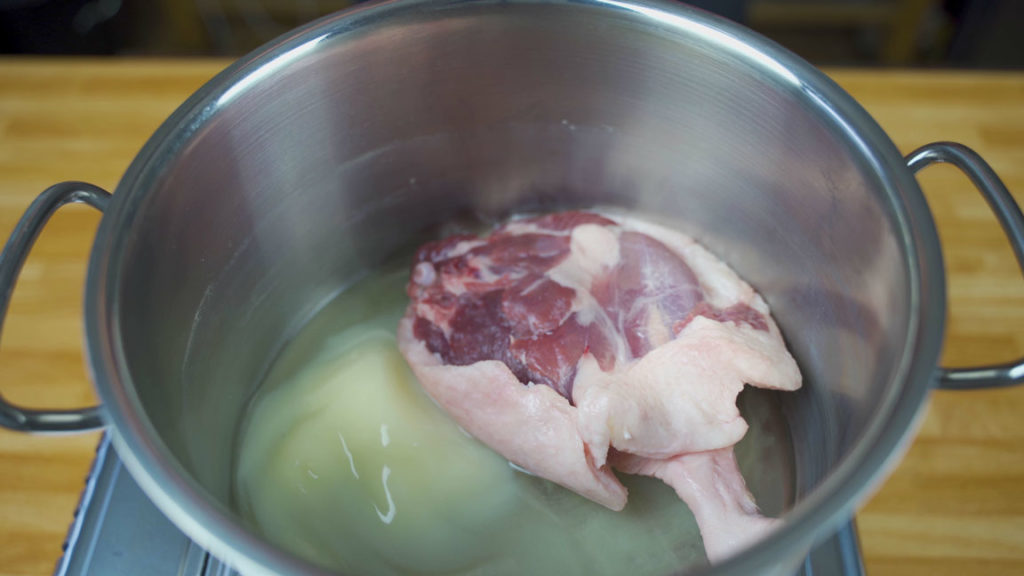
Add the remaining goose fat and turn the legs.
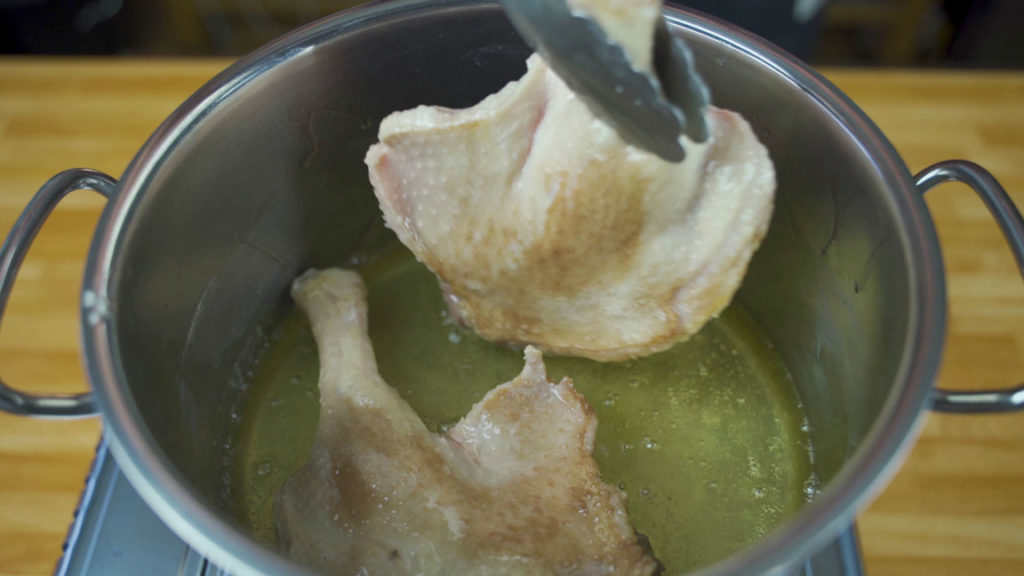
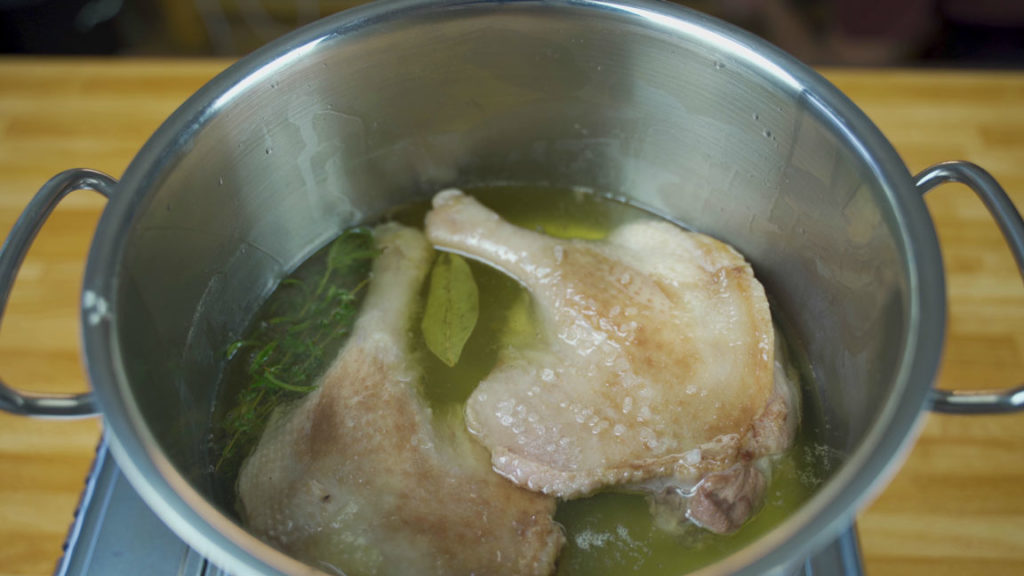
Optional: Add a little bit of water if your goose leg is not at least ¾ covered with fat.
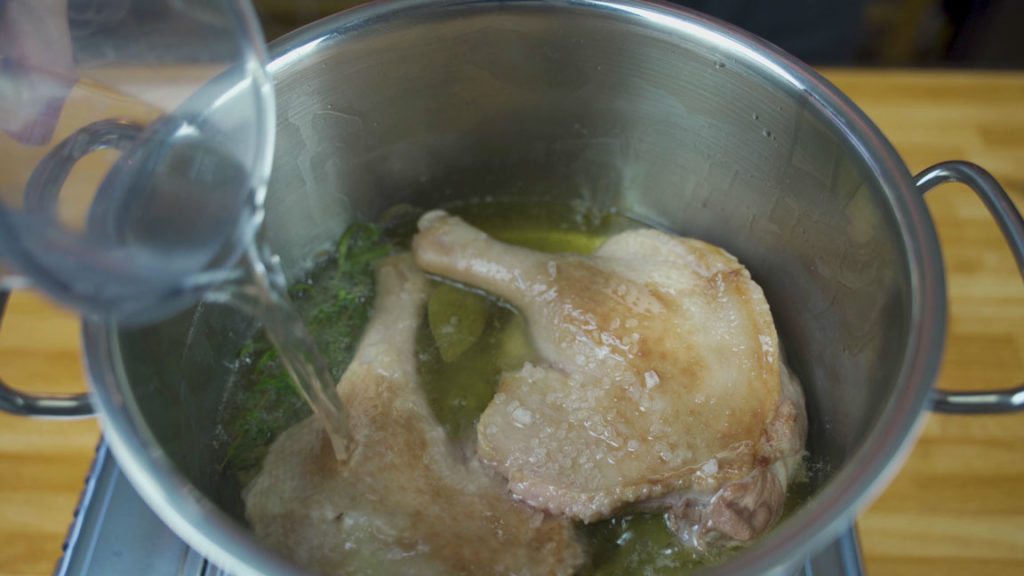
Cover the pot and cook on low-medium heat for 3 – 3.5 hours. The goal is for the meat to separate from the bone.
Important: The fat should not be too hot and also not too cold. I would say a maximum of 80 °C (176 Fahrenheit).
Alternative: You can also do this step in the oven at about 130 °C (266 Fahrenheit). It is best to use an ovenproof pot for this.
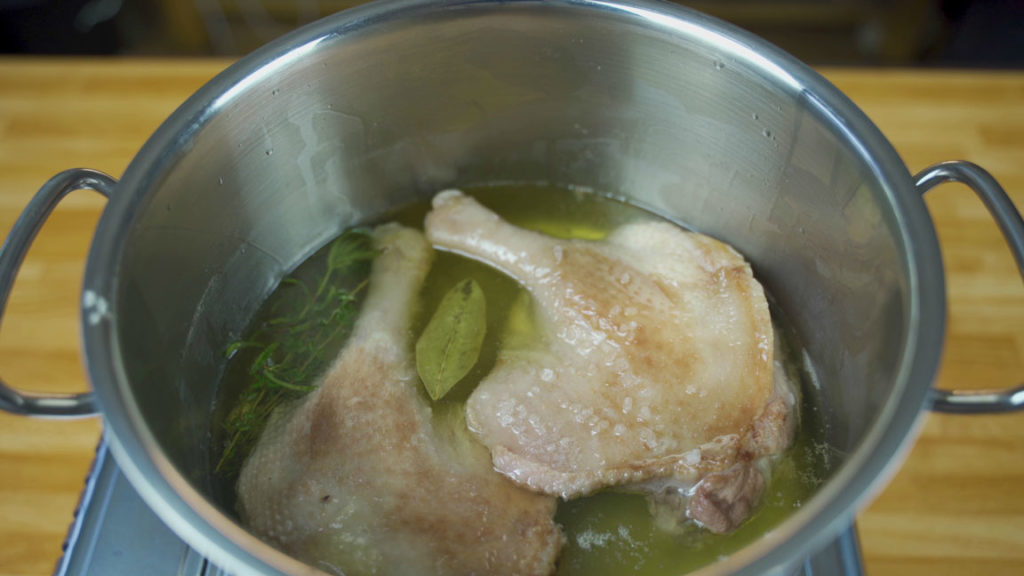
Check occasionally whether there is still enough liquid in the pot. The goose leg should ideally be completely covered. If it is not, I would turn it once every hour.
As soon as the meat falls off the bone, you can take out the legs and peel off the skin with a fork, separating it from the meat.
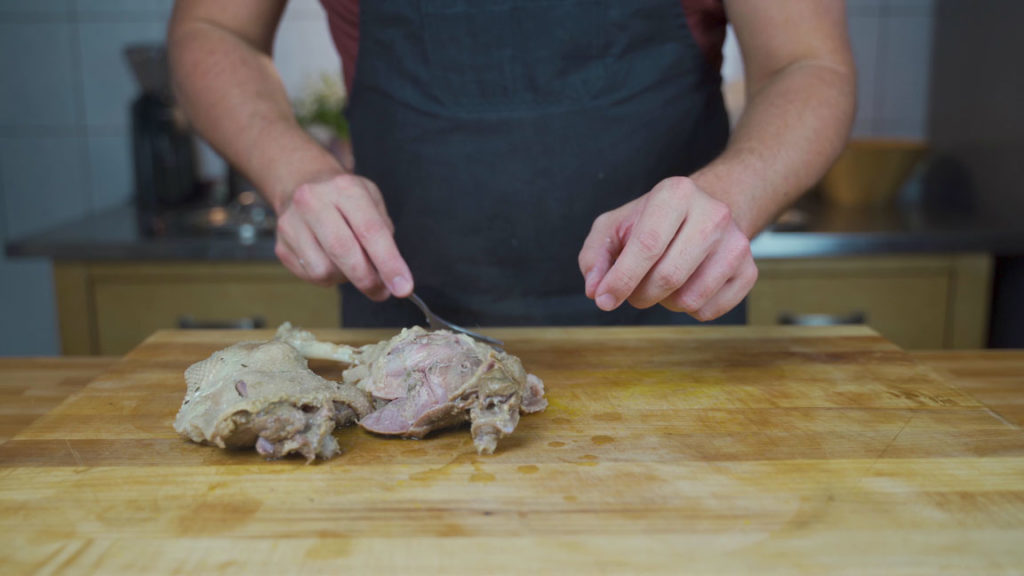
Separate the meat from the bone and place it in a bowl. Make sure that no cartilage, tendons or skin residues get into your rillette.
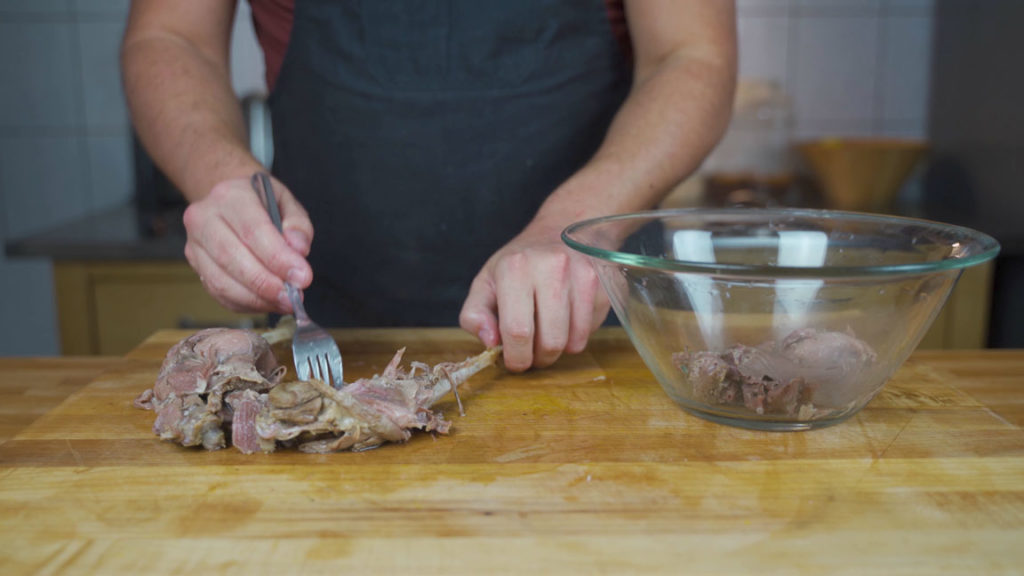
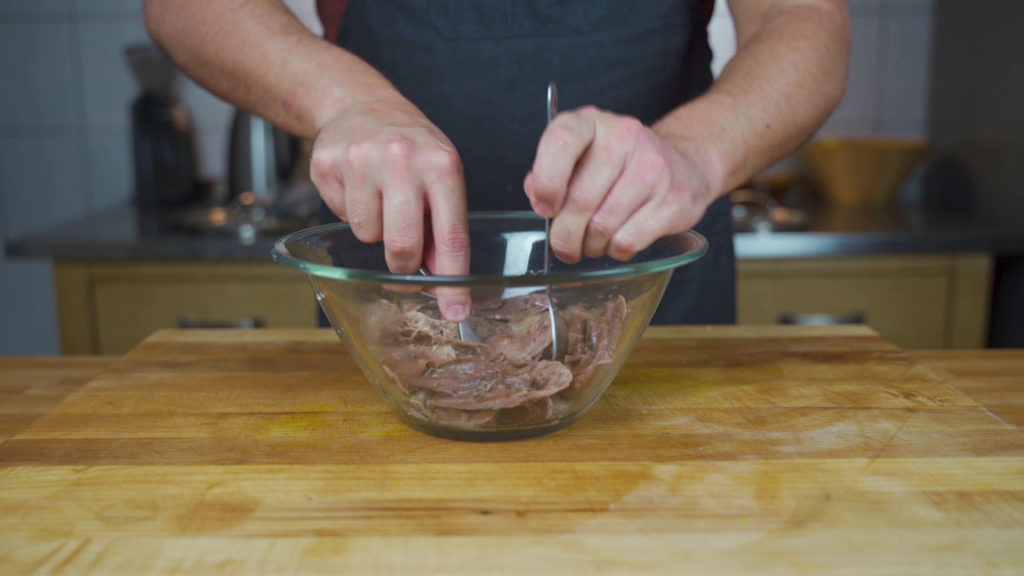
Now pick the meat apart with two forks. You can also use a food processor for this. I personally like the texture of “hand made” rillette better.
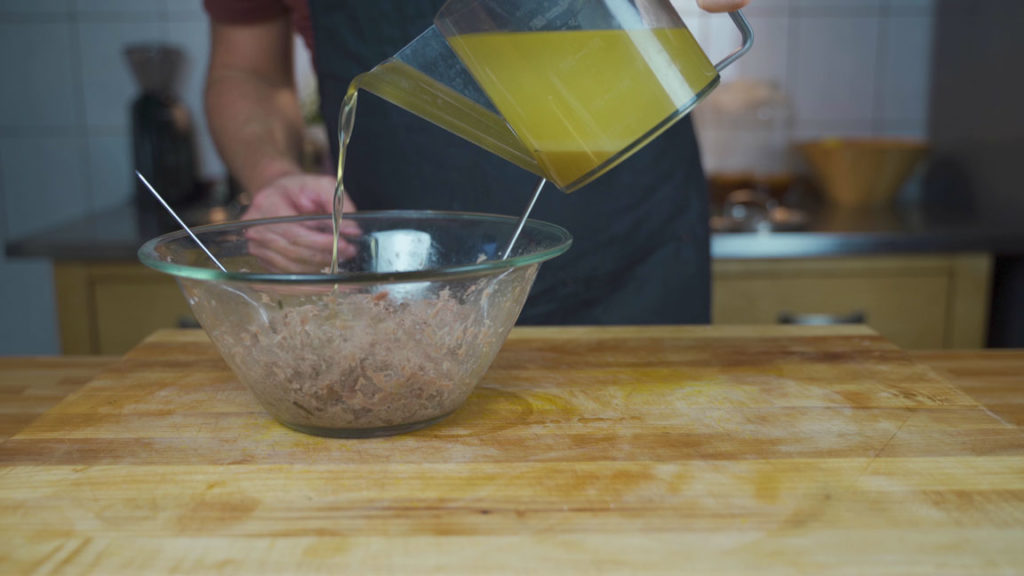
Pour the liquid left in the pot into a fat separator. If you do not have such can just separate the liquid and fat with a method of your choice.
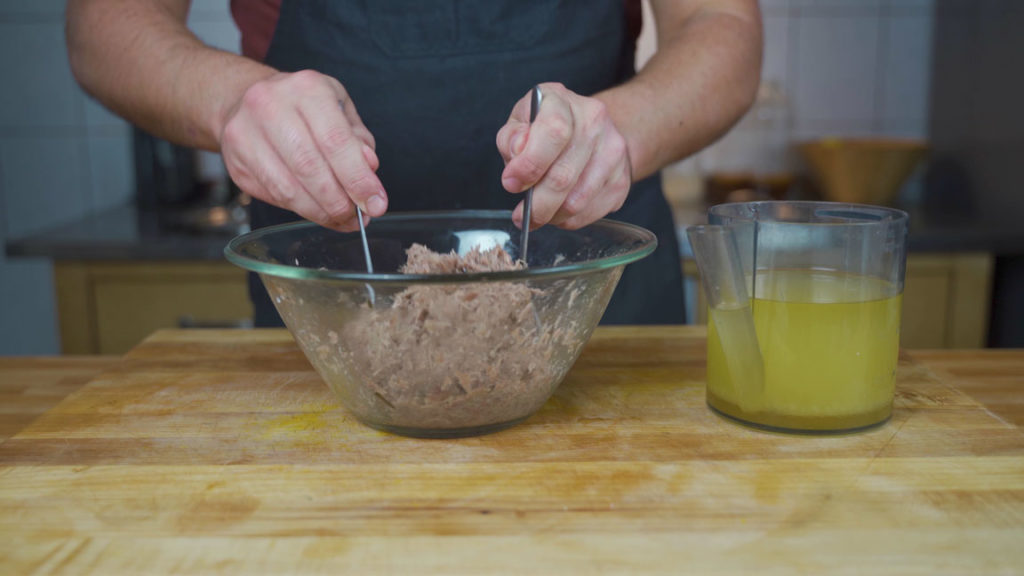
Gradually add the liquid to the meat mixture until the mixture is nice and creamy. I usually add 3-4 tablespoons of fat (or more to taste) to the mixture in addition to the liquid. This ensures that the rillette is nice and creamy. The fat also makes it taste more intense.
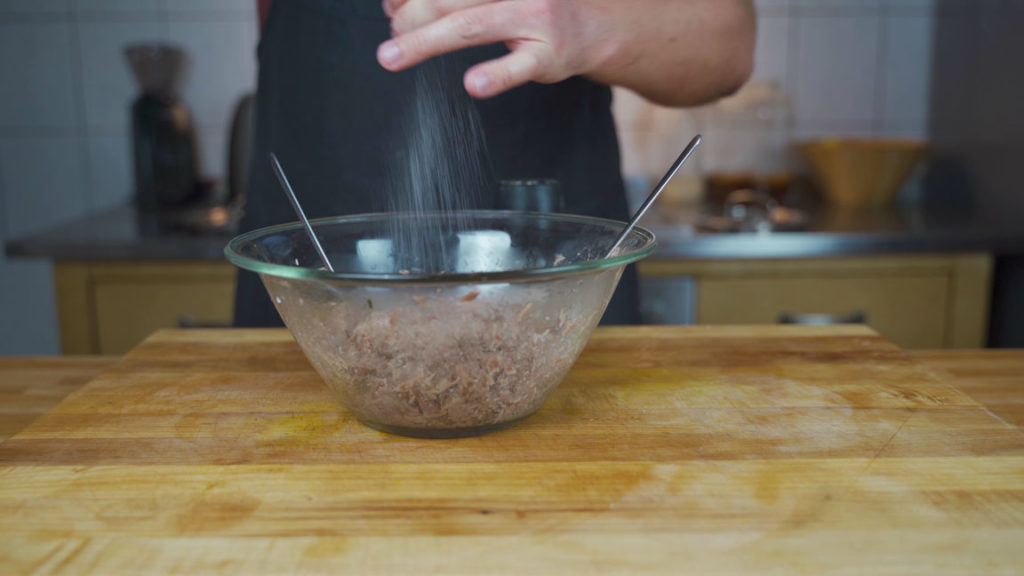
Season the mixture with salt and pepper.
Now you can fill the meat mixture into jars. Finally, you can seal them airtight with the remaining fat. Keep the jars in the fridge and use the rillette within 2–3 weeks. Now cool and…
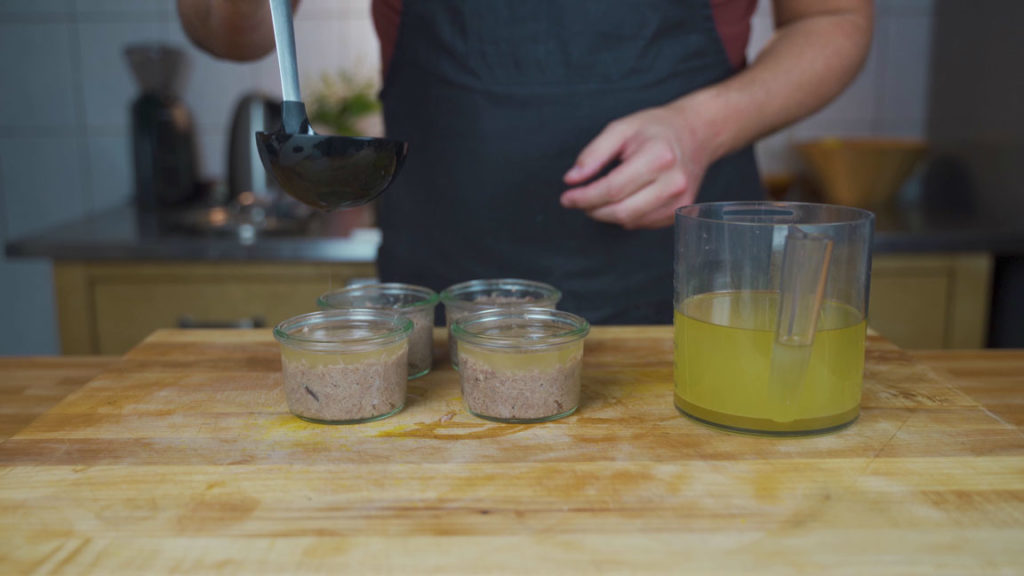
Your goose rillette is ready 😄. Enjoy it.
Frequently asked questions
What is a rillette?
What is a rillette?
Meat cooked slowly in its own fat until it falls off the bone, pulled into threads, and potted under a layer of that same fat. It is one of the older things in French charcuterie and it began as a way to keep meat through the winter; the fat seal on top still keeps the air out. You eat it cold and on bread. It is a spread, not a piece of meat.
Pork is the classic, and duck and goose are the two you meet most often after it. The method does not change from one to the next: fat, low heat, and time. This one is goose. If you have come across it written rillettes de canard, that is the duck version of the same thing, and I have a duck rillette on the site too — the recipe below works the same way whichever bird you have.
What is the shelf life of the goose rillette?
What is the shelf life of the goose rillette?
Keep the goose rillette in the fridge and use it within 2–3 weeks. Once the fat seal is broken use it within a few days.