Why Is Ham Pink? How Curing Changes Meat Color

Why is ham pink? Curing color development is one of the most important processes in homemade sausage and ham. It gives your sausage its typical appetizing red color instead of leaving it gray. In this guide, I’ll explain how it works, the temperatures and times involved, and how it can work without nitrite curing salt.
What is curing color development?
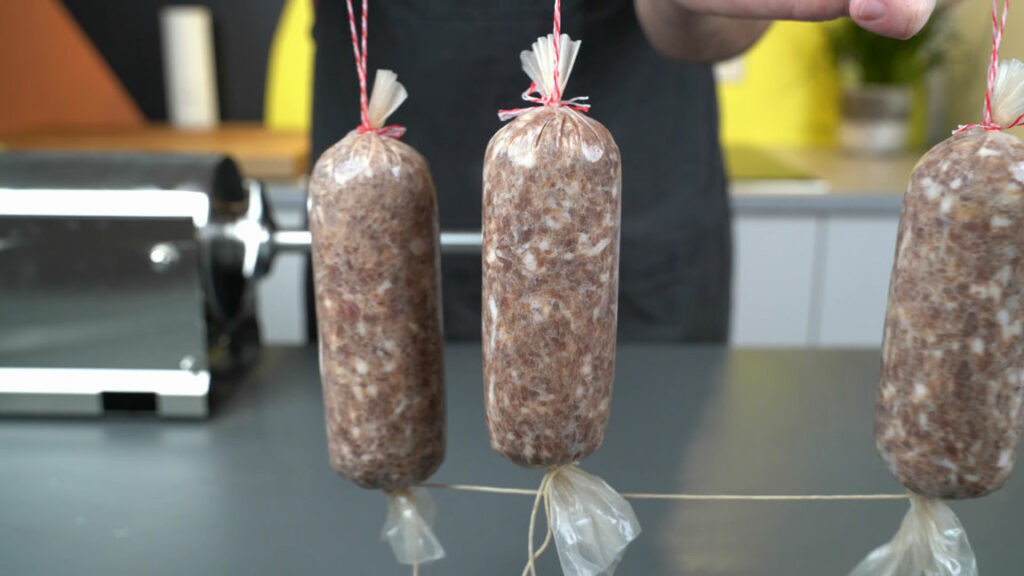
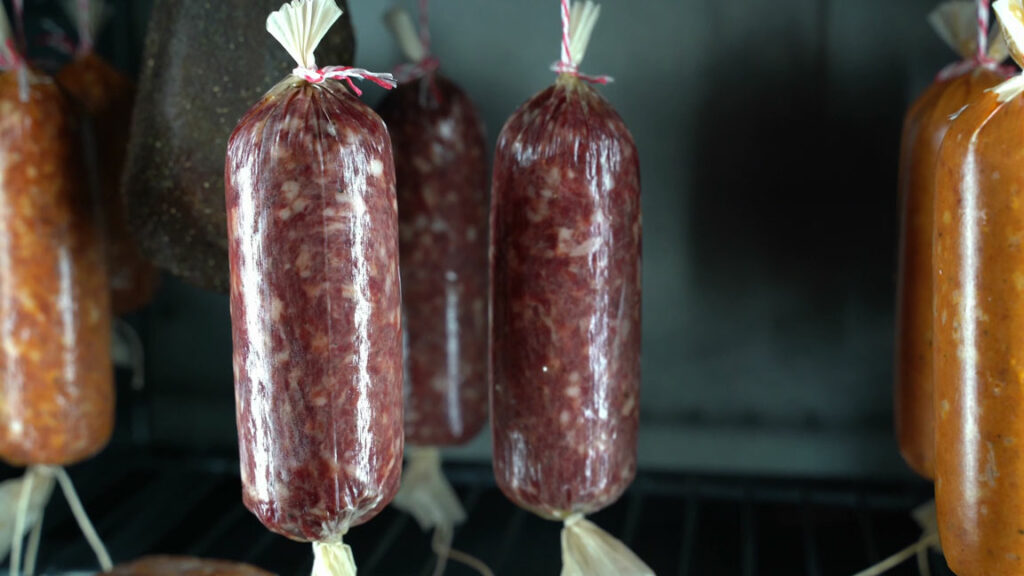
Curing color development is a chemical reaction in which the meat pigment myoglobin reacts with nitric oxide (NO). This forms nitrosomyoglobin, which gives the meat its characteristic pink-red color. What makes it special is that the color is heat-stable: it remains after poaching, smoking or maturing.
Without this reaction, your sausage or ham would look gray-brown after heating. It also makes a difference to flavor: cured products have the typical cured aroma you know from cooked ham or Fleischwurst.
Nitric oxide forms when nitrite is reduced. The nitrite enters the meat through nitrite curing salt. EU readers can order this from my German store. The process has several stages:
- Nitrite (NO₂⁻) is reduced to nitric oxide (NO).
- Nitric oxide binds to the myoglobin in the meat.
- Nitrosomyoglobin forms, producing the pink-red color.
- Heat or acid denatures the protein; the color remains stable.
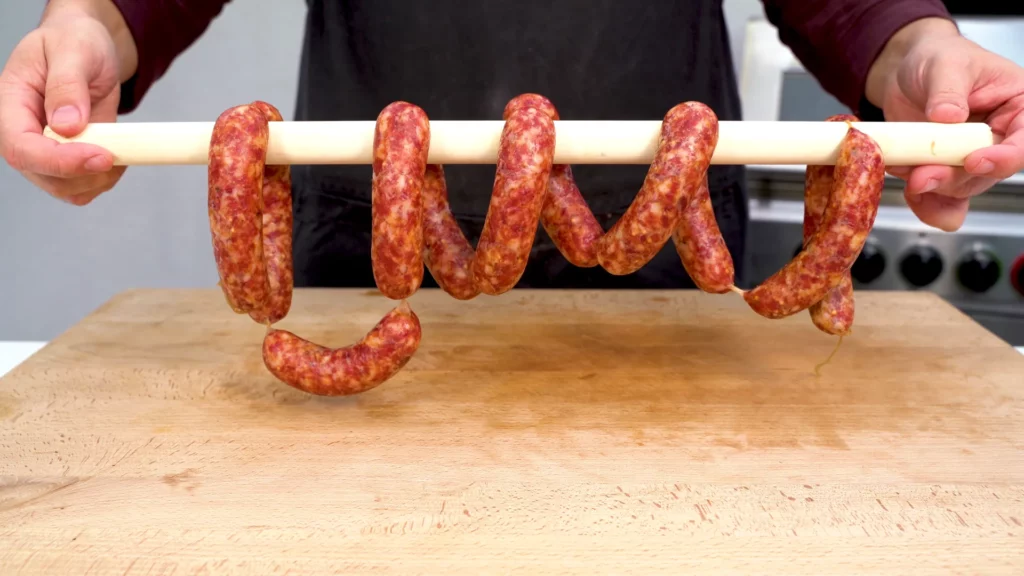
Before:
After:
Color development in different sausage types
The conditions vary considerably by product. Here’s an overview:
Cooked sausages (Fleischwurst, Wiener, Bockwurst): Color develops during poaching at a water temperature of about 72–75 °C (162–167 °F). This happens relatively quickly because heat speeds up the process. Color development is generally complete after poaching.
Raw cured sausages (salami, Mettwurst, Landjäger): Color develops at low temperatures during fermentation. For the first 24 hours, the temperature is about 22–24 °C (72–75 °F). Acidification by starter cultures lowers the pH, further encouraging color development.
Ham (cooked and dry-cured): During curing, color develops at refrigerator temperatures of 4–8 °C (39–46 °F). This takes much longer because the low temperature slows the reaction. In return, the color develops more evenly.
How long does curing color take to develop?
The time depends on three factors: temperature, pH and the size of the piece of meat.
Cooked sausages: Color development is practically complete after poaching, so after about 30–60 minutes, depending on the casing diameter.
Raw cured sausages: Most color development happens in the first 24–48 hours of fermentation. You can recognize it when the cut surface changes from gray to pink-red.
Ham: Full color development in whole pieces of ham can take 1–4 weeks. Curing is followed by equalization, during which the nitrite distributes evenly through the meat and color development finishes.
Tip: If you still see a gray center when you cut the meat after curing, color development isn’t complete. Give it more time to equalize.
Curing accelerators
Curing accelerators speed up color development and improve color stability. The most important are:
Ascorbic acid (vitamin C) or sodium ascorbate: The most commonly used curing accelerator. It speeds up the reduction of nitrite to nitric oxide and produces an even, stable color. Dose: about 0.3–0.5 g per kg of meat.
Citric acid: Lowers the pH, which also encourages color development. It’s less often used on its own, but appears in many seasoning mixtures.
I always use sodium ascorbate for cooked sausages and cooked ham. It simply makes the color more even and stable. It isn’t essential for raw cured sausages because acidification by the starter cultures has the same effect.
Color development without nitrite curing salt
You can also make sausage and ham without nitrite curing salt. There are several approaches:
Parma ham: Traditional Parma ham is cured with sea salt only, without nitrate or nitrite. Its red color comes from zinc protoporphyrin forming during long aging.
Vegetable powder containing nitrate: Beetroot powder or celery powder contains natural nitrate. Combined with starter cultures, this forms nitrite, which enables color development. This method is used in organic and clean-label production.
Completely without nitrite: Many products made without nitrite turn gray to brownish and lack the typical cured flavor. Long-aged Parma ham develops its red color through a different pigment, zinc protoporphyrin.
Important: Nitrite does more than produce color. It inhibits dangerous bacteria such as Clostridium botulinum. If you leave out nitrite curing salt, pay particular attention to hygiene, refrigeration and short maturation times. Products without nitrite should be eaten sooner.
Frequently asked questions
Why isn’t my sausage developing its cured color?
The most common reasons are too little cure, too short a resting time or the wrong temperature. The amounts per kg of meat are:
Cooked sausage must reach a core temperature of at least 68 °C (154 °F). Also check that your cure is still fresh, because nitrite breaks down during long storage. A curing accelerator such as sodium ascorbate (0.3–0.5 g/kg) can improve the process considerably.
How long does curing color development take?
It depends on the product. Cooked sausages: 30–60 minutes during poaching. Raw cured sausages: 24–48 hours during fermentation. Ham: 1–4 weeks including equalization. The lower the temperature, the longer it takes. A low pH, for example from starter cultures in raw cured sausage, speeds up the reaction.
What’s the ideal temperature for curing color development?
Cooked sausages: 72–75 °C (162–167 °F) water temperature. Raw cured sausages: 22–24 °C (72–75 °F) for the first 24 hours of fermentation. Ham: 4–8 °C (39–46 °F) during curing, followed by equalization at the same or a slightly higher temperature. For raw cured sausages, moderate warmth combined with acid formation is crucial for even color development.
What are curing accelerators?
Curing accelerators are additives that speed up color development and improve color stability. The most common is ascorbic acid or sodium ascorbate (dose: 0.3–0.5 g per kg of meat). It promotes the reduction of nitrite to nitric oxide and gives a more even color. I particularly recommend sodium ascorbate for cooked sausages and cooked ham.
Can cured color develop without curing salt?
Nitrite creates the familiar cured pink color. Vegetable powders containing nitrate can also lead to nitrite formation. Parma ham is different: it is cured with sea salt only, without nitrate or nitrite, and develops its red color from zinc protoporphyrin during long aging. Remember that nitrite also helps preserve meat, so hygiene and refrigeration matter particularly for products made without it.