
Homemade Spanish Chorizo Recipe

- Type
- Cured sausage
- Level
- Medium
- Rating
- Rate this recipe
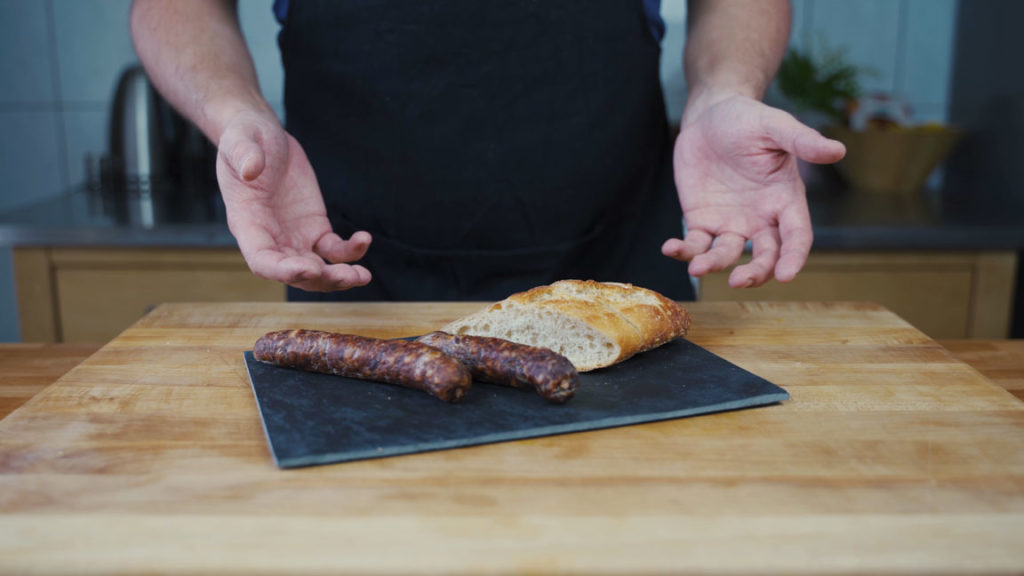
In this article I will show you how you can make a Spanish Chorizo yourself.
Depending on the region, it is also called Chouriço in the Portuguese region or Xoriço in the Catalan region.
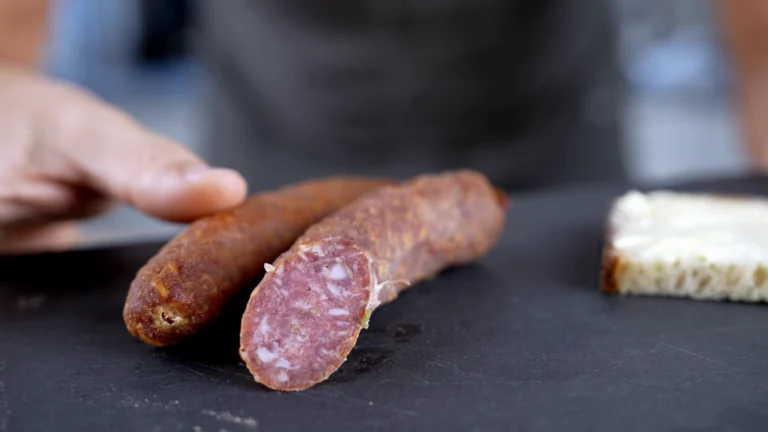
It is an air-dried raw sausage and is prepared with pork, paprika and garlic. It typically has a coarse consistency. If you want to use the chorizo as a raw sausage (Bratwurst) without the drying process, it will also work.
The chorizo tastes heavenly and is very versatile. It is excellent in fine slices on bread.
Alternatively, you can use the chorizo in almost all dishes that are normally prepared with ham, diced ham or salami. It is definitely not to be missed at a Spanish tapas party.
You can find the complete Chorizo recipe as a video or read it.
Have fun and good luck making it!

Table of Contents
Spanish Chorizo – What do you need to make it?
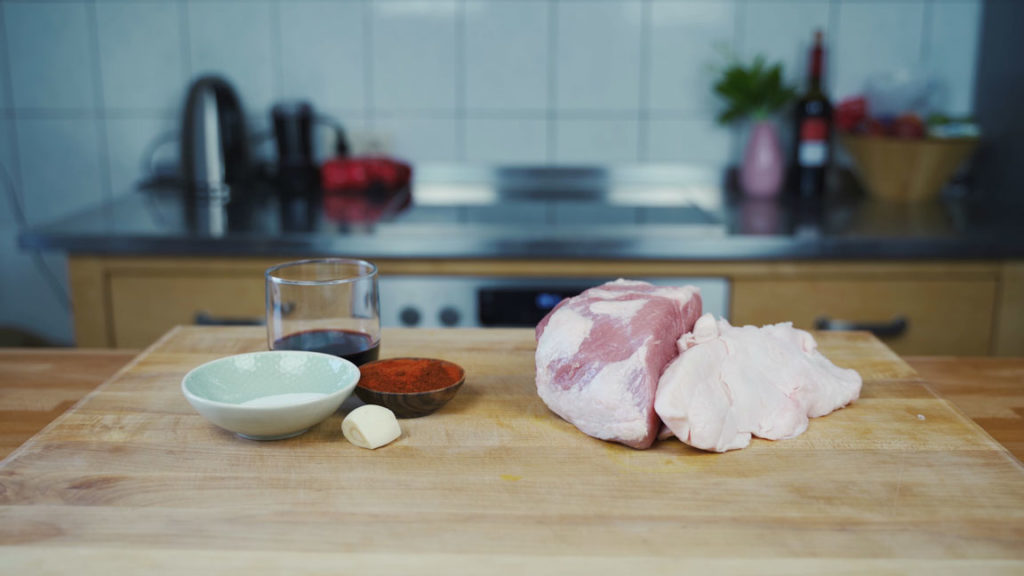
Ingredients per 1 kg
| Ingredient | Grams | Percent |
|---|---|---|
| Chorizo | ||
| pork shoulder | 700 g | 70 % |
| pork back fat | 300 g | 30 % |
Spices per 1 kg
| Ingredient | Grams |
|---|---|
| dry red wine | 50 ml |
| Pimentón de La Vera (this paprika powder is smoked over holm oak wood and is actually indispensable for a real chorizo taste) | 22 g |
| salt | 21.5 g |
| Cure #1 (for the fresh bratwurst version, omit the cure and use 18 g plain salt per kg of meat instead of the listed salt) | 2.5 g |
| cloves of garlic (7 g) | 2 |
You like your chorizo spicy?
Then you can use 8g of chili flakes, a little pepper or alternatively the hot version of the Pimentón de La Vera.
The equipment to make Chorizo
You need a meat grinder to “grind” the meat. The meat is chopped into small chunks and can then be mixed.
You need a sausage stuffer to get your meat mass into the casing. In the beginning you can also add a filler to your grinder or use a modified plastic bottle or funnel.
Sausage casings
Chorizos are traditionally filled into natural pork casings caliber 28/30
Sewing needle or sausage picker
You will need the needle if air got into the sausage during filling.
Homemade Chorizo – Step-By-Step Instructions
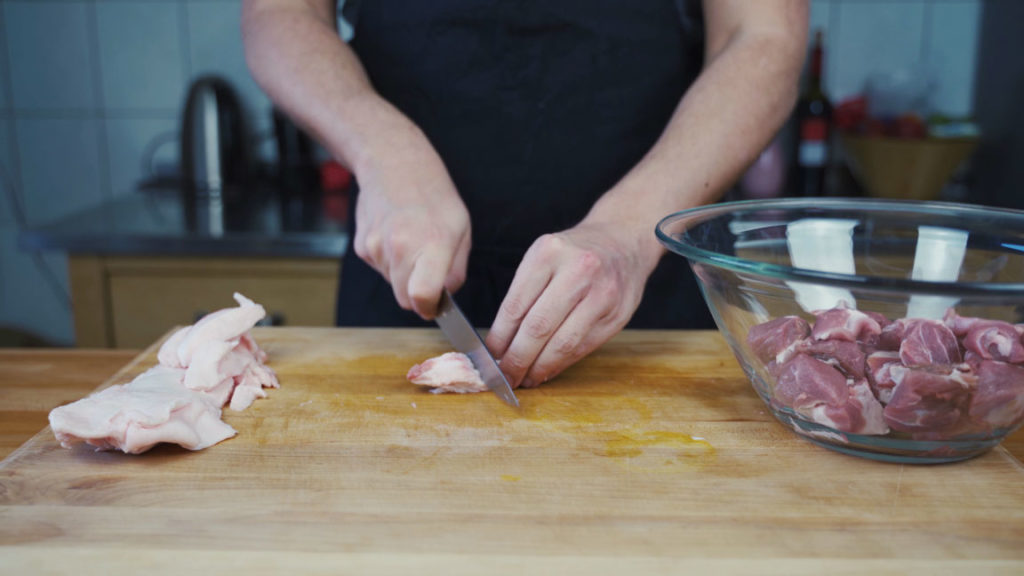
Cut the meat into strips or cubes. You can vary the size depending on how big your meat grinder is.
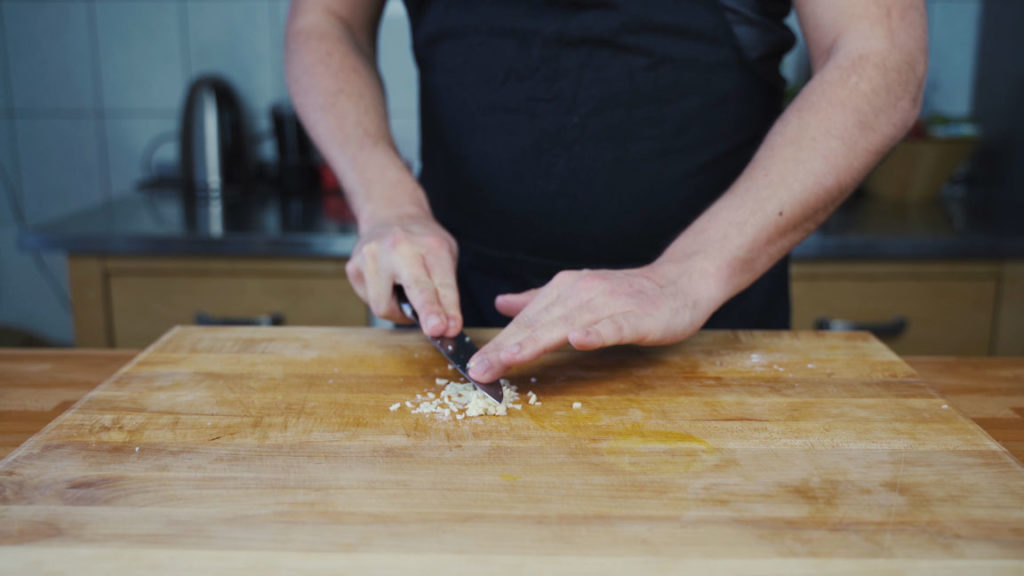
Chop the garlic into small pieces and process it into a paste Add some salt and press the garlic firmly onto the board with a knife. Then cut again and press again. This way the garlic becomes a fine paste.
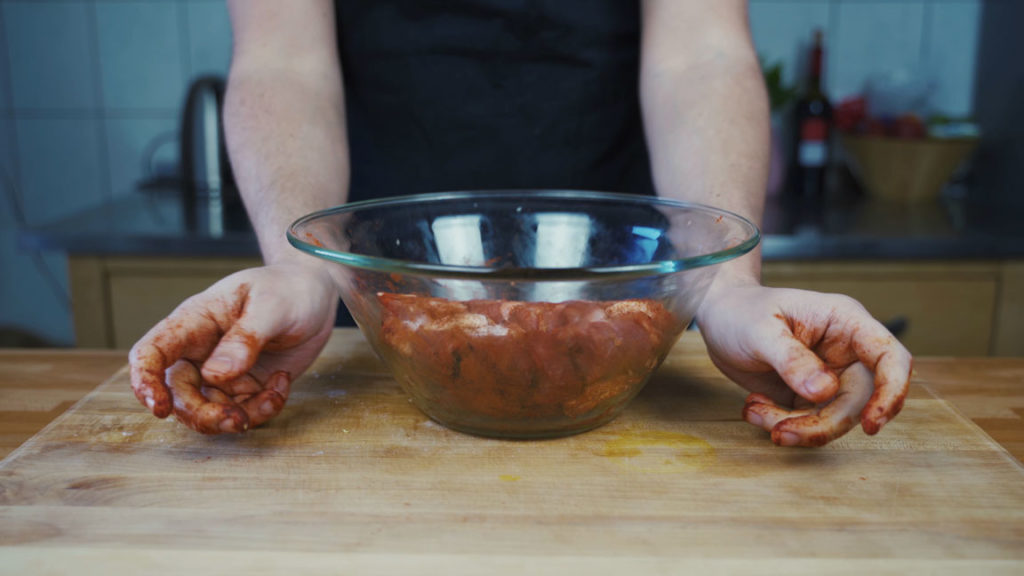
Add the spices and garlic to the meat and massage them in. The salt and cure gets added later on.
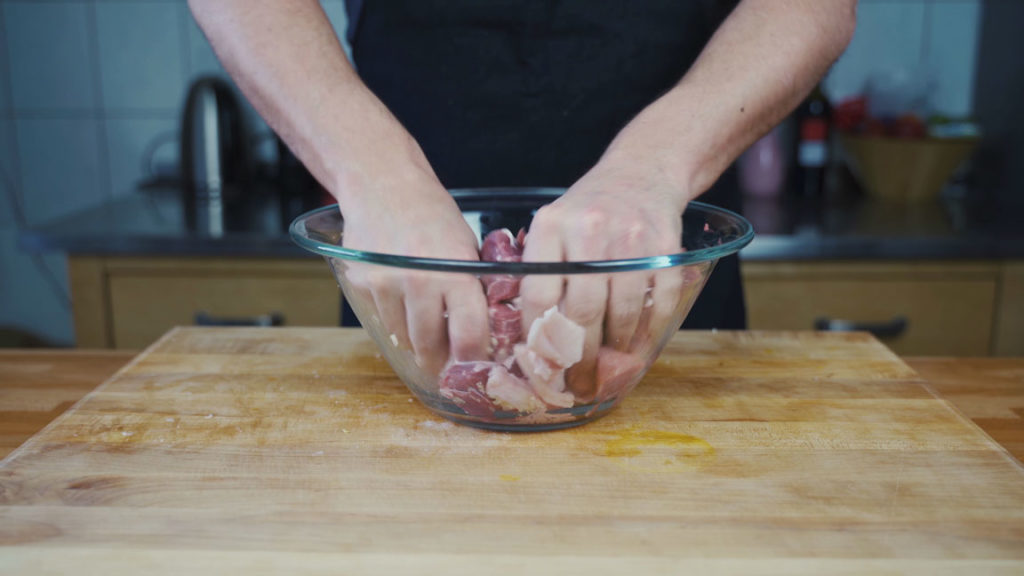
Put it into the freezer for 1-2 hours. This will help your grinding process later and make sure that the mixture does not get too warm.
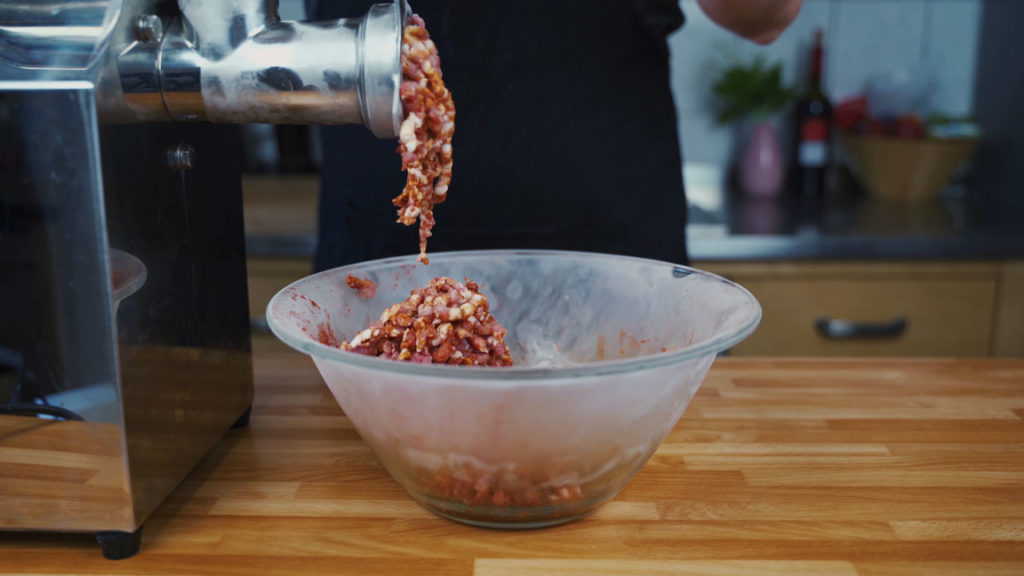
Now you can grind the meat. I used the medium perforated disc (4.5 mm). You want to grind the meat coarse.
Now add the red wine, salt and Cure #1.
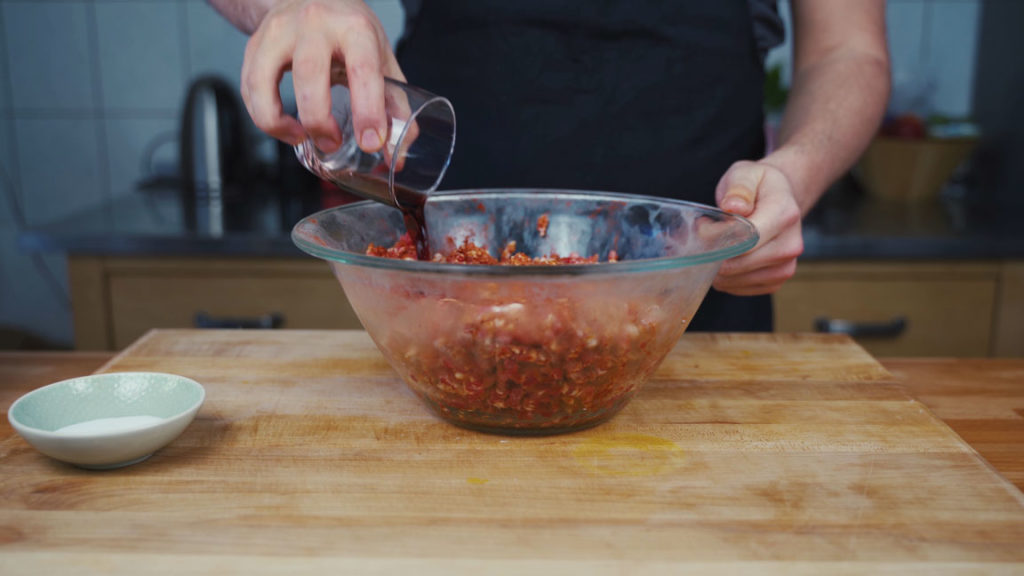
Mix the meat mass for 2-3 minutes. You can either knead the meat with a food processor with a kneading attachment or mix it vigorously by hand. This ensures that the sausage meat will bind well and the sausage will not be crumbly later on.
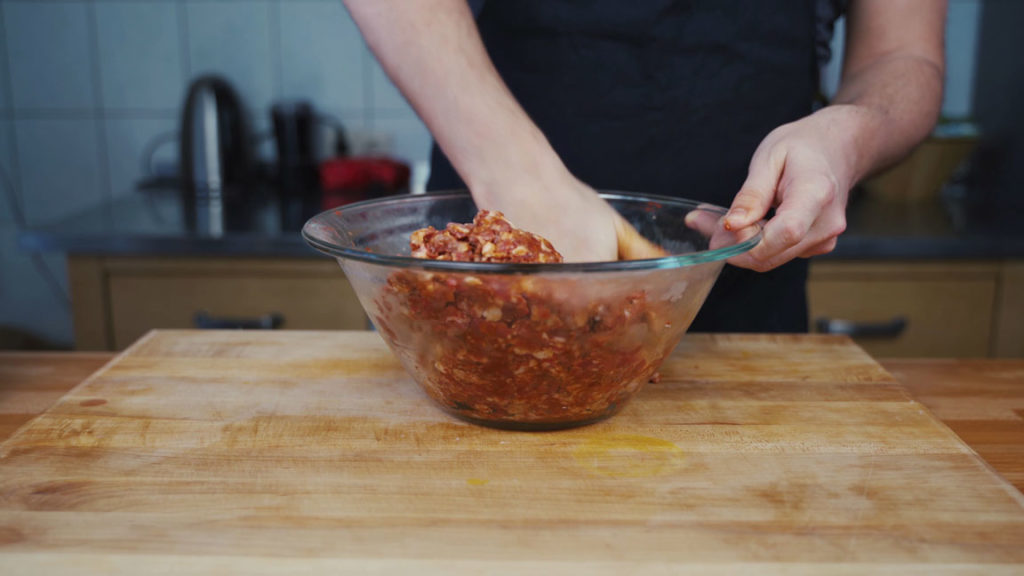
Now put the casing onto your sausage stuffer and fill the mass into the casings. Make sure that there is trapped as little air as possible.
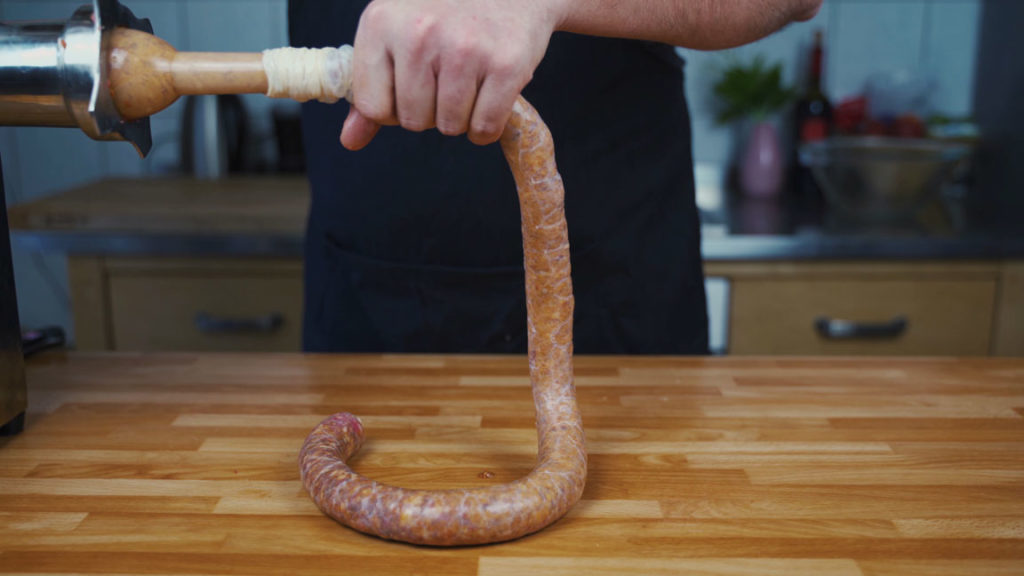
Now it’s time to link the sausages. You can decide for yourself how big your Chorizo should be. Put the sausage between your thumb and forefinger. Rotate the sausage away from you then move to the next link and rotate it toward you.
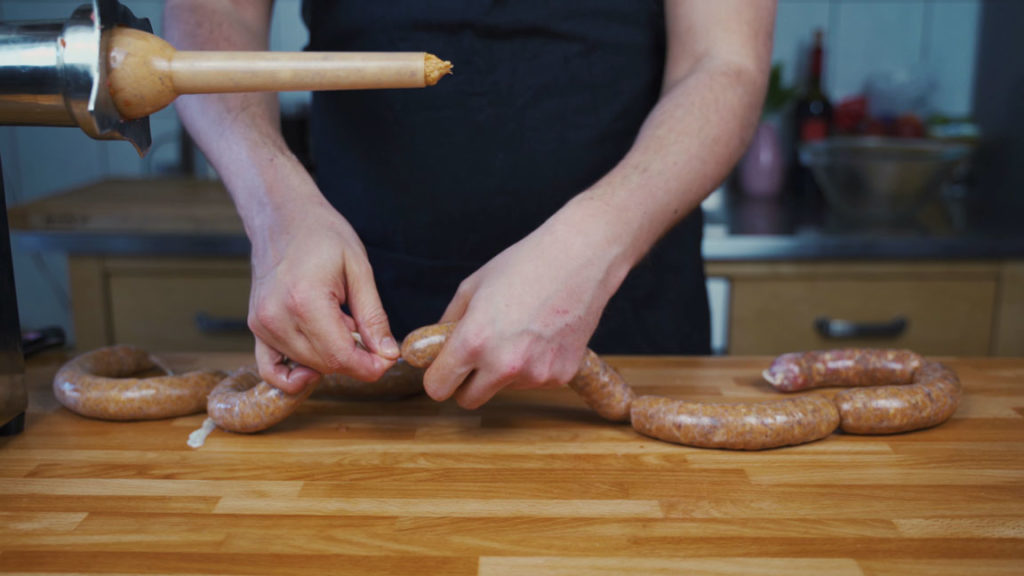
Take a needle and prick the sausage to open any air holes.
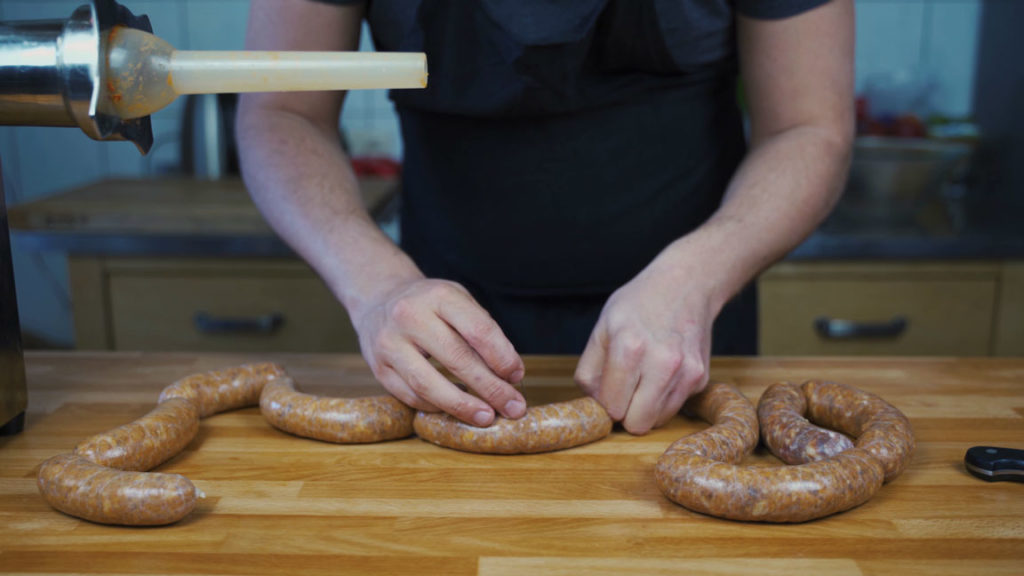
Cut the individual links in pairs apart so you can hang them in the next step.
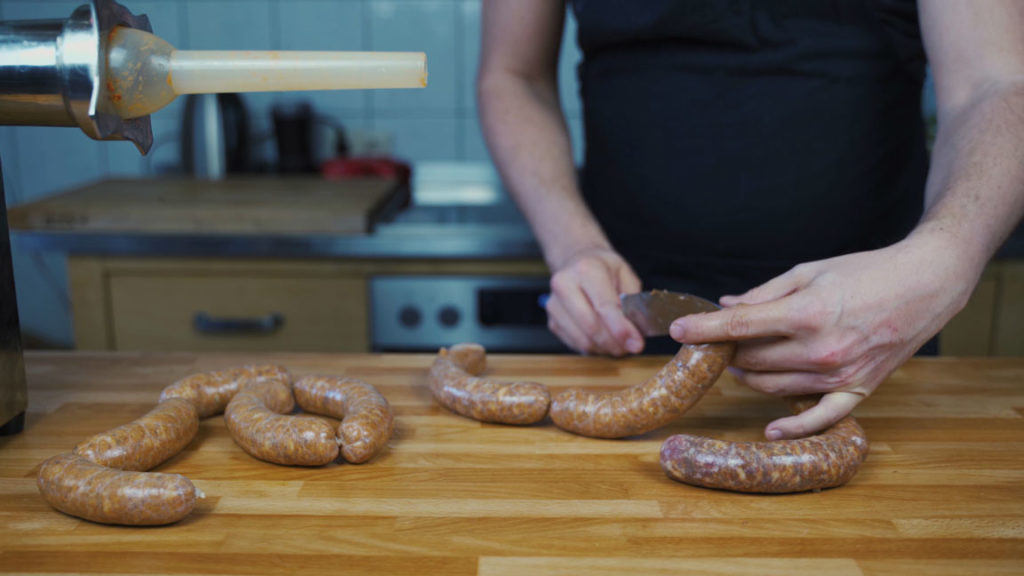
Now it is time for the drying process. Hang the sausage in a dark place for one day. The place should have about 18-20 C° (64 – 68 °F) and 70 – 80 % humidity.
Tip: If you do not have a place with such humidity hang them in the bathroom and spray with water from time to time.
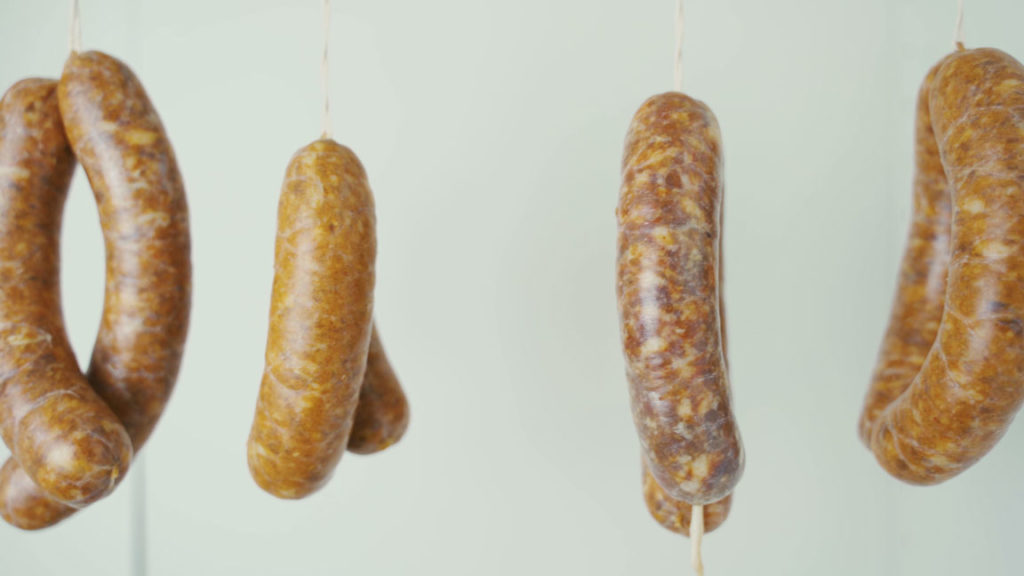
After 24 hours the reddening has taken place and you can hang it up in any cool place. The air humidity should be about 70%. For me the cellar worked out. For the first week I moistened the chorizos once a day and hung a damp cloth next to it to get the humidity.
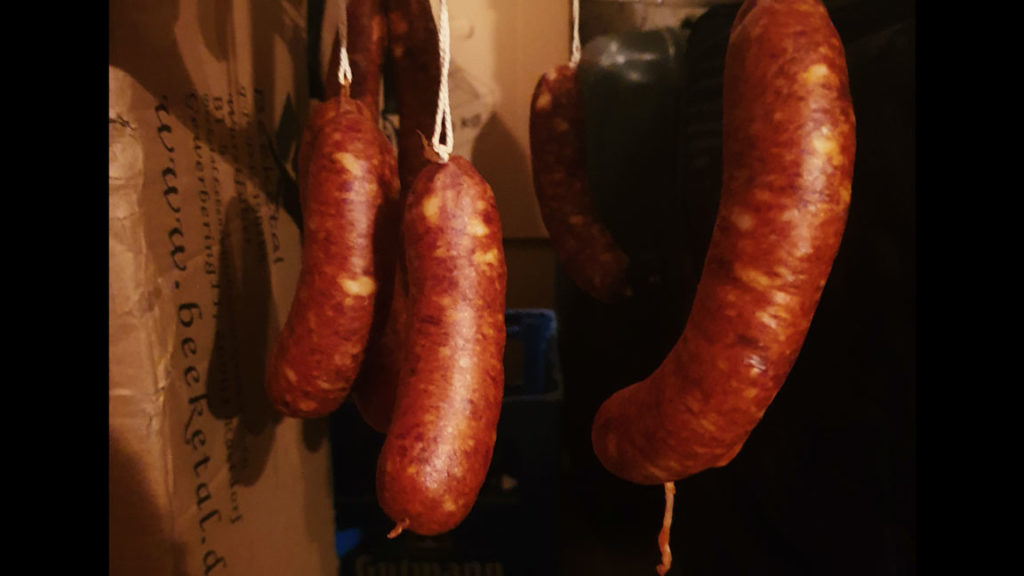
After the first week, you can dry the chorizo without further ado until it has lost about 35% of its weight. This usually takes between 2 and 3 weeks (depending on the caliber).
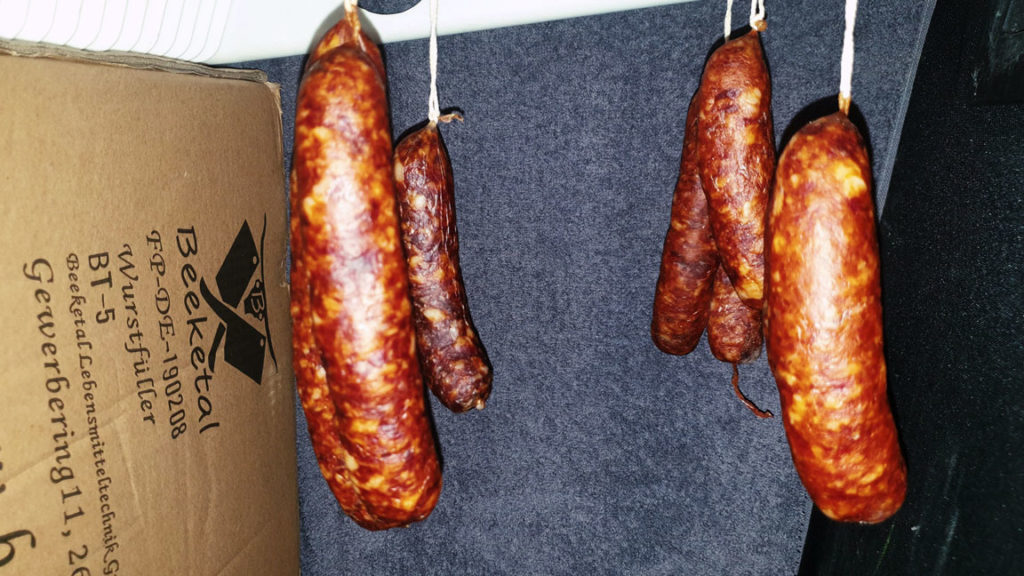
Your chorizo is ready. If you want it even harder, you can let it dry even longer.
Frequently asked questions
Why does a chorizo need Pimentón de la Vera?
Why does a chorizo need Pimentón de la Vera?
Because in a chorizo the paprika is not a seasoning, it is the recipe. Its red colour and its smoky taste both come from the smoked paprika: the Pimentón de la Vera peppers are smoked over holm oak before they are ground, and this recipe never puts the sausage itself in a smokehouse. That is why the list above names that specific paprika instead of just saying “paprika”.
Use an ordinary sweet paprika and you will get a good sausage. It will be red, it will taste of garlic and pork, and it will not taste of chorizo, and no amount of extra paprika fixes that, because what is missing is the smoke rather than the pepper. Heat is a separate question: of the three routes to a spicier chorizo listed under the spices, the hot version of the same Pimentón is the one that turns the heat up without putting a second flavour in beside it.
How long does the Chorizo keep?
How long does the Chorizo keep?
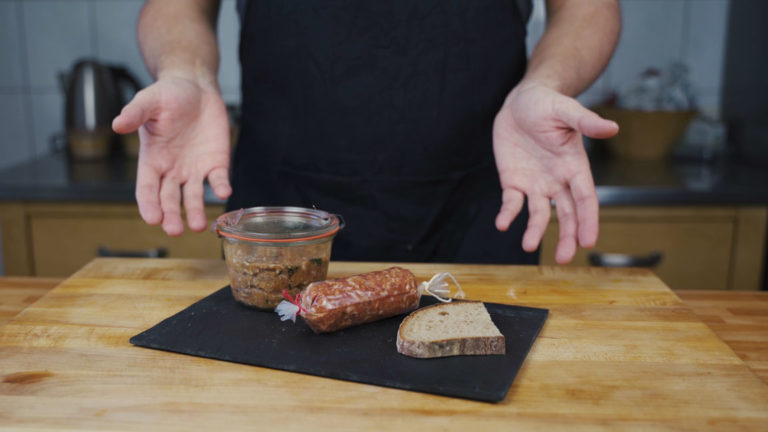
The chorizo can be kept for several months.
When cut, however, you should consume it quickly.
The longer it is open, the more it dries out.
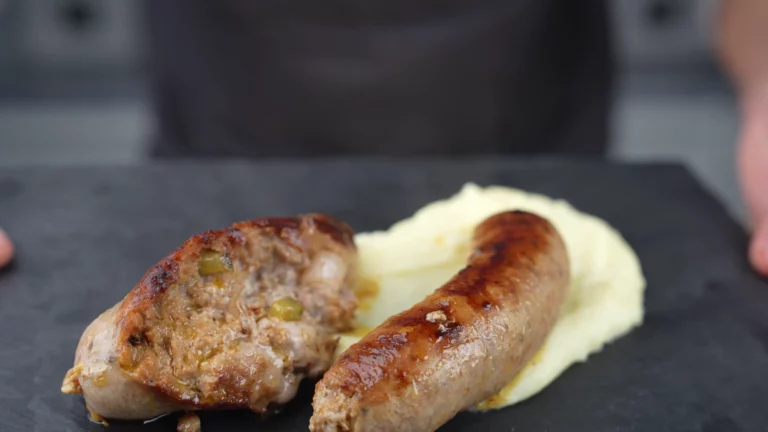
Chorizo as “Bratwurst” without curing and drying
You can also make my chorizo recipe as bratwurst.
For this, omit the Cure #1 and use 18 g plain salt per kg of meat instead of the listed salt.
After filling it, you can throw it directly onto the grill or into the pan.
Hi Dan: Having lived in Bamberg and visiting every two years I get to enjoy the many different verities of sausages Barvaria has to offer. Could you at some point explain or do a video on my favorite cured beef product Zwetschgenbaames? Is this dried cured or brine cured? I thank you for your videos and step by step instructions on so many sausage options. Keep up the good work.