Rouladen Bratwurst — A Sunday Classic for the Grill


- Type
- Bratwurst
- Level
- Easy
- Rating
- Rate this recipe
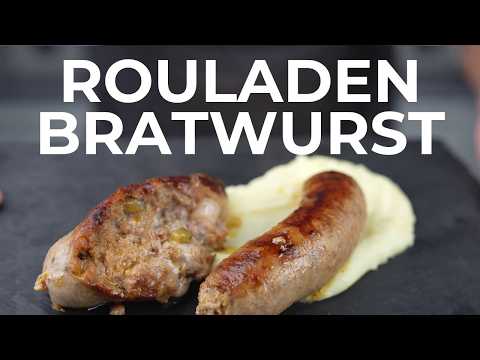
In this post, I’ll show you how to make your own Rouladen Bratwurst. Beef, pork shoulder, smoked bacon, pickles, shallots, and mustard: the classic roulade goes right into the sausage casing. Cutting into it at the end is half the fun—you can see the pickle and onion pieces beautifully distributed throughout, and the flavor comes surprisingly close to that of a real roulade.
If you’re looking for even more ideas for creative sausage recipes, check out my Cevapcici bratwurst, the Antipasti bratwurst. If you’re a complete beginner, check out my basics post on making your own bratwurst first.
If you’re looking for more creative bratwurst ideas, be sure to check out my recipe book “”24 Bratwurst Recipes For A Perfect Barbecue Experience”.
But now enough talking…
Here you can find the complete Rouladen Bratwurst recipe as a video or to read through.
Have fun and good luck making it!
Rouladen Bratwurst – What do you need to make it?

With the right ingredients and a little patience, you can easily make this delicious Rouladen bratwurst.
Ingredients per 1 kg
| Ingredient | Grams | Percent |
|---|---|---|
| pork shoulder | 400 g | 40 % |
| lean beef | 300 g | 30 % |
| pork back fat | 150 g | 15 % |
| smoked pork belly | 150 g | 15 % |
Spices per 1 kg
| Ingredient | Grams |
|---|---|
| shallots | 100 g |
| cucumbers | 100 g |
| Dijon mustard | 30 g |
| salt | 16 g |
| black pepper | 2.5 g |
The equipment to make Rouladen sausage
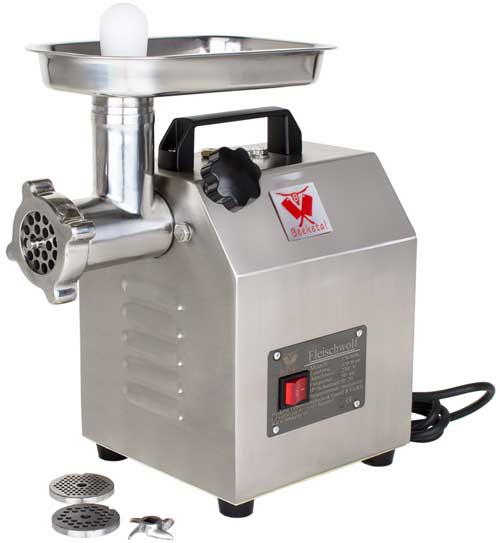
A meat grinder cuts the meat into small pieces so it can be mixed with the seasoning. Cut the meat into pieces that fit the feed tube before grinding.

Sausage stuffer, grinder attachment or funnel
Use a sausage stuffer to fill the mixture into its casing. A stuffing attachment for your meat grinder or a hand funnel also works when you are starting out.
Natural casings
The Rouladen sausage is stuffed into natural casings. I recommend you to use pork casing caliber 28/30.
Rouladen Bratwurst – Step-By-Step Instructions
Follow these steps to make the perfect Rouladen Bratwurst.
Cut the lean beef, pork shoulder, pork back fat, and smoked pork belly into pieces suitable for the meat grinder. Keep everything neatly separated so that you can grind everything evenly in the end. The smoked pork belly adds exactly the right touch that a classic roulade has, so you shouldn’t use unsmoked bacon here.

Put it in the freezer for about 45 minutes. Smoked belly bacon, in particular, is relatively soft and will otherwise get stuck in the meat grinder instead of being cut cleanly. The beef and shoulder cuts can be slightly frozen until they feel firm on the outside but are still tender on the inside. Don’t let them freeze completely, or the meat grinder will jam.

Finely dice the pickles and shallots by hand. Don’t use a food processor: I’ve tried it, and the pickles turn into a mushy mess in the processor, which breaks down the sausage’s texture. Finely dicing takes a few more minutes, but the result is much better, and when you cut into the sausage, you’ll see the typical little pieces of pickle.

Grind the frozen meat, including the back fat and belly fat, through the medium-sized grinding plate. The medium grind works best for this bratwurst: fine enough that the mustard and cucumber juice bind well, but coarse enough that the sausage still has some texture when you bite into it.

Add the diced cucumbers and shallots, the mustard, salt, and pepper to the ground meat. Now mix everything together thoroughly. At first, it may seem as though the mixture isn’t coming together because the cucumbers release so much water. No need to worry: keep kneading, and the juice will seep out, binding the mixture into a nice, sticky patty. Allow about 3 minutes for kneading.

Thread the soaked pork casing (caliber 28/30) onto the sausage stuffer. Caliber 28/30 is my standard caliber for Rouladen Bratwurst: thick enough that the cucumber and shallot pieces fit through easily without straining the casing. Sheep casings (caliber 22/24) would theoretically work as well, but you’ll definitely need to chop the cucumbers and shallots even finer; otherwise, they won’t feed through the funnel smoothly.

Use the sausage stuffer to fill the casing evenly. Pay special attention to the pressure when making this sausage: the diced cucumbers and shallots will push slightly outward during frying, and if the casing is too tightly packed, it will burst quickly. You should still be able to press your finger into the sausage slightly. A filling that’s too loose is less of a problem here than one that’s too tight—you can always tighten it up later when tying off the ends.

Twist the sausages to your desired length. Hold a sausage between two fingers and twist it forward once. Leave the next section of sausage untwisted and twist it in the opposite direction. This locks the individual sausages together so they don’t untwist.

Now it’s up to you. I prefer to fry the rouladen bratwurst fresh. If you want to stock up: freeze it in portions or blanch it in the refrigerator at 75 °C (167.0°F) for about 30 minutes for longer shelf life.

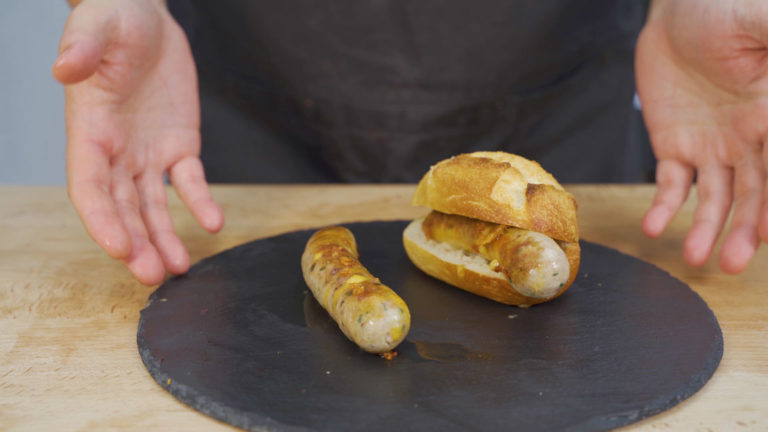
Fry the Rouladen Bratwurst in a pan over medium heat for about 10 to 15 minutes, until they’re golden brown on the outside and cooked through on the inside. Of course, they work just as well on the grill. By the way, the first slice is half the battle: you’ll see the bacon, cucumber, and onion pieces beautifully distributed throughout, and the flavor comes surprisingly close to a real roulade—the mustard and cucumbers really set the tone. Enjoy! 🙂
Frequently asked questions
How long do homemade Rouladen Bratwurst last?
How long do homemade Rouladen Bratwurst last?
Fresh, raw Rouladen Bratwurst will keep in the refrigerator for about 2 to 3 days. If you blanch them at 75 °C, their shelf life extends to 5 to 7 days. When frozen in individual portions, they’ll keep for 3 months without any problems.
Why shouldn't I add cucumbers and shallots to the meat grinder?
Why shouldn't I add cucumbers and shallots to the meat grinder?
I tried this, and it doesn’t work: Cucumbers are too soft and too watery; when processed in a meat grinder, they turn into a mushy mass that ruins the texture of the sausage mixture. Finely dicing them by hand takes a few more minutes, but you’ll end up with a sausage that holds its shape and, when sliced, reveals the typical roulade-style pieces.
Can I use cornichons or salted cucumbers instead of pickles?
Can I use cornichons or salted cucumbers instead of pickles?
Cornichons work well—they’re similarly tart and crunchy. Salted cucumbers are milder and less tart, so the sausage will lack a bit of that typical roulade kick. If you use salted cucumbers, I’d add a teaspoon of vinegar or a little more mustard to balance out the acidity.
What kind of casing do I need for Rouladen Bratwurst?
What kind of casing do I need for Rouladen Bratwurst?
I use pork casings in size 28/30: that’s the classic bratwurst size, and it also complements the roulade’s appearance well. sheep casings (size 22/24) work too, but you’ll need to chop the cucumbers and shallots even finer; otherwise, they’ll clog the stuffing funnel.
Can I make the roulade bratwurst entirely from beef?
Can I make the roulade bratwurst entirely from beef?
Yes, you can—you’ll end up with a pure beef bratwurst with roulade flavors. It’s important, though, to still aim for about 25 to 30% fat content; otherwise, the sausage will turn out dry. Use beef fat for this, or stick with smoked pork belly, since that’s exactly what gives it that typical roulade flavor.
What goes well with Rouladen Bratwurst?
What goes well with Rouladen Bratwurst?
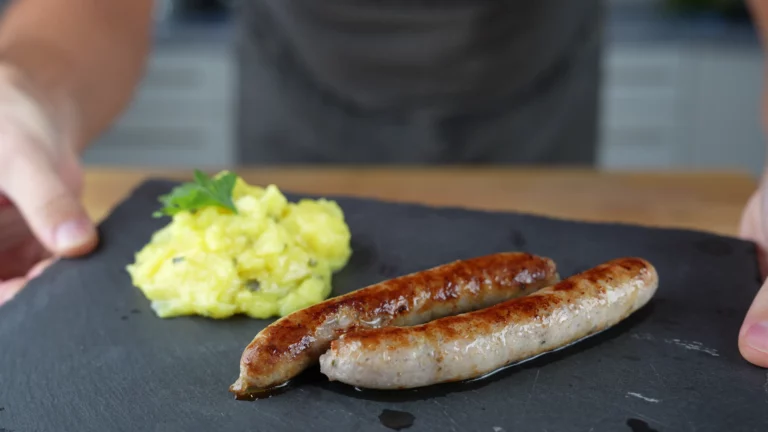
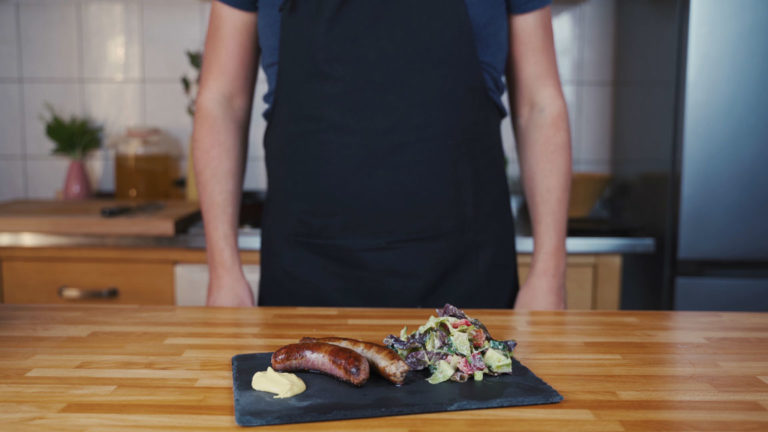
Anything that goes well with a classic roulade: mashed potatoes, red cabbage, bread dumplings, or a hearty potato salad. A dark gravy really makes the sausage feel festive if you’re in the mood for a Sunday roast.