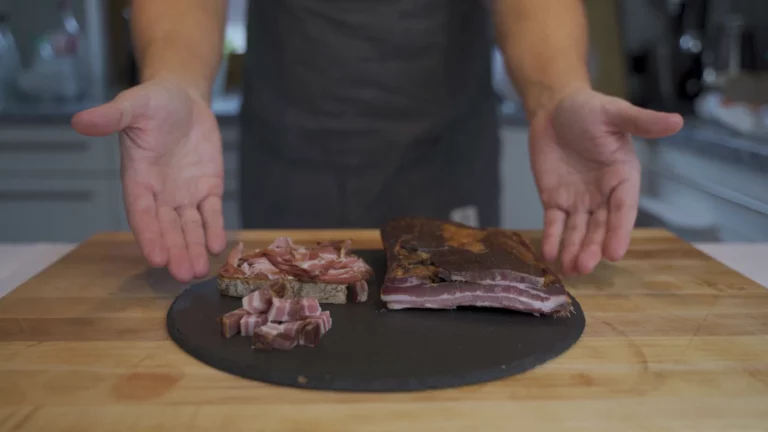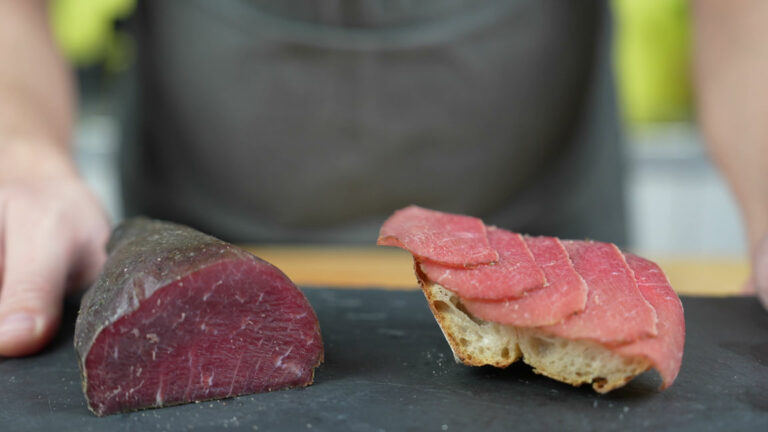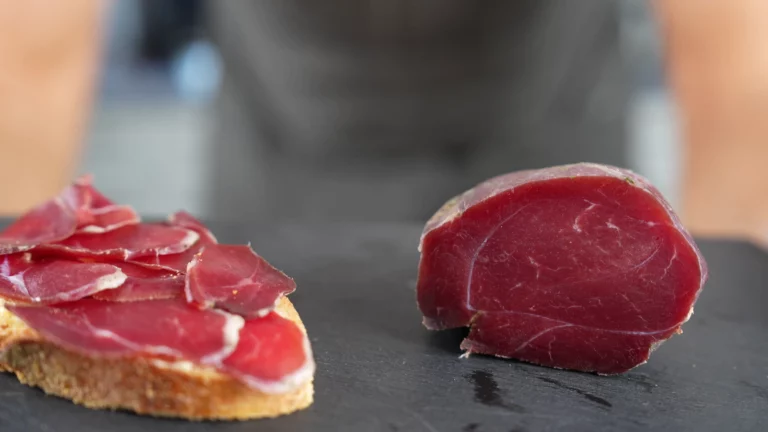
Cold-Smoked Goose Breast Recipe

- Type
- Ham
- Level
- Medium
- Rating
- Rate this recipe
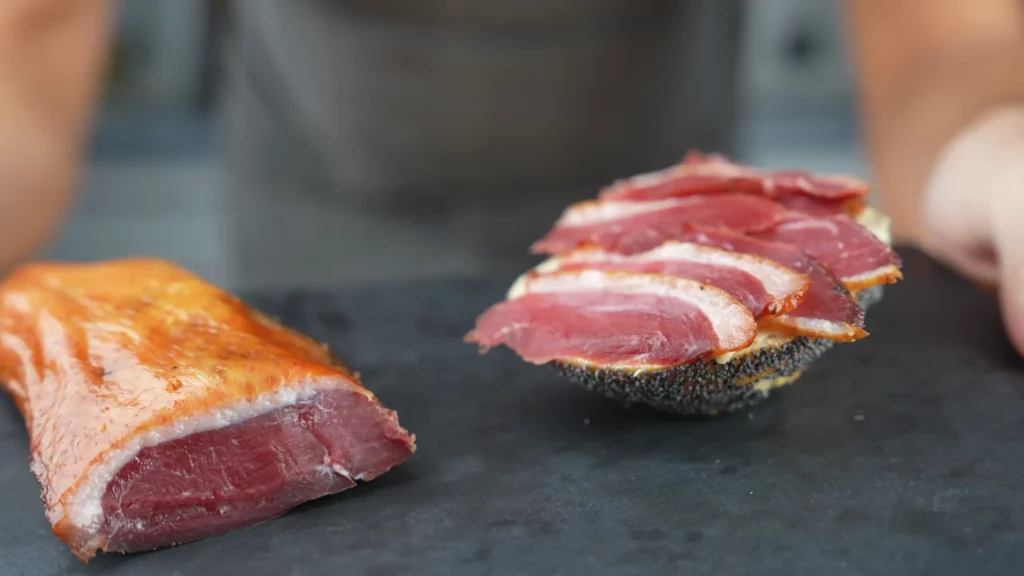
In this post, I’ll show you how to make your own smoked goose breast. More specifically, this is a genuine raw ham made from goose breast, which is cured for several days and then cold-smoked.
Smoked goose breast is one of my favorite types of dry-cured ham: aromatic and spicy thanks to the classic Quatre-Épices blend of white pepper, ginger, nutmeg, and cloves, with a firm, dark texture that really makes a statement on a snack board. It’s perfect with a full-bodied red wine or on a cheese platter.
The actual work involved is manageable, but you’ll need a bit of patience and a smoker with a cold-smoke generator. Expect it to take about a week from curing to the first slice. If you’ve ever made smoked duck breast before, you’ll feel right at home here.
But now enough talking…
Here you can find the complete cold-smoked Goose Breast recipe as a video or to read through.
Have fun and good luck making it!

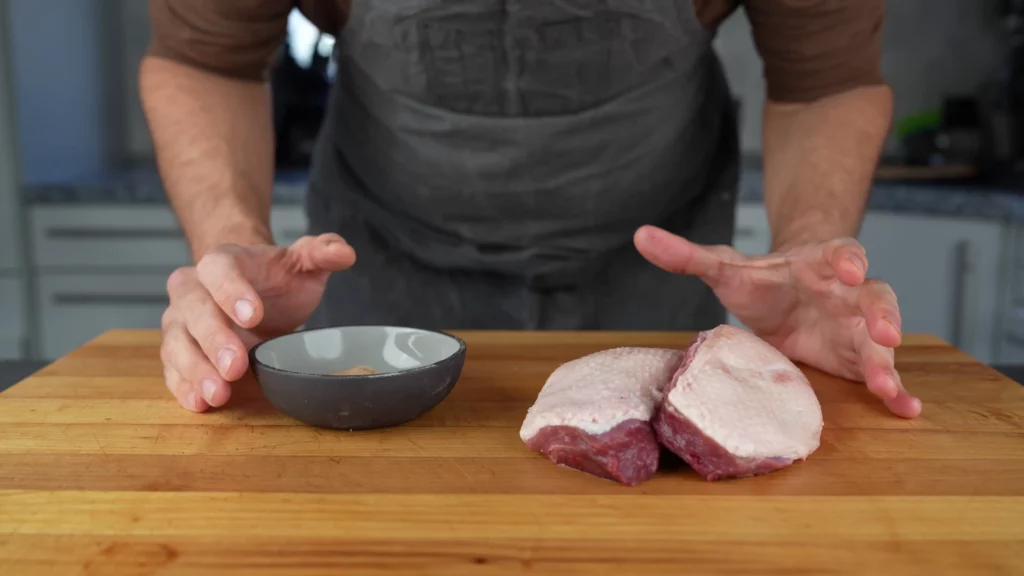
With the right ingredients and a little patience, you can easily make this delicious goose breast.
Ingredients per 1 kg
| Ingredient | Grams | Percent |
|---|---|---|
| goose breast | 1,000 g | 100 % |
Spices per 1 kg
| Ingredient | Grams |
|---|---|
| salt | 29.5 g |
| sugar mixture (50 % sugar / 50 % dextrose) | 3 g |
| Cure #1 | 2.5 g |
| white pepper | 2 g |
| ginger | 1 g |
| nutmeg | 1 g |
| cloves | 0.25 g |
The equipment to make cold-smoked goose breast
Smoker
You will need the smoker to smoke your goose breast.
Smoking auger / cold smoke generator (for cold smoking option)
With the cold smoking option, you also need a smoking auger. It ensures that you have continuous smoke in the smoker for 12 hours.
Step-By-Step Instructions
Mix the spices
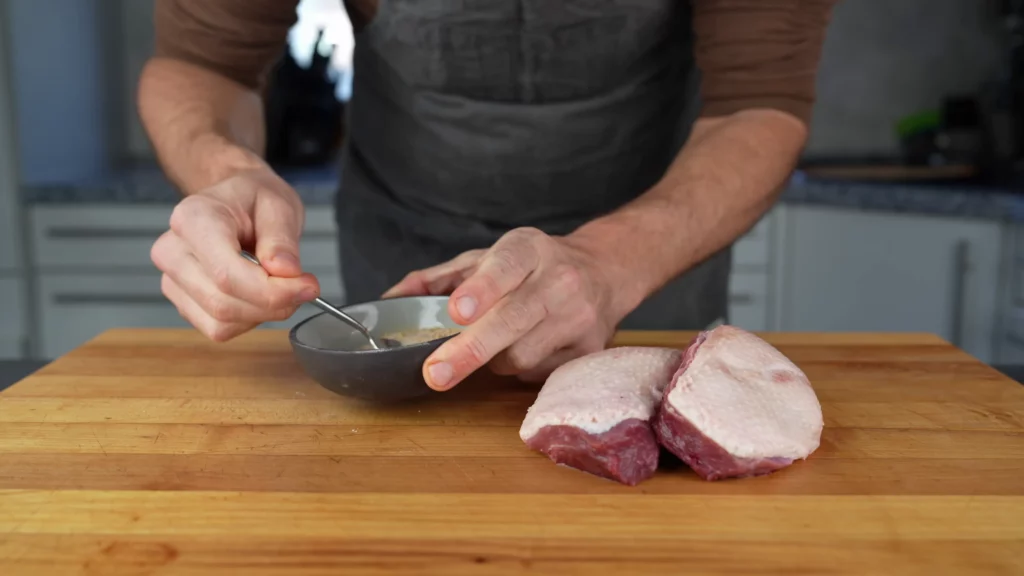
Weigh the white pepper, ginger, nutmeg and cloves separately. Mix thoroughly with the sugar mixture, salt and Cure #1. Weigh each spice carefully: the 0.25 g cloves can easily overpower the quatre épices balance.
Rub the goose breast
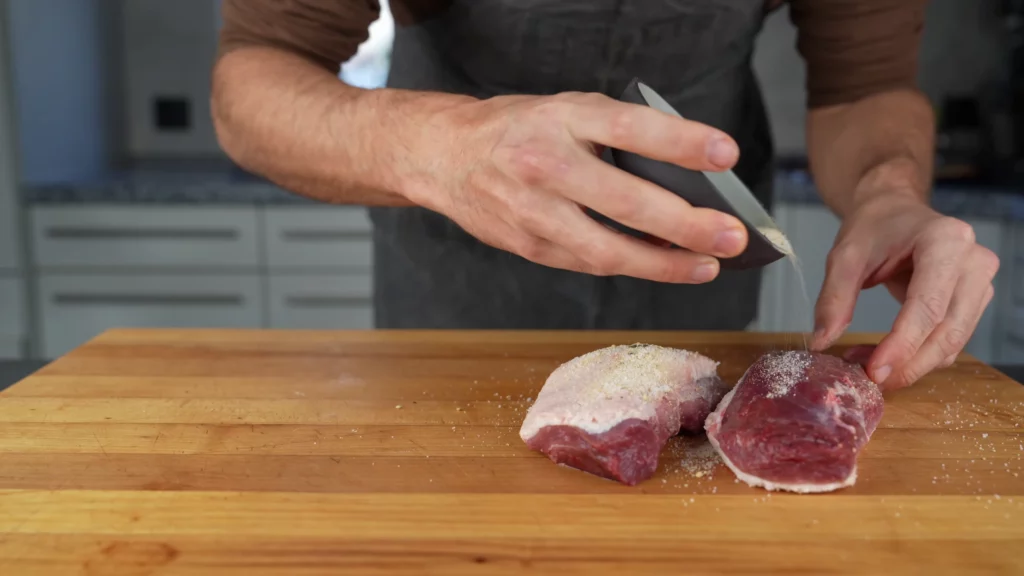
Put the goose breasts in a bowl and rub the complete seasoning mixture over every side. Use the entire weighed amount, calculated for 1 kg goose breast.
Put it in a vacuum bag
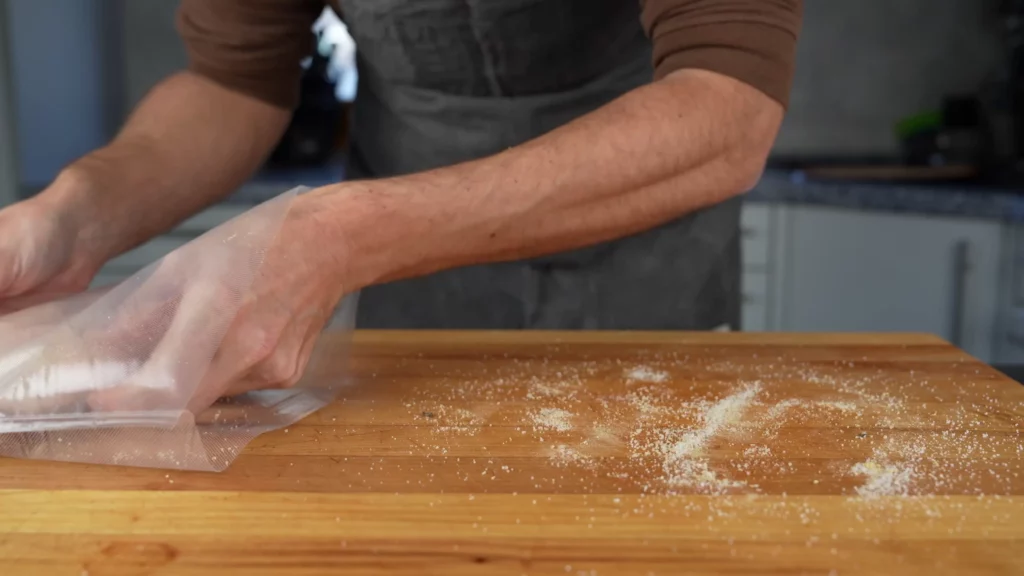
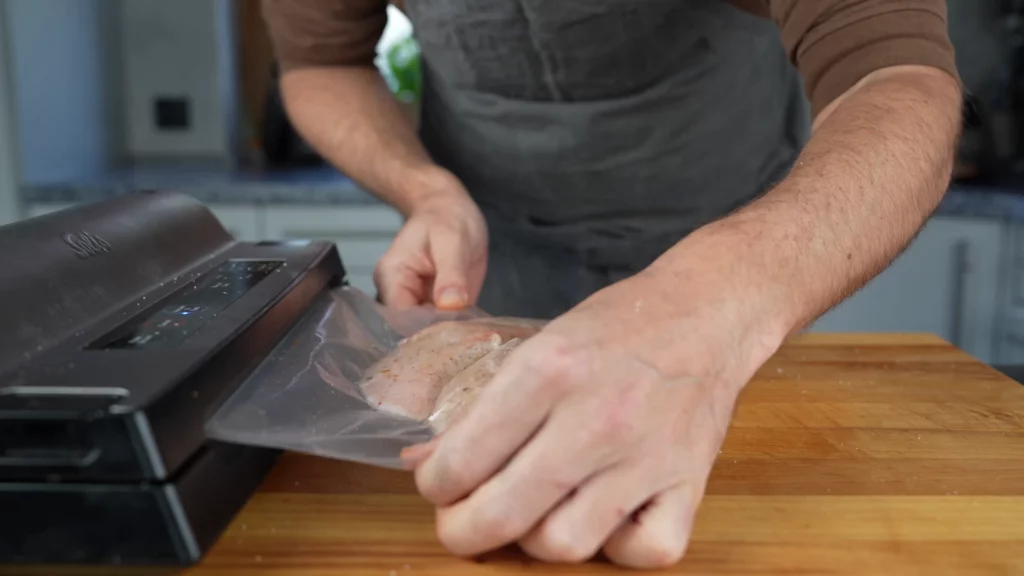
Put the seasoned breasts into a vacuum bag. Scrape all remaining seasoning from the bowl into the bag. Every bit belongs in there or the measured curing dose will be incomplete and the color uneven.
Vacuum-seal and label
Vacuum-seal tightly and label with the date and contents, especially if you are curing several pieces at once.
Cure in the fridge
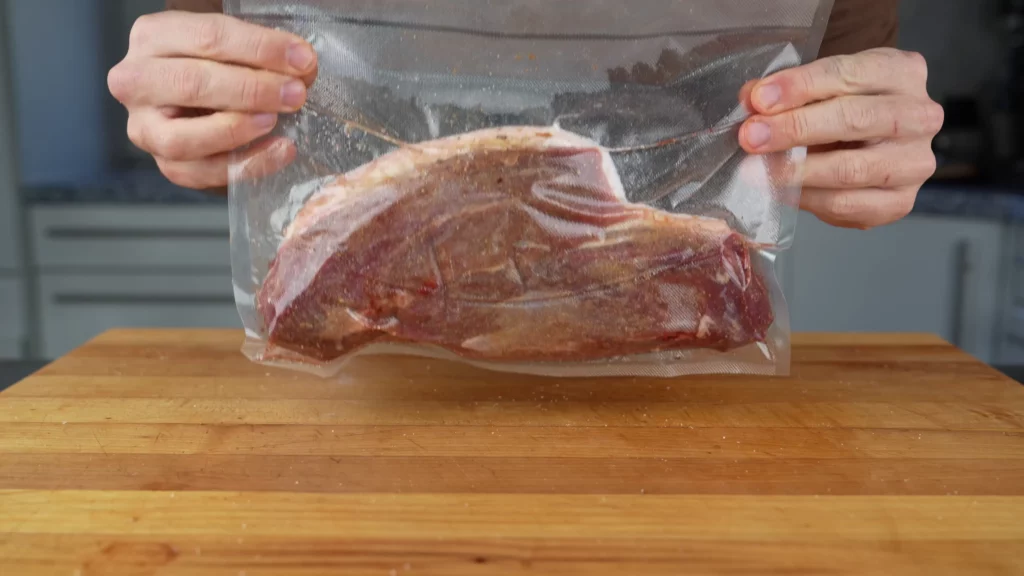
Cure in the fridge for at least about 1.5 days per centimeter of meat thickness. A typical 2–3 cm breast needs 3–4.5 days. Longer is fine; shorter is not, because the cure won’t reach the center evenly.
Pat dry
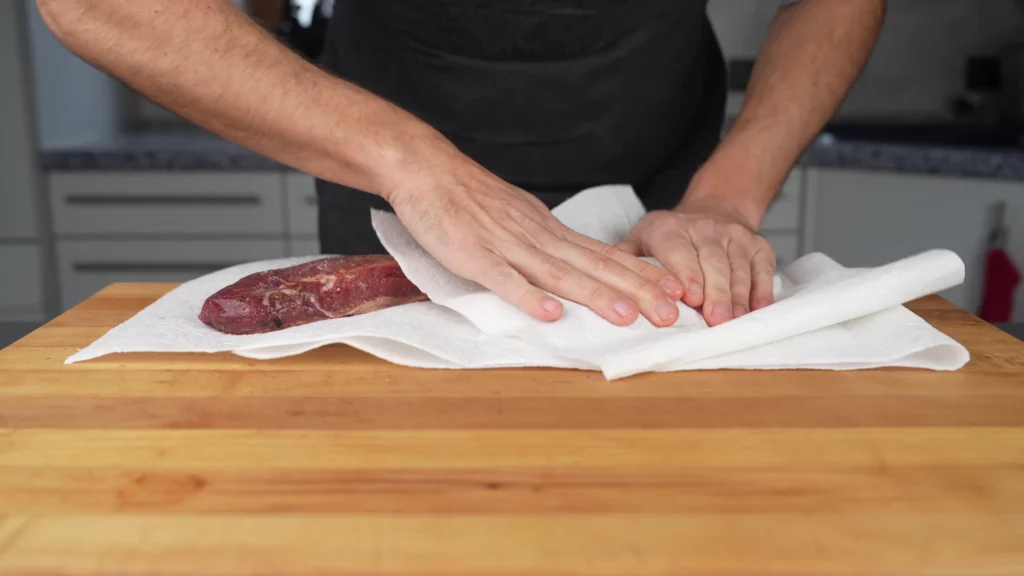
Remove from the bag and pat every side dry with kitchen paper. The surface should look matte rather than wet and shiny so it takes the smoke evenly.
Hang to develop the cured color
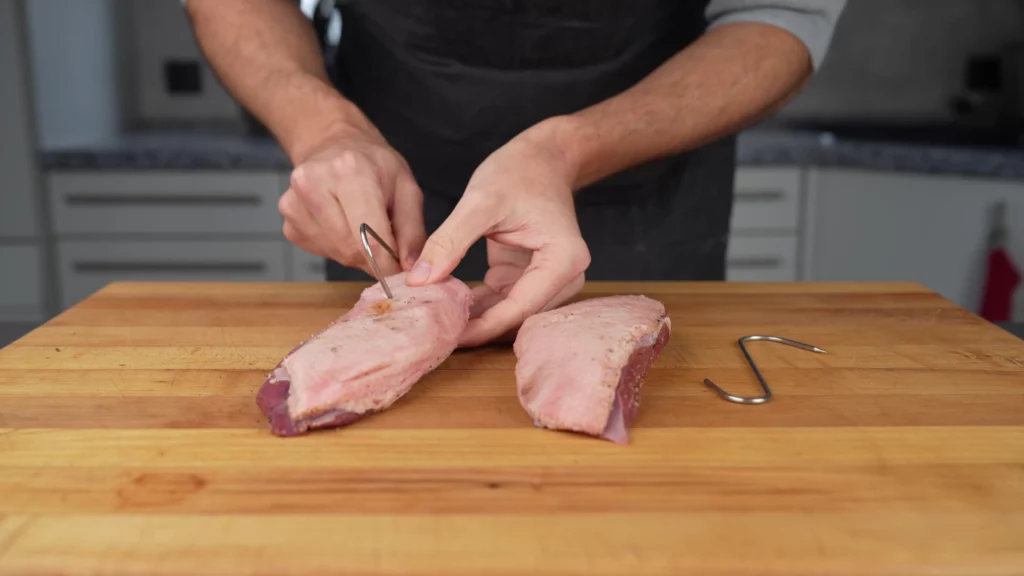
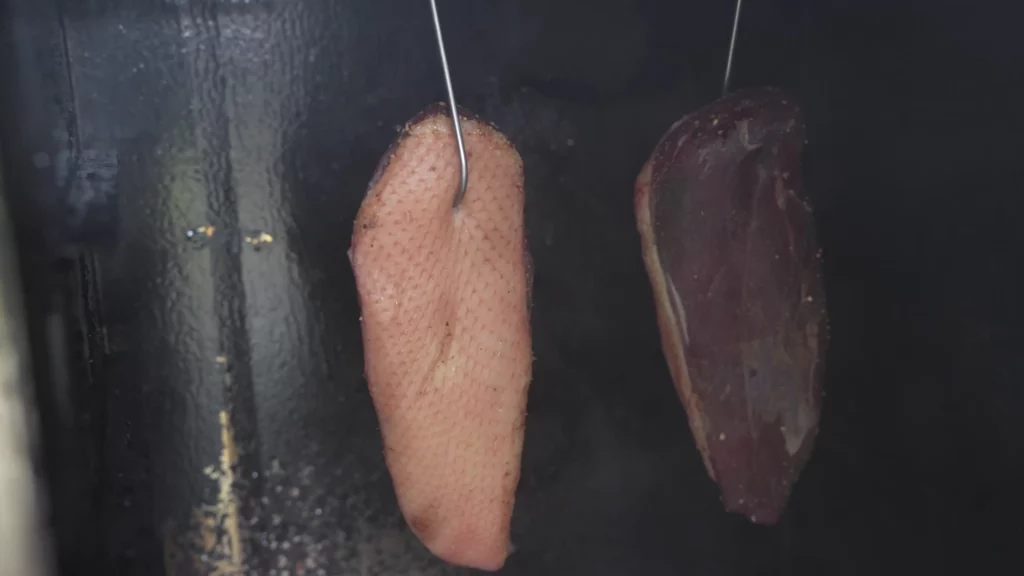
Tie with kitchen twine or hang on a hook. Hang for 24–48 hours at 15 °C to a maximum of 20 °C (59–68 °F) and about 80 % humidity. The cured color develops and the surface firms slightly. Keep the surroundings from becoming too dry or a hard rim can form and take smoke poorly.
Cold-smoking sessions
Cold smoke at a maximum of 20 °C. Alternate 12 hours of smoke with 12 hours of rest at the same temperature. Three or four smoking sessions are a good starting point for a mild smoke flavor that supports the quatre épices.
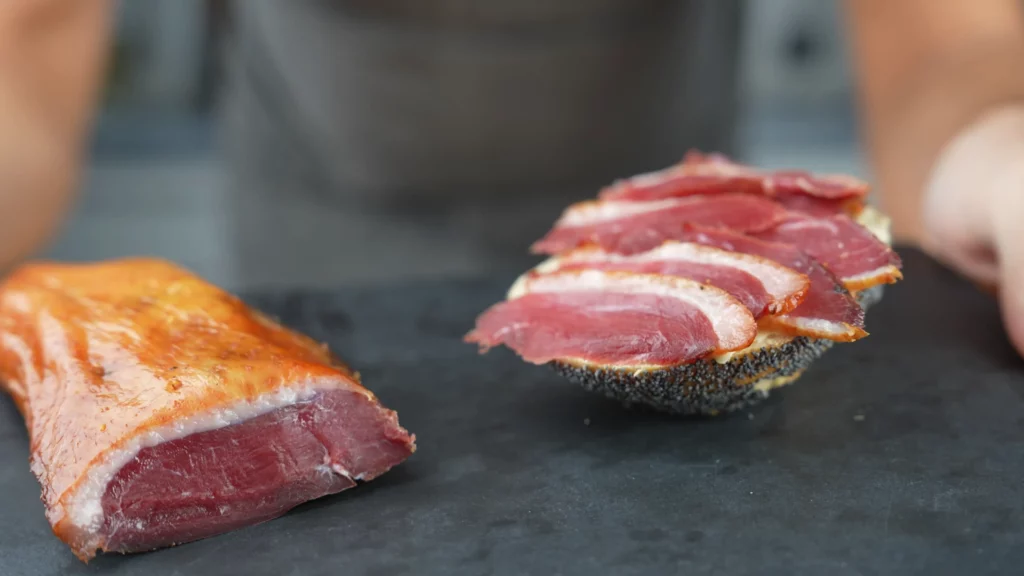
Your smoked goose breast is ready
You can slice the goose breast after the last smoke. About five days after smoking, it is still juicy and soft, the way I like it. For a firmer, more intense result, let it mature another 1–2 weeks under the same conditions. Your smoked goose breast is ready. Enjoy!
Frequently asked questions
How long does homemade smoked goose breast keep?
How long does homemade smoked goose breast keep?
Vacuum-packed in the fridge, it keeps for 4–6 weeks. Once cut and wrapped in cling film, use within 2 weeks. Frozen in a vacuum bag, it keeps for at least 6 months without losing flavor.
How long should I cure it?
How long should I cure it?
At least about 1.5 days per centimeter of thickness. For a typical 2–3 cm breast, that means 3–4.5 days in the fridge. Longer is fine; shorter leaves the cure and color uneven in the center.
What is quatre épices, and can I substitute it?
What is quatre épices, and can I substitute it?
It is a classic French mix of white pepper, ginger, nutmeg and cloves. I weigh the spices individually to control the proportions. You can use about 4 g ready-made quatre épices per kg goose breast instead.
Can I hot smoke it instead?
Can I hot smoke it instead?
Yes, but that makes a different product: cooked, hot-smoked goose breast, more like Kassler. For the dark, firm texture and intense flavor of raw-cured ham, cold smoke at a maximum of 20 °C.
Why is it too dry?
Why is it too dry?
The humidity may have been too low during color development or smoking. Aim for about 80 % during color development and moderate smoking conditions. Too much smoke or excessive heat can also dry it out. Stay below 20 °C and use several shorter sessions rather than one long one.