Biltong Recipe – How to Make Biltong at Home

- Type
- Ham
- Level
- Medium
- Rating
- Rate this recipe
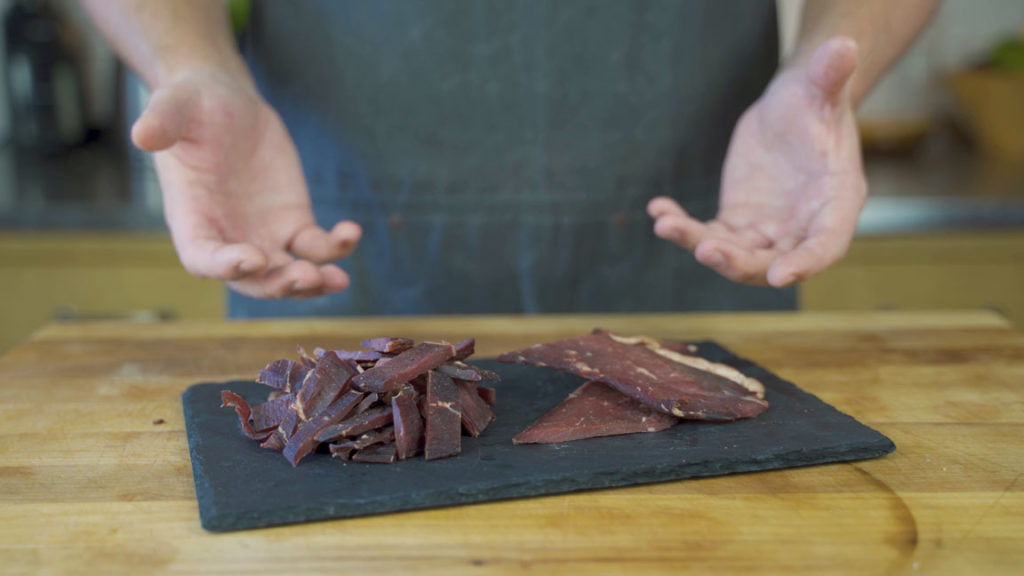
In this post I show you how you can make biltong yourself. With a moderate effort, you achieve a super tasty result.
Biltong is a dried meat and comes from Southern Africa.There are different ways of producing this type of meat in most countries (South Africa, Zimbabwe, Malawi, Namibia, Botswana and Zambia).
I’ve written down two variations for you to cure your meat below.
Variant 1 is the classic way. However, the ratio of apple cider vinegar and Worcester sauce is 3:1, which makes the meat very sour. Variant 2 is a milder version. If you don’t like it sour, I advise you to use the second version.
Here you can find the complete Biltong recipe as a video or to read through.
Have fun and good luck making it!

Table of Contents
Biltong – What do you need to make it?
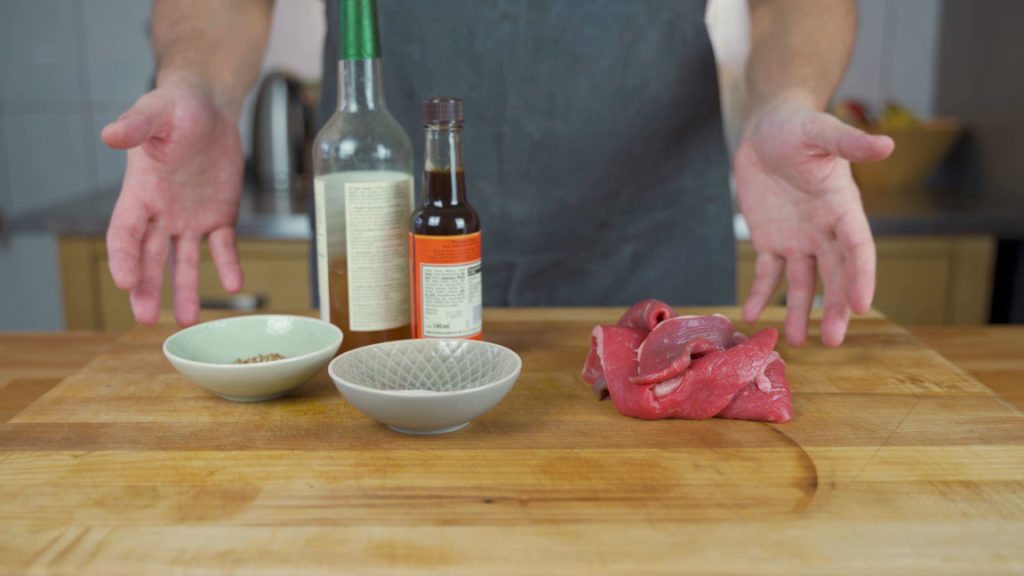
Ingredients per 1 kg
| Ingredient | Grams | Percent |
|---|---|---|
| beef top round or bottom round cut into thin slices | 1,000 g |
Spices per 1 kg
| Ingredient | Grams |
|---|---|
| salt | 22.5 g |
| coriander seeds | 6 g |
| black pepper | 3 g |
| Cure #1 | 2.5 g |
Additional information about the meat: As mentioned in the video, you can use different types of meat. Game meat is also a good choice. The same applies to different “cuts”. The biltong can also be prepared with thicker pieces. It does not always have to be lean either.
And…
Variant 1: (Classic variant – final product is already well sour)
- 150 ml apple cider vinegar
- 50 ml Worcester sauce
Variant 2: (My modified variant – less acidic)
- 100 ml apple cider vinegar
- 100 ml Worcester sauce
The equipment to make Biltong
Spice grinder / mortar
To grind your spices, it is best to use a spice mill. Alternatively, a mortar is also suitable. Or you can use already ground spices. I recommend to grind them yourself.
Make Biltong – Step-By-Step Instructions
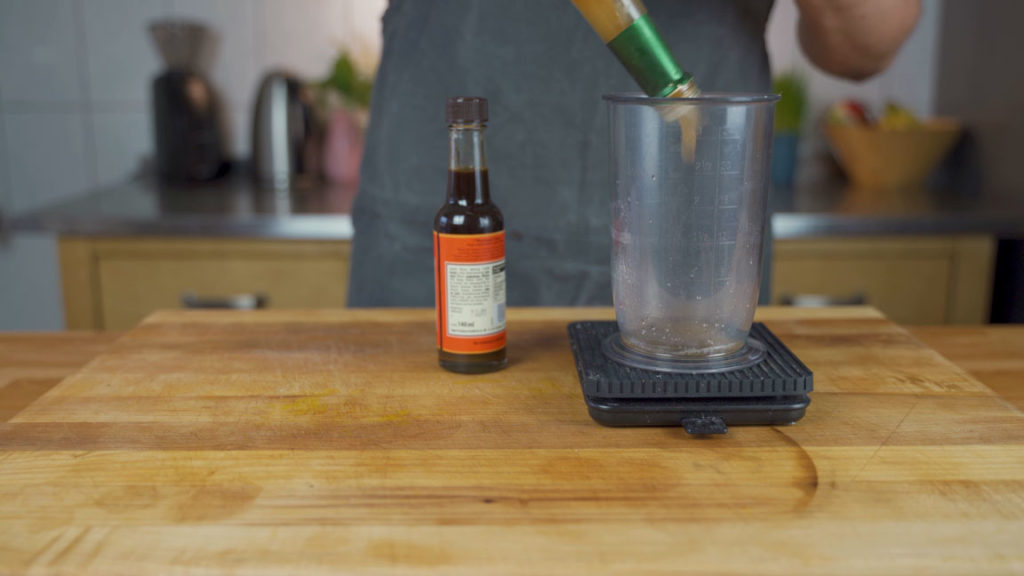
Mix the apple cider vinegar with the Worcester sauce in your desired mixing ratio.
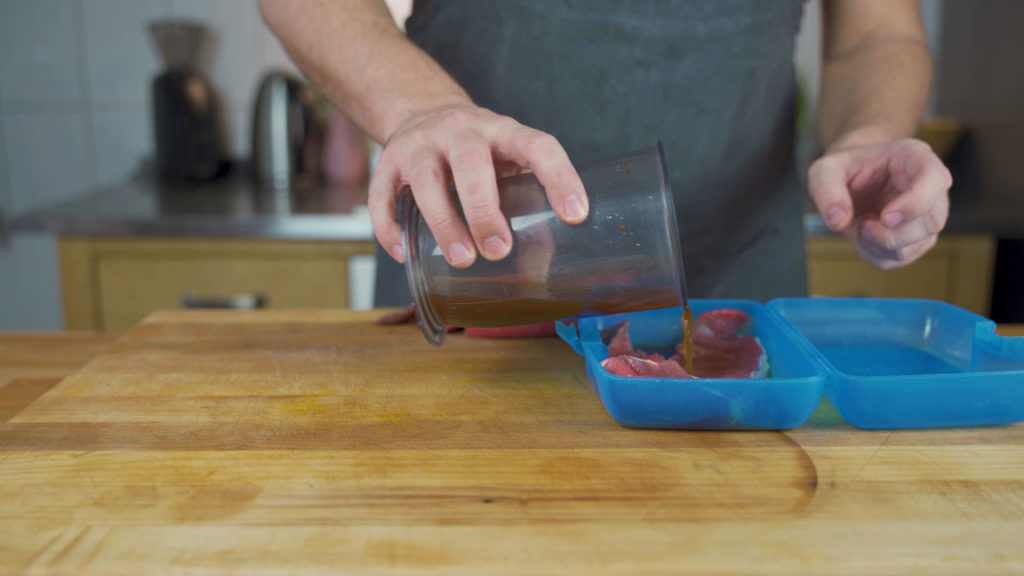
Soak the meat in the liquid.
Let it sit in the refrigerator for 3 – 4 hours.
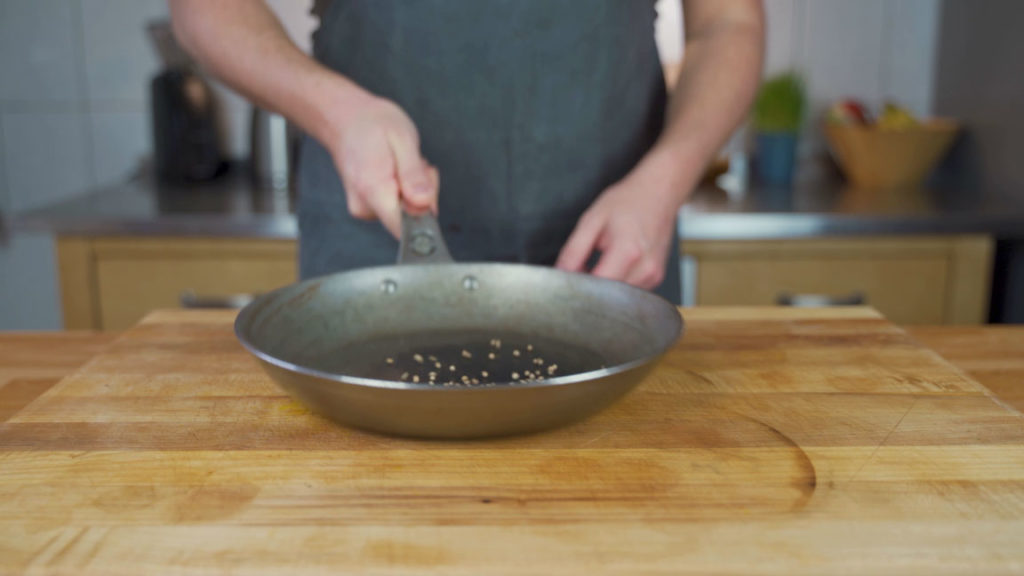
In the meantime, I recommend you toast the coriander seeds and then mortar them. Be careful not to burn them. You can do it without roasting. However, in my experiments, this greatly improved the results.
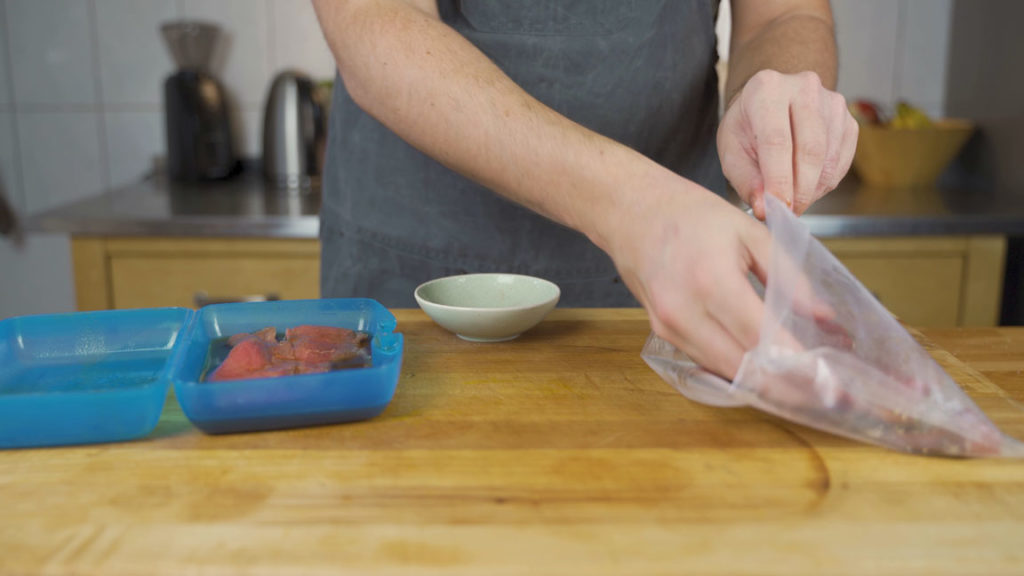
Drain the meat a bit and put it in a vacuum bag with the salt, cure and spices and vacuum it.
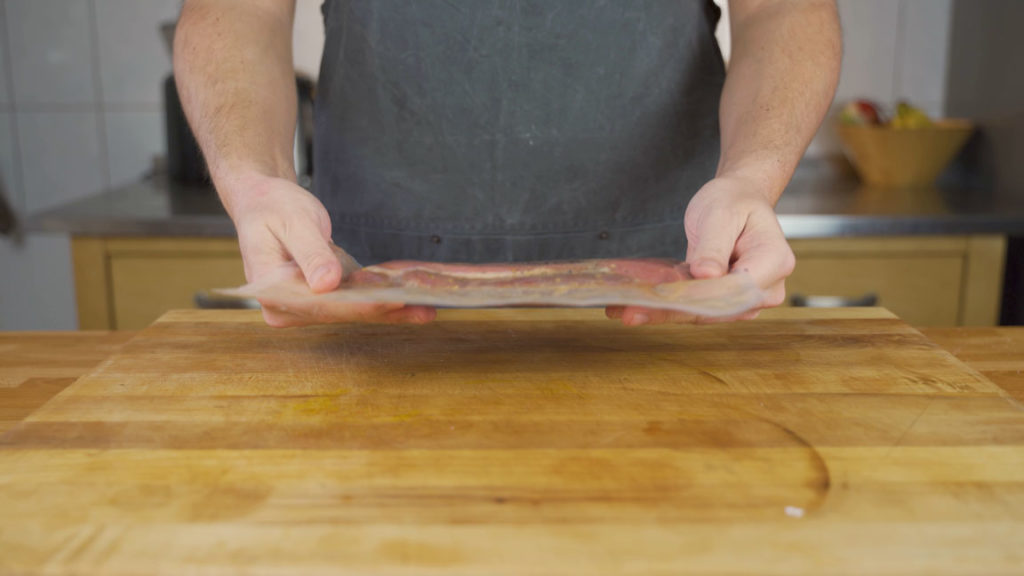
The meat must now be cured in the refrigerator for about 3 days. If you have a thicker piece, you need to cure it longer (guideline 1.5 days per cm of meat thickness).
Take the meat out of the bag. You will notice that the piece of meat has lost some liquid and has become firmer.
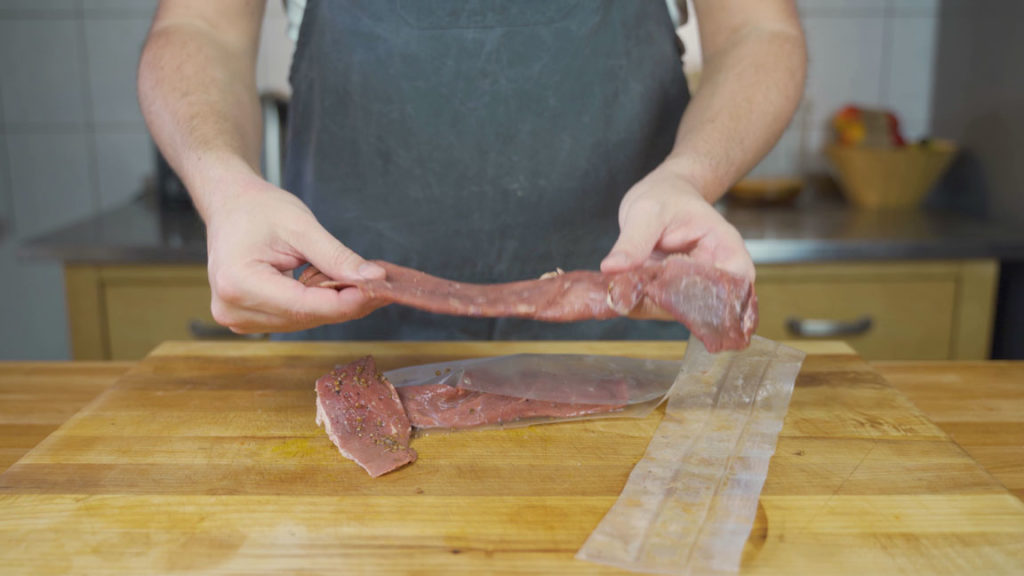
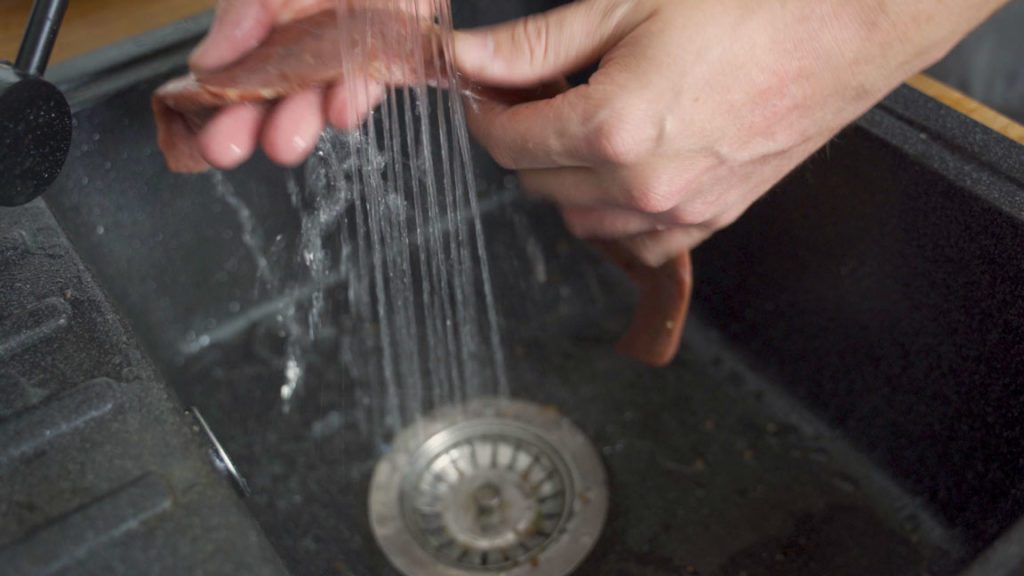
Rinse the spices under cold water and then dry it with a kitchen towel.
Now it is time to dry your meat. You can hang it up or dry it on a rack (turn it regularly). If you dry it in the cellar, the temperature should be <15 degrees Celsius (59 °F) . Alternatively, you can dry it in the refrigerator. The length depends on how dry you want the meat to be. For my thickness, 2-3 weeks gave good results.
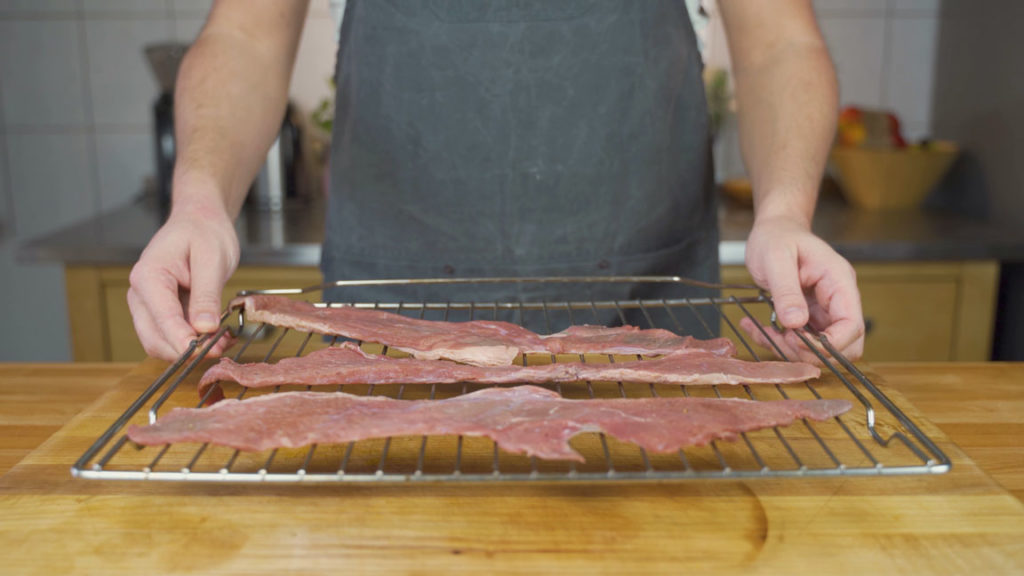
Your Biltong is ready 😄. Enjoy it.
Make your own Biltong – Alternative Drying / Oven Drying
If you don’t want to wait that long, there is the alternative to dry your biltong with a dehydrator or in the oven.
Method #1 Dehydrator
- Depending on the type of dehydrator you have, you can hang the meat in the dehydrator or spread it out on the rack.
- Afterwards you can dry the meat at about 40 °C. It is important that the meat can dry well from all sides.
- ATTENTION: The time will of course change depending on the thickness and desired firmness. Assuming it’s as thick as the one I showed, I’d start with 12 hours and then decide if it should be dried further.
Method #2 Oven
- Works basically the same as in the dehydrator. Turn the oven on low heat and stick a wooden spoon between the door and oven. This will allow the moisture to escape.
- Spread the biltong on a rack and dry it to the desired firmness.
- Important: If you want to dry it on a baking tray with baking paper, then you must turn the pieces of meat every 1-2 hours, so that everything can really dry evenly.
Depending on the oven, the lowest setting may be already too warm. So make sure that it does not get hotter than 40 degrees.
Frequently asked questions
What is biltong, and how is it different from beef jerky?
What is biltong, and how is it different from beef jerky?
Biltong is South African dried meat, and the short answer is that it is never cooked. The strips are cured with salt, vinegar and coriander and then simply dried in cool air until they are as firm as you want them. Nothing in this recipe heats the meat and nothing smokes it. That puts biltong much closer to a coppa or a bresaola than to anything off a grill.
Beef jerky is the one people compare it to, and it is made the other way round: jerky is dried with heat or over smoke, and it is usually marinated sweet. Biltong is dried cold and seasoned sour, which is why the vinegar and the toasted coriander in step 4 matter so much here. The result is more tender than jerky and tastes more of beef and less of the marinade. If you have only ever had jerky, that difference is the thing to expect.
Which meat should you use for biltong?
Which meat should you use for biltong?
Top round and bottom round are the classic cuts and they are what the ingredient list above uses, because both are lean, even-grained and easy to slice cleanly. Rump steak works too. So does game: venison and wild boar both make excellent biltong, and the note under the ingredient list already points you at them.
It does not have to be completely lean, though, and that is worth saying because most people assume it does. A little fat carries flavour and keeps the finished biltong from eating dry. The one thing to know is that fat shrinks less than muscle while it dries, so a fatty strip will end up looking fattier than it started. Pick the cut you can slice evenly and let the drying do the rest.
What is the shelf life of Biltong?
What is the shelf life of Biltong?
Your biltong will keep for several months in the refrigerator. The danger here is that it dries out over time and becomes tough. Therefore, it is best to always pack it airtight or portion it in a vacuum.