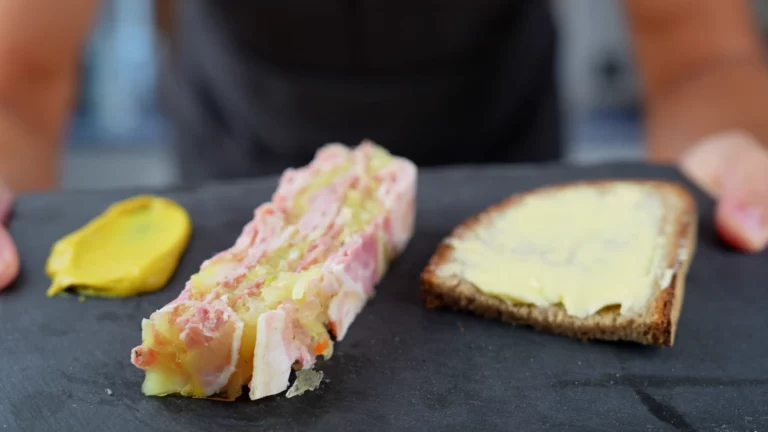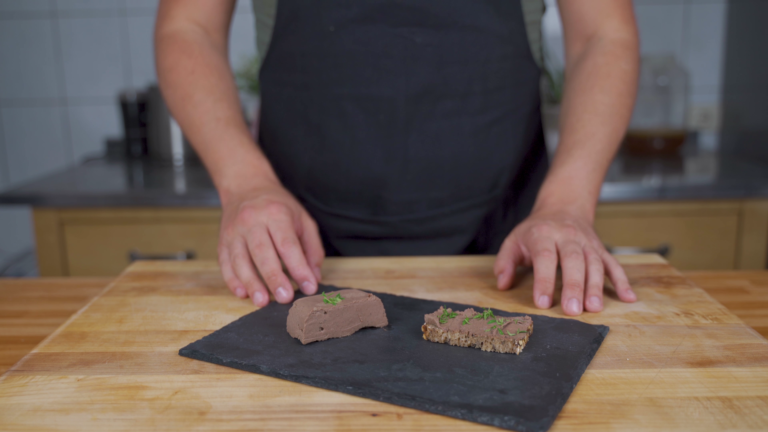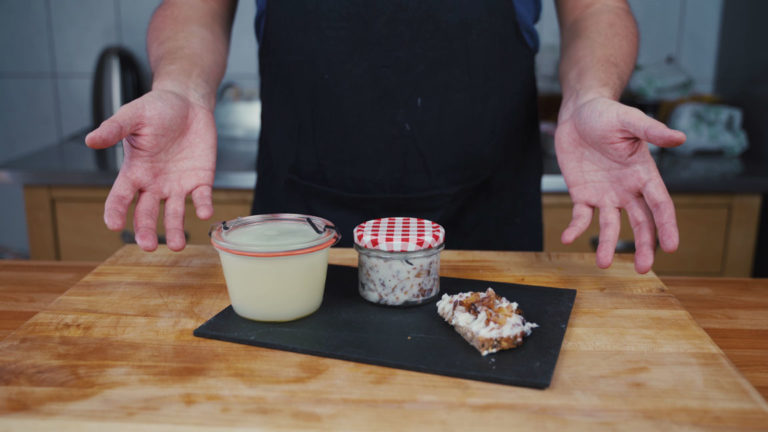
Paprikapastete – Easy, Quick, and Delicious


- Type
- Pâté & terrine
- Level
- Medium
- Rating
- Rate this recipe
In this post, you’ll learn how to make your own Paprikapastete. It’s easy and super quick to make.
Whether as a spread on fresh bread, for a snack, or as a hearty treat between meals. The Paprikapastete is incredibly versatile. The combination of meat and aromatic paprika makes it especially juicy and rich in flavor. And the best part: You only need a few ingredients and can adjust the texture to your liking—from smooth to slightly chunky.
If you love pâtés, I have a liver pâté and Pâté de Campagne recipe for you as well.
Here you can find the complete Paprikapastete recipe as a video or to read through.
Have fun and good luck making it!

Table of Contents
Paprikapastete – What do you need to make it?

With the right ingredients and a little patience, you can whip up this specialty in no time.
Ingredients per 1 kg
| Ingredient | Grams | Percent |
|---|---|---|
| pork shoulder | 450 g | 45 % |
| pork jowl | 200 g | 20 % |
| back fat | 200 g | 20 % |
| ice water | 150 g | 15 % |
Spices per 1 kg
| Ingredient | Grams |
|---|---|
| pickled bell peppers (Important: drained and patted dry!) | 150 g |
| fresh onions | 50 g |
| salt | 15.5 g |
| Cutter Phosphate (e.g BRIFISOL 414, PhosThis!, Ames Phos) | 4 g |
| Cure #1 | 2.5 g |
| white pepper | 2.5 g |
| mace | 2.5 g |
| garlic powder | 2.5 g |
| ginger | 1.5 g |
The equipment to make Paprikapastete
Pie dish / Jars / Aluminum tray / Other containers
It’s up to you which container you use to make the Paprikapastete. You can achieve the same result with any of them.
Paprikapastete – Step-By-Step Instructions
Follow these steps carefully to make the perfect Paprikapastete.
Cut the pork, pork cheek, and pork back fat into pieces suitable for mincing. Make sure to keep the meat and fat separate.

Place the meat pieces in the freezer for 1 to 2 hours. This will make mincing easier later and prevent the mixture from getting too warm while mixing.

Now mince the meat, onion, and fat. Depending on how coarse you want your final sausage meat to be, you can use different mincing discs here. I use the finest disc (3 mm). I recommend mincing the fat and meat separately. This will make cutting easier later on.

Place the lean meat along with the cutting aid and spices into the food processor or cutter and turn it on. Mix the mixture on the highest setting and gradually add the ice water.

Now you can add the fat and mix it in. Make sure the mixture doesn’t exceed 12 degrees. Check the temperature regularly.

Add the bell peppers to the mixture. Depending on how finely chopped you want the pieces to be, process them for a shorter or longer time.

Grease your baking dish and pour the mixture in. Make sure as few air pockets as possible form. This will ensure a nice cross-section later.

Score the surface of the Paprikapastete in a cross pattern. This helps it take on a nice shape while baking and prevents it from cracking randomly.

Now it’s time to bake. First, bake in a preheated 180°C (356°F) oven for 15 minutes. Then reduce the temperature to 120°C (248°F) and finish baking. The baking time varies depending on the size of your pan (rule of thumb: 1 hour per kg).
Alternatively, you can measure the internal temperature and bake it until it reaches an internal temperature of 69–72 °C(156–162 °F).
Then let the Paprikapastete cool for 10 minutes. Remove it from the pan and serve.

Your Paprikapastete is ready. Enjoy! 😄
Frequently asked questions about making your own Paprikapastete
How long does your Paprikapastete last?
How long does your Paprikapastete last?
In the refrigerator, the Paprikapastete will generally keep for 3–5 days in a clean, airtight jar. If you can it in jars, keep them in the fridge and use it within 2–3 weeks.
Can I freeze Paprikapastete?
Can I freeze Paprikapastete?
Yes, that works just fine. It’s best to freeze it in portions so you can easily thaw it later. The flavor and texture will remain intact.
How do I get the right texture?
How do I get the right texture?
That depends entirely on your taste. For a finer pâté, you can puree the mixture; for a rustic version, it’s enough to just coarsely mince it.
Which type of bell pepper works best?
Which type of bell pepper works best?
You can use either pickled or dried bell peppers. Pickled bell peppers should be well-drained and patted dry so the Paprikapastete doesn’t become too runny. Dried bell peppers provide a more intense flavor and should be soaked beforehand.
Can I make the Paprikapastete without meat?
Can I make the Paprikapastete without meat?
Yes, you can replace the meat with ingredients like chickpeas, lentils, or cream cheese to make a vegetarian version.
What does Paprikapastete go best with?
What does Paprikapastete go best with?
Traditionally, it goes well with fresh bread, baguette, or country bread. However, it also works well as a dip, with grilled dishes, or as part of a snack platter.