
Make your own Käsekrainer- Wow they are delicious

- Type
- Cooked sausage
- Level
- Medium
- Rating
- Rate this recipe
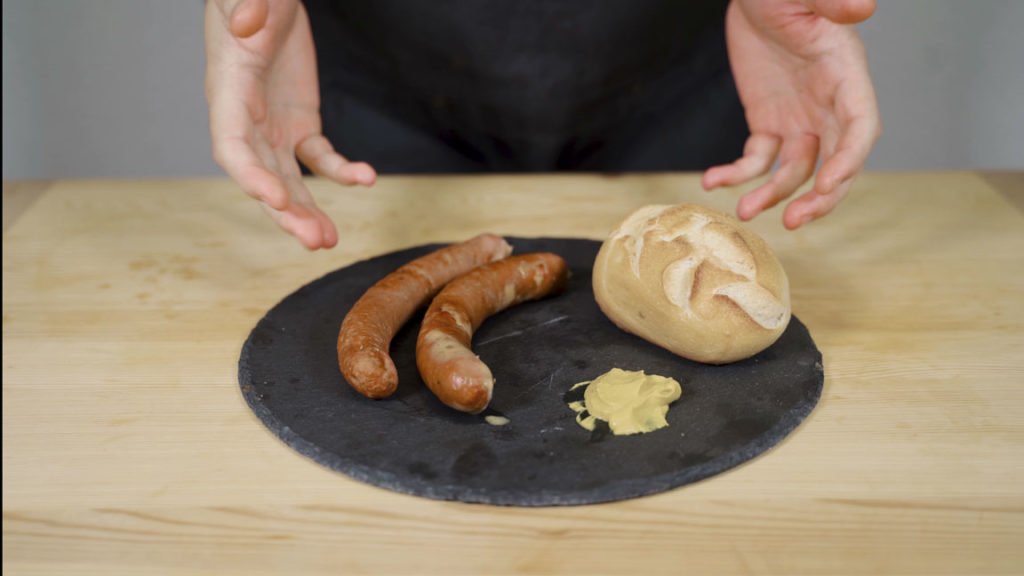
In this post I show you how you can make Käsekrainer yourself.
Käsekrainer is always associated with Austria these days. However, there is actually a bit of a dispute about where the original comes from.
They are often just referred to as “Krainer” or “Eitrige”. Where this name comes from is clear once you cut into a fresh hot sausage. In Slovenia they are called “Kranjska Klobasa” and are now geographically protected.
Whatever you call it, it’s a lightly smoked boiled sausage with a hint of garlic.
You’ll need a smoker to prepare it. Alternatively, you can just scald them, but you are then missing out on the smoke flavor.
So now enough backstory. Off to the Käsekrainer recipe either as a video or to read through.
Have fun and good luck making it!

Table of Contents
Käsekrainer – What do you need to make it?
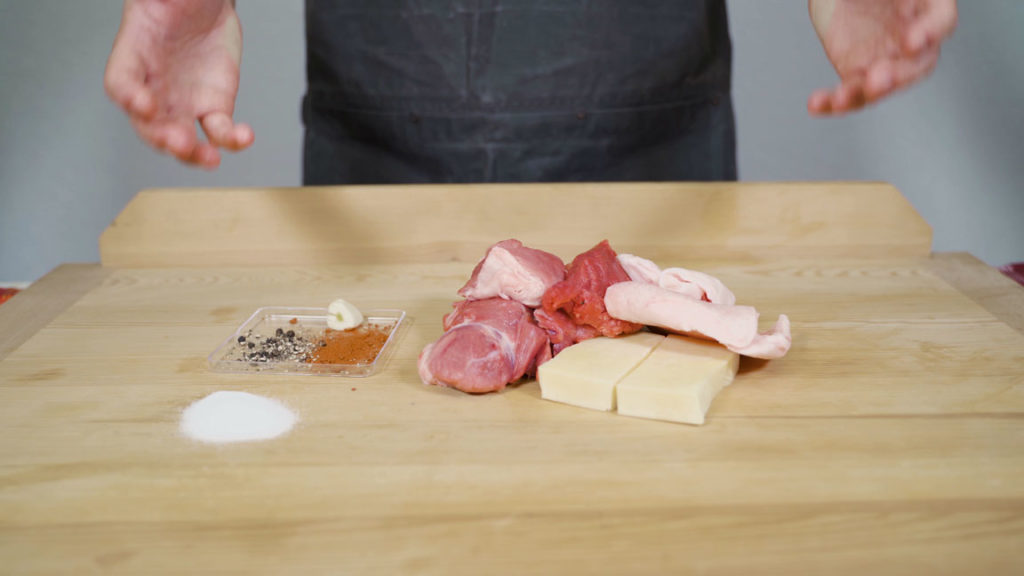
Ingredients per 1 kg
| Ingredient | Grams | Percent |
|---|---|---|
| Käsekrainer | ||
| pork shoulder | 550 g | 55 % |
| pork loin fat | 150 g | 15 % |
| lean beef | 100 g | 10 % |
| cheese (200 g e.g. Emmental or mountain cheese) | — | 20 % |
Spices per 1 kg
| Ingredient | Grams |
|---|---|
| salt | 15.5 g |
| garlic | 4 g |
| Cure #1 | 2.5 g |
| black pepper | 2 g |
| paprika sweet | 2 g |
If the mixture becomes too solid, you can add a little water (5 – 10 %).
Pork casing caliber 28/30
The equipment to make Käsekrainer
You need a meat grinder to “grind” the meat. The meat is chopped into small chunks with it.
Spice grinder / mortar
To grind your spices, it is best to use a spice mill. Alternatively, a mortar is also suitable. Or you can use already ground spices. I recommend to grind them yourself.
Sausage filler / attachment for the meat grinder / hand filling funnel
You need this to get your meat mass into the casing. For starters, a filler attachment for your meat grinder or a hand filler funnel will work for this. I use this one.
Natural casings
For filling your mass you need natural casings. I use Pork casing caliber 28/30.
Smoker
You need the smoker to smoke your Käsekrainer.
Make Käsekrainer – Step-By-Step Instructions
Cut your meat and back fat into strips. The size varies depending on how big your meat grinder is. The bigger the grinder, the bigger your pieces of meat can be.
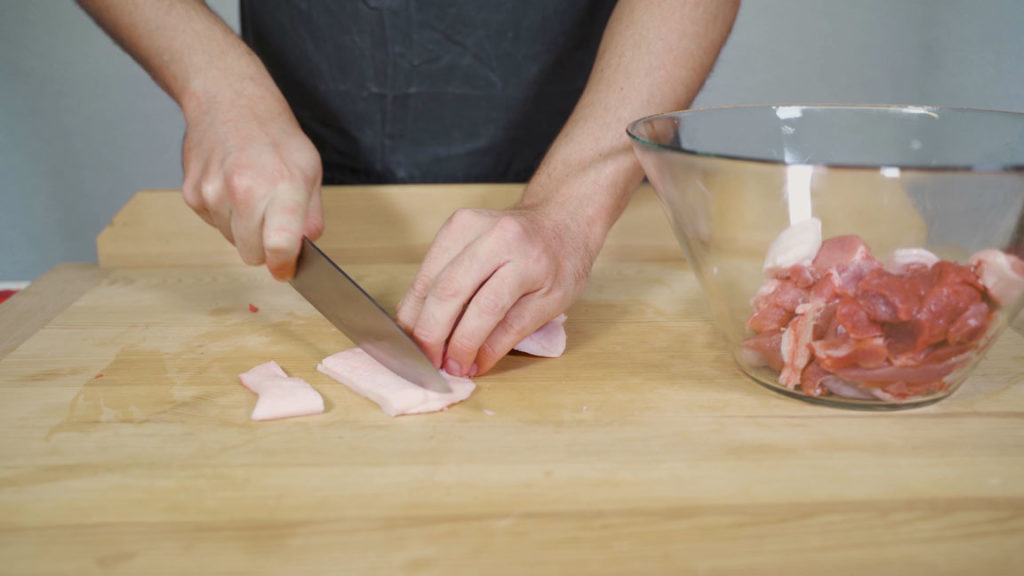
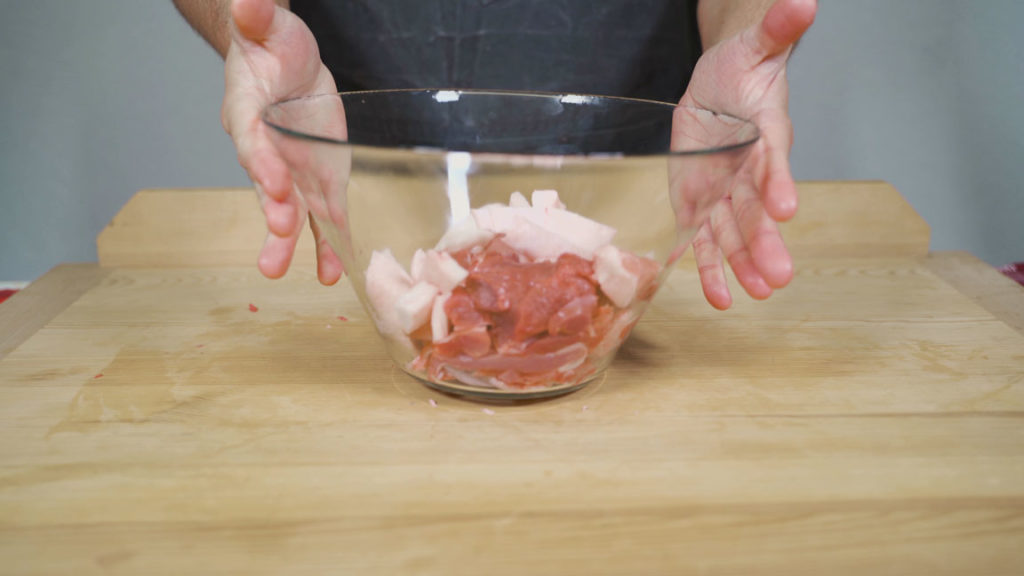
Put the meat in the freezer for 1-2 hours. This will help later on with the grinding process and the temperature.
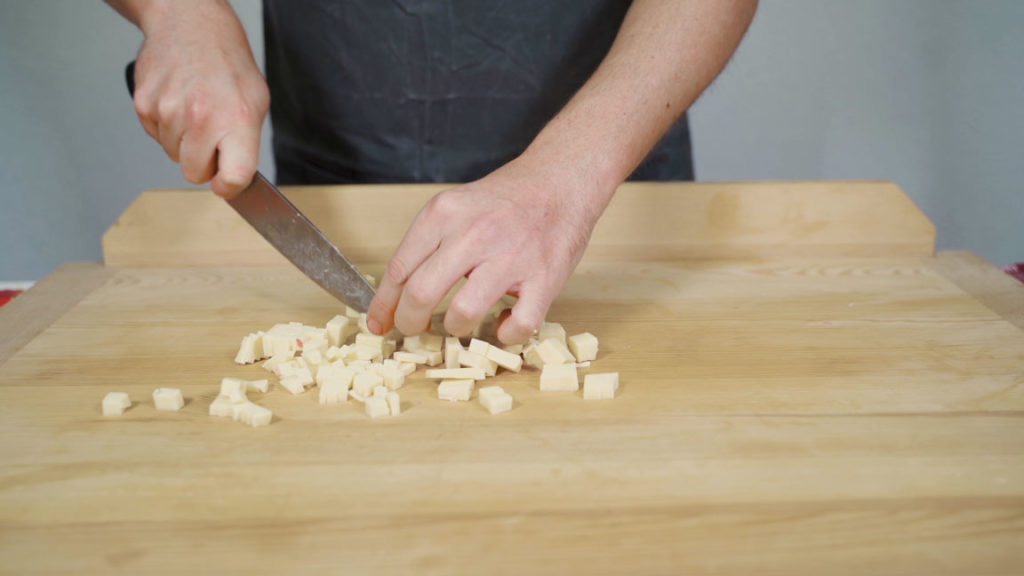
Cut the cheese into small cubes. The size determines the look later on. After dicing, I usually go through 2-3 times with the knife. This way I get uneven pieces.
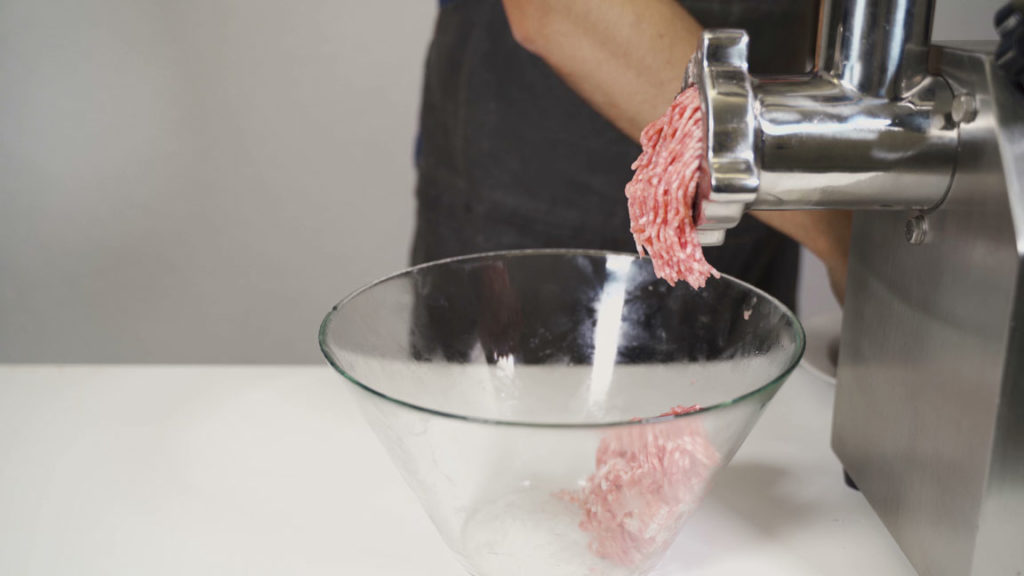
Now it’s time to grind the meat and the garlic. Grind the meat twice through the finest perforated disc. If you want the sausage a little coarser, then once is enough.
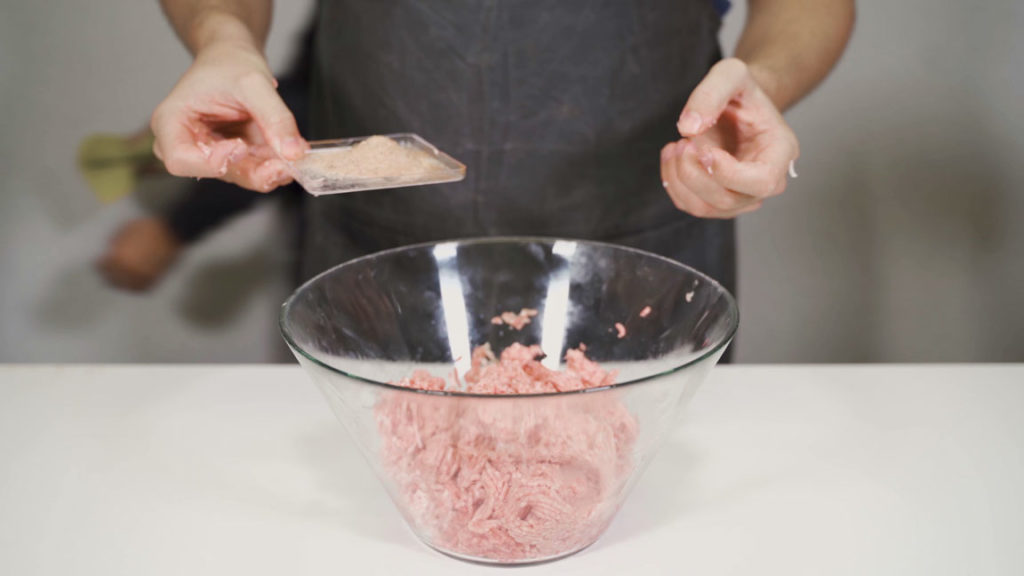
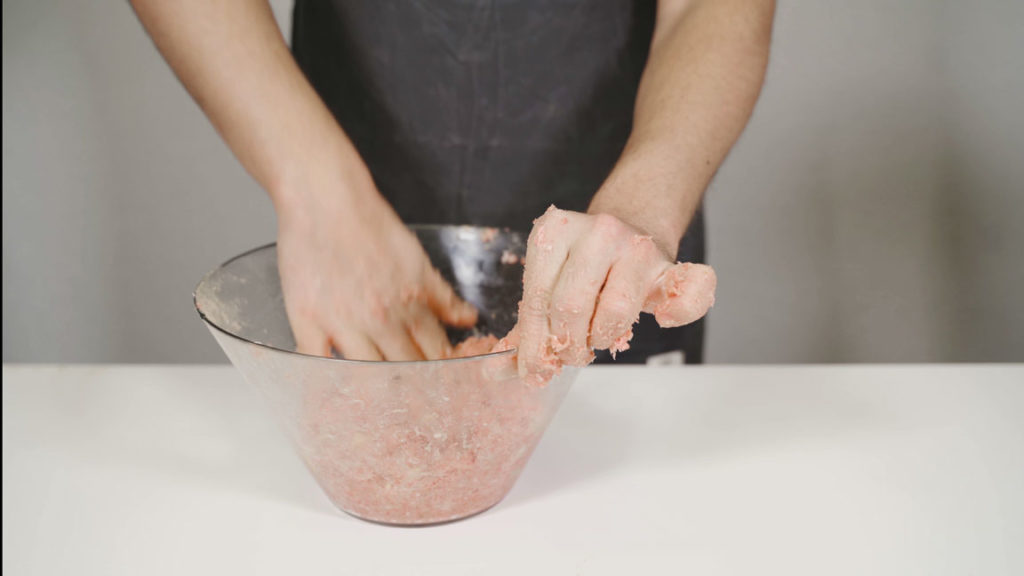
Mix the mass until it has a strong binding. You can do this either by hand or with a machine with a dough hook. If you find the mixture too sticky and firm, you can add a little water (5 – 10%).
You can fill the mass into casings. Make sure that not much air gets into the casings. I use pork casing caliber 28/30.
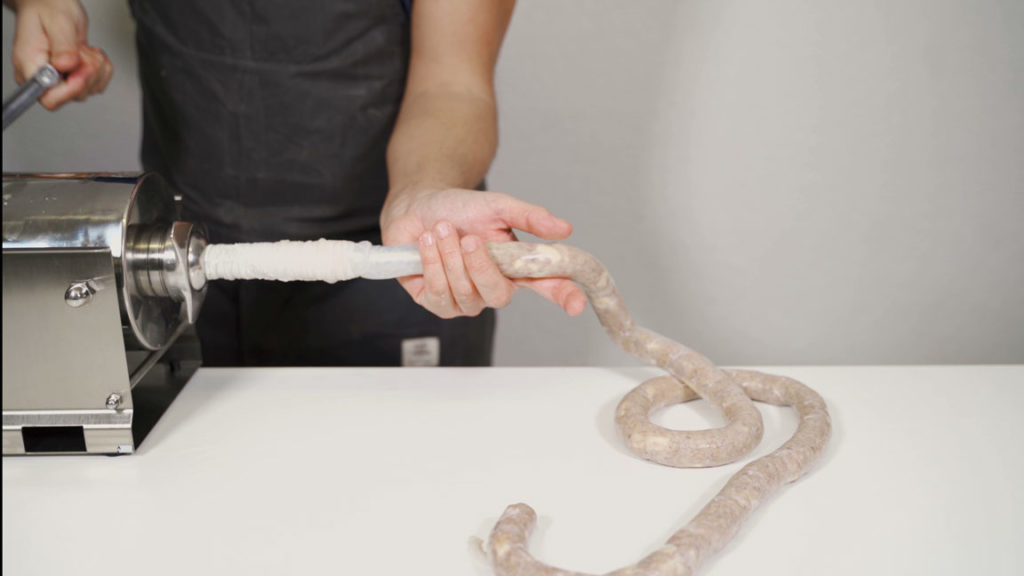
Now it is time to link them off. You can decide for yourself how big your Käsekrainer should be. Simply twist off one sausage, leave one out and then twist it off again.
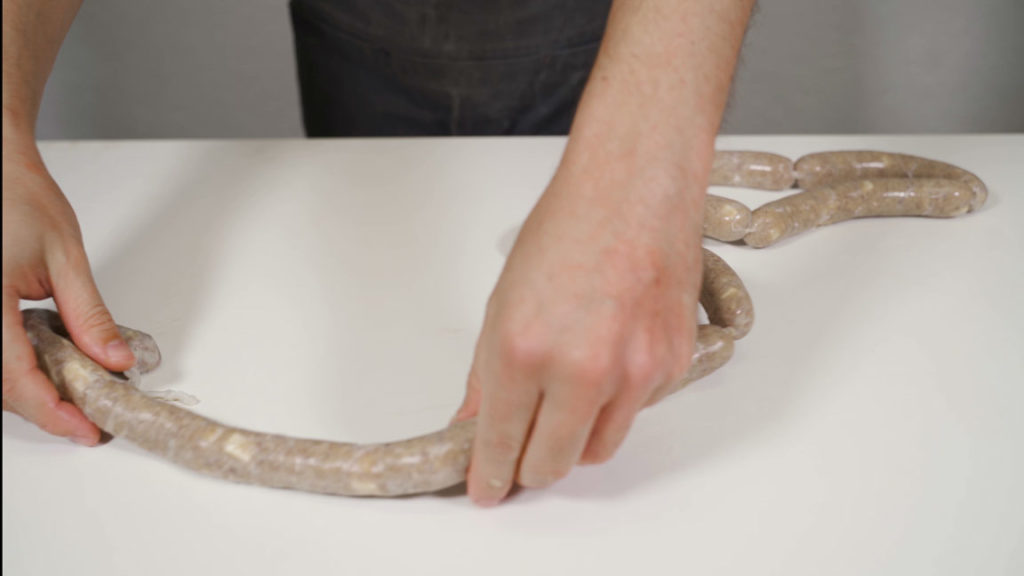
Hang your Käsekrainer in the smoker to dry for about 1 hour. Alternatively, you can let them dry like I did without smoke, for 10-15 minutes at 40 degrees Celsius (104 Fahrenheit) without smoke.
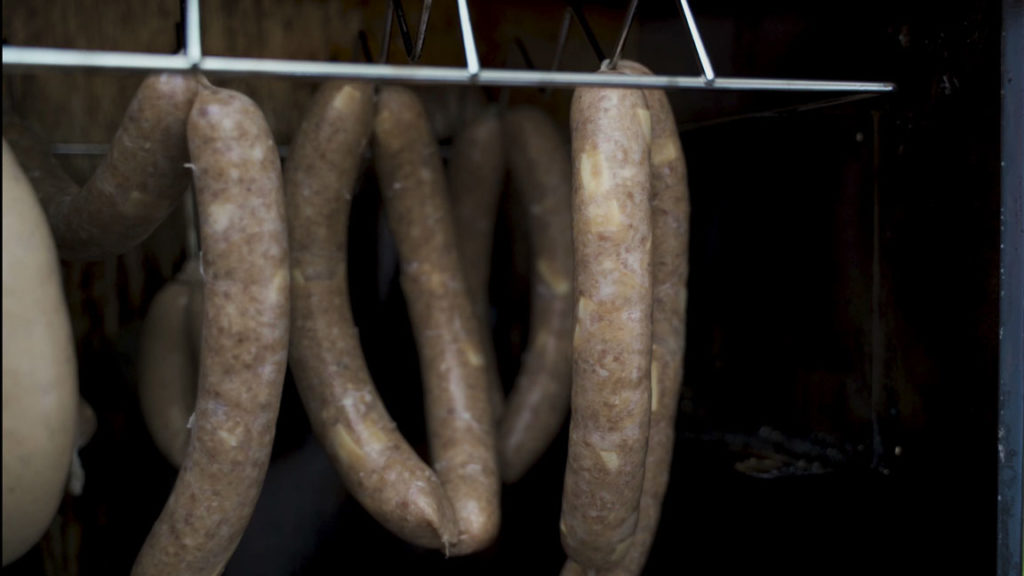
When your Käsekrainer are dry, you can smoke them at around 70 C° (158 Fahrenheit) for 45-60 minutes. The duration depends on your personal preferences. Depending on how much smoke and what color you want.
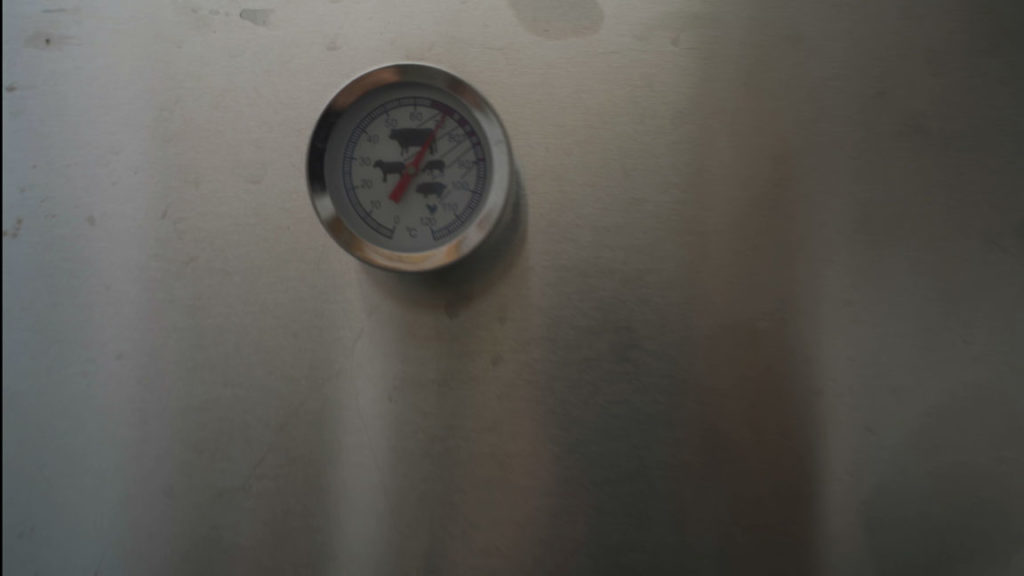
After smoking, the Käsekrainer must be scalded for about 15 minutes at 75 C°(167 Fahrenheit).
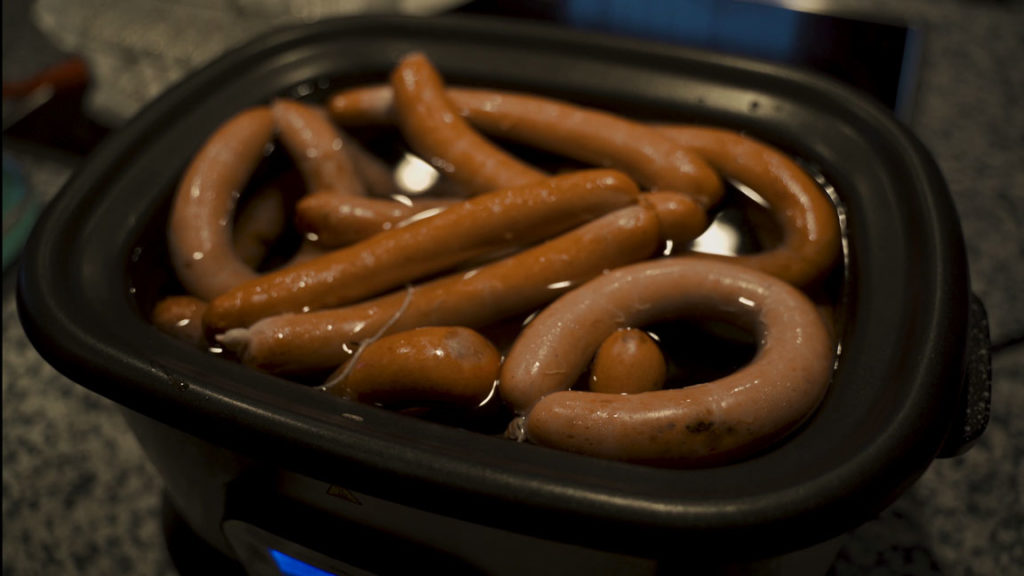
Your Käsekrainer are ready. Enjoy.
Frequently asked questions
What is a Krainer sausage?
What is a Krainer sausage?
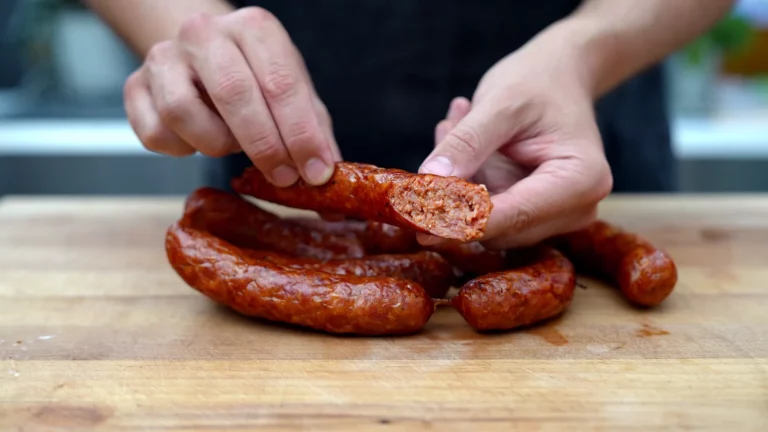
A Krainer is a lightly smoked cooked sausage, and a Käsekrainer is the same sausage with cheese cubes in the sausage meat, usually Emmental or a mountain cheese. The cheese is the point of it: it melts while the sausage is scalded and runs out of the cut end when you slice into a hot one. That is where the Austrian nickname “Eitrige” comes from.
The spellings all point at the same sausage. Krainer, Krainerwurst, Kase Krainer and Käsekrainer are one thing, and the word comes from Krain, a historical region straddling what is today Slovenia and Austria. In Slovenia the sausage is called Kranjska Klobasa and is geographically protected; in Austria it is the Käsekrainer. Where the original comes from is still argued about.
Which spices go into Käsekrainer?
Which spices go into Käsekrainer?
Traditionally only two, pepper and garlic, next to the salt and the Cure #1. That is the whole seasoning. I add sweet paprika on top of it because I like the slightly sweet note it gives, and that is a matter of taste rather than a rule. Ready-made Käsekrainer spice mixes exist too, but with pepper, garlic and paprika you are on the safe side.
What is the shelf life of Käsekrainer?
What is the shelf life of Käsekrainer?
Ready brewed in the refrigerator they can be kept for about 1 week. Vacuum packed in the refrigerator for about 3 weeks. Alternatively, you can also freeze them longer.
Wonderful Recipe love your way
I'm prepping in advantage for a party. Can I skip the step of scalding the sausages and just freeze the sausages after a light smoke. Then on the day of the party I'll make sure they are grilled upto a safe internal temperature of 75c?