German Pretzel Recipe: Homemade Laugenbrezeln

- Level
- Easy
- Rating
- Rate this recipe
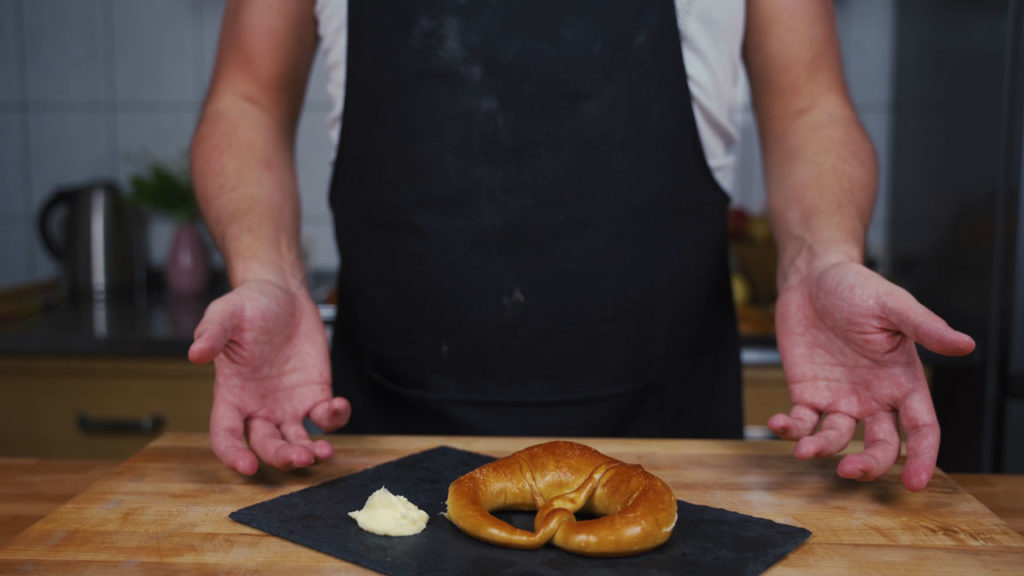
In this post, I’ll share my German pretzel recipe. Crisp outside, fluffy inside and better than the bakery’s.
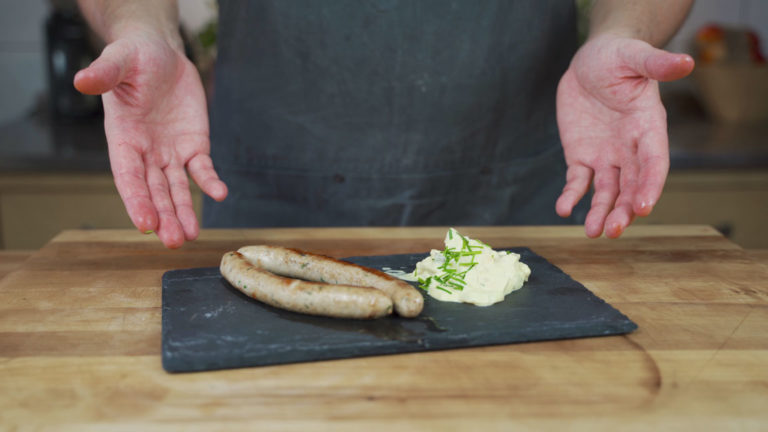
The German name varies by region: Brezel, Brezn, Bretzn or Breze all mean the same thing. This traditional Bavarian lye-dipped bread is often eaten in Bavaria with Weisswurst at a classic Weisswurst breakfast, or with butter.
The classic brown color and bold flavor come from dipping the pretzel in lye solution. I’ll show you how, step by step. You’ll also find a shaping guide and three different dipping solutions.
Preparation takes about 60 minutes.
You can read the complete pretzel recipe here.
Have fun and good luck making it!
German pretzels – ingredients and equipment
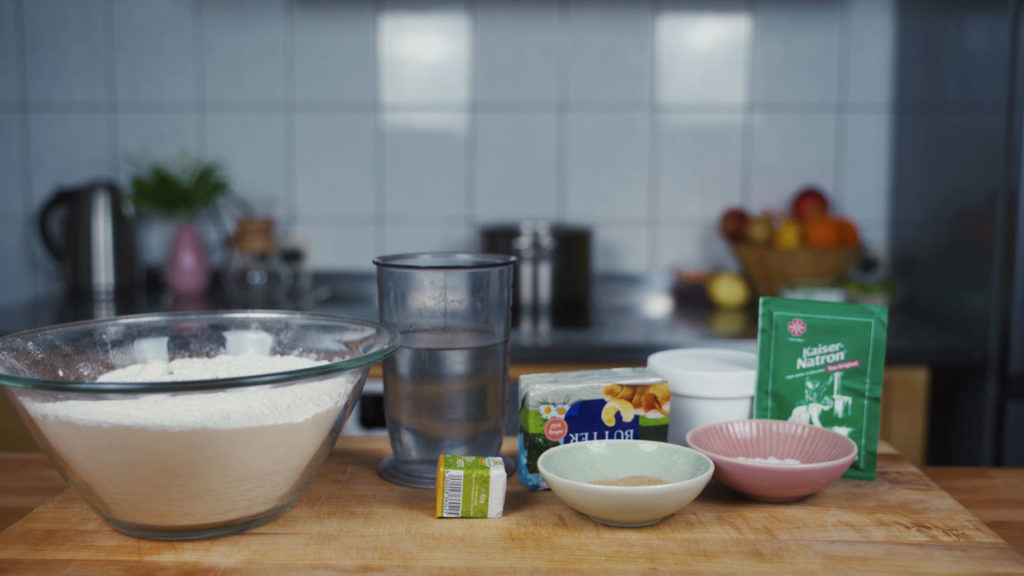
Ingredients per 1.5 kg
| Ingredient | Grams | Percent |
|---|---|---|
| Ingredients for 16 pretzels | ||
| wheat flour (German type 550) | 1,000 g | |
| lukewarm water | 500 ml | |
| butter | 70 g | |
| salt | 20 g | |
| brown sugar | 16 g | |
| cube of fresh yeast (42 g) or 2 packets of dry yeast (7 g each) | 1 | |
| Coarse or fine salt for sprinkling | — | |
Equipment
- Large mixing bowl
- Silicone spatula or stand mixer
- Glass bowl for the lye solution (no metal)
- Rubber gloves (for handling NaOH)
- Baking sheet with parchment paper or a silicone mat
German pretzels – step-by-step instructions
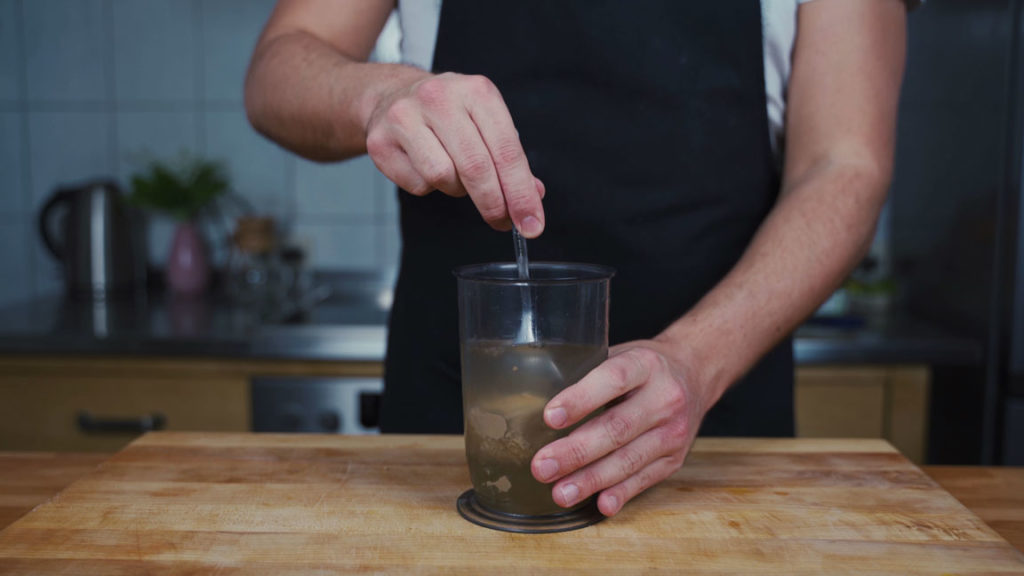
Dissolve the yeast
Dissolve the yeast in lukewarm water and add the sugar. Stir well until the yeast dissolves completely, then leave for 10 minutes. Small bubbles on the surface show that the yeast is active.
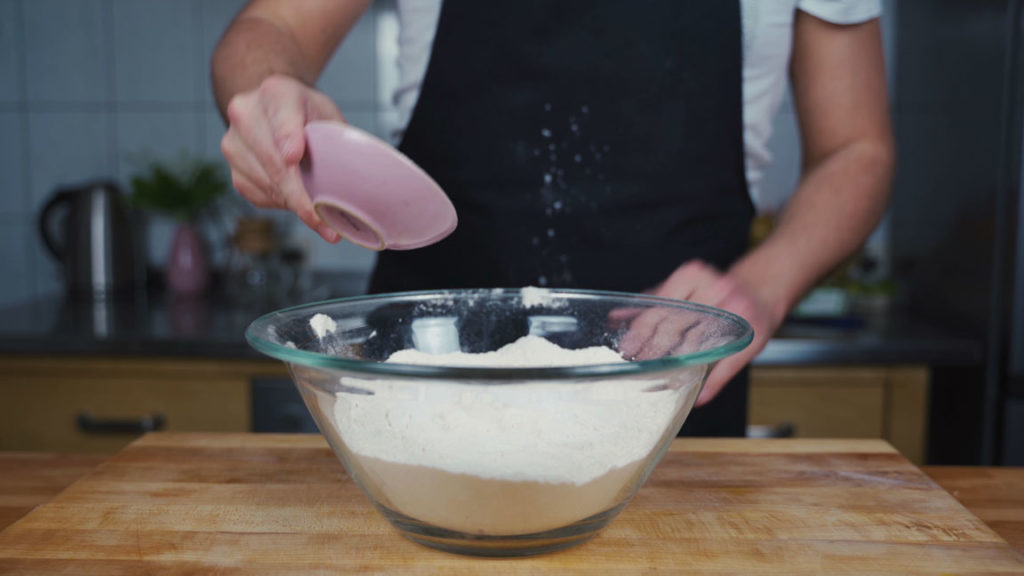
Mix the flour and salt
Mix the flour and salt in a large bowl. Stir thoroughly with a spoon to distribute the salt evenly.
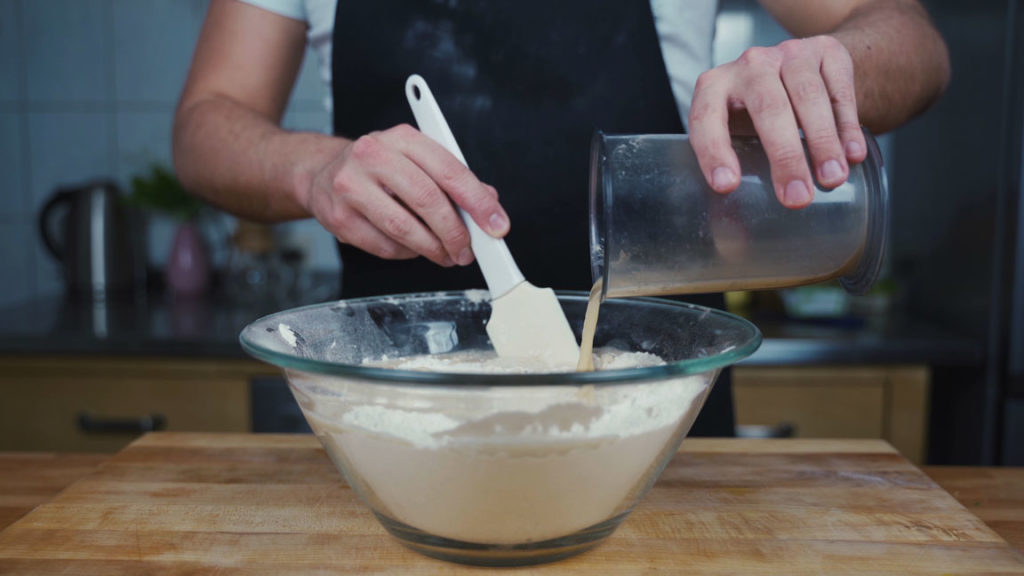
Add the yeast mixture to the flour
Make a small well in the flour, then pour in the water, yeast and sugar mixture so the liquid spreads well. Make sure all the yeast goes from the container into the dough.
Work in the butter
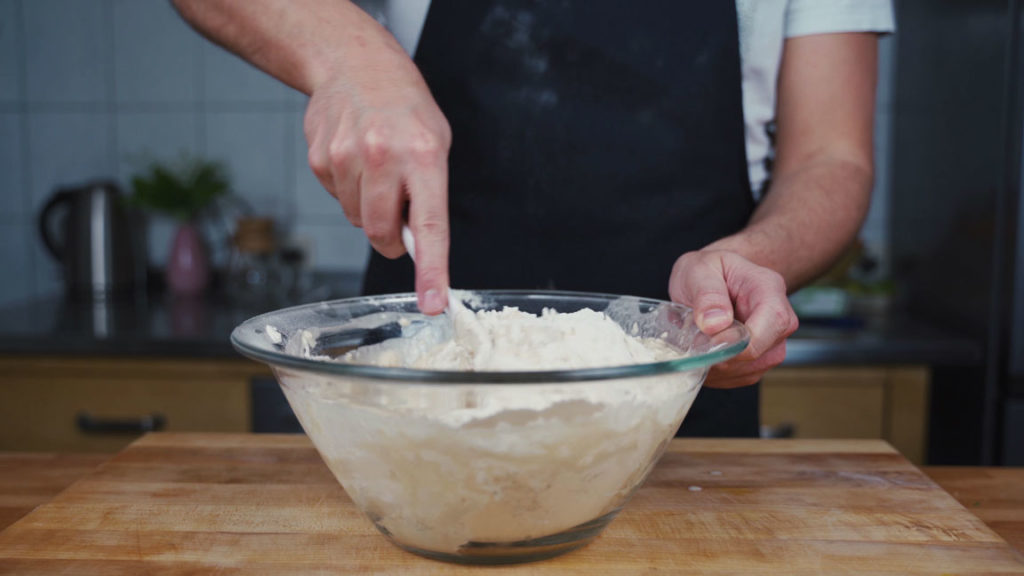
Add the butter and stir with a silicone spatula until you have a workable dough. If you have a stand mixer, you can use that too. I don’t have one myself, so I do this by hand.
Prepare the work surface
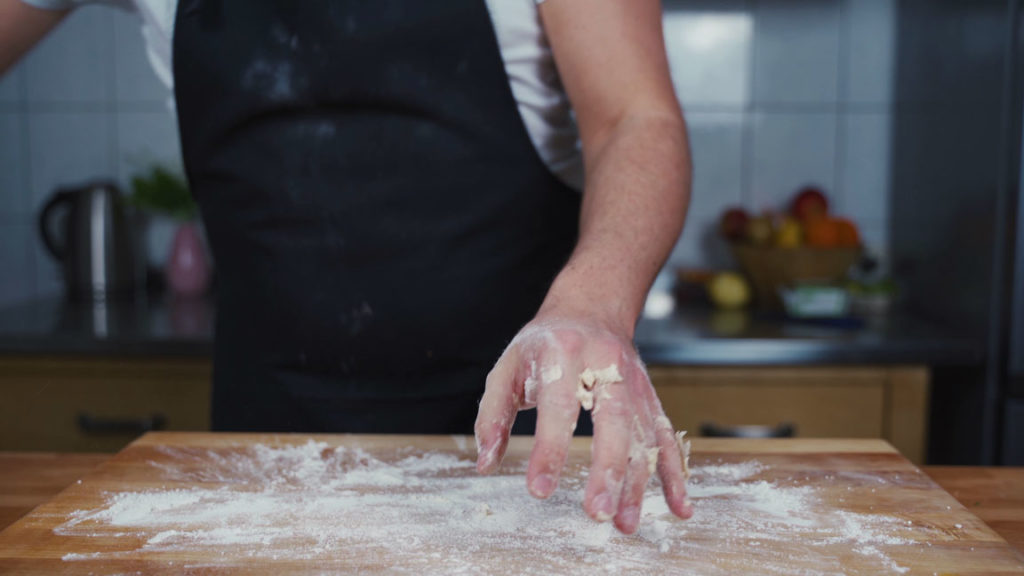
Dust your work surface with a little flour so the dough doesn’t stick.
Knead the dough
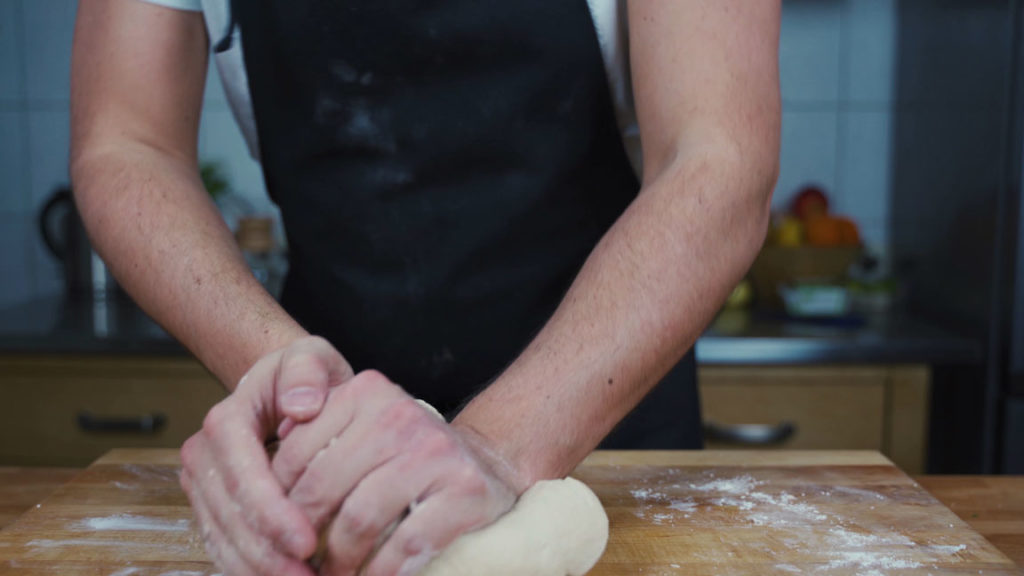
Knead for 5 to 10 minutes. At a certain point, using your hands is easier than the spatula. The dough is ready when the surface is smooth and it no longer sticks to your hands. It should be firm but supple.
Rest the dough
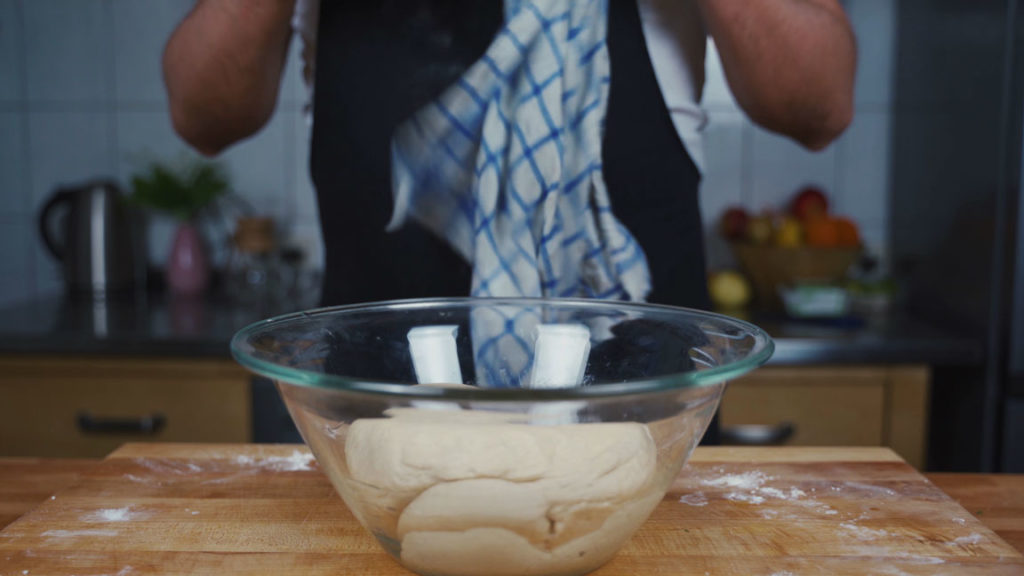
Put the dough in a lightly oiled bowl, cover with a damp kitchen towel and rest for no more than 10 minutes. Any longer and the dough rises too much.
Prepare the lye solution
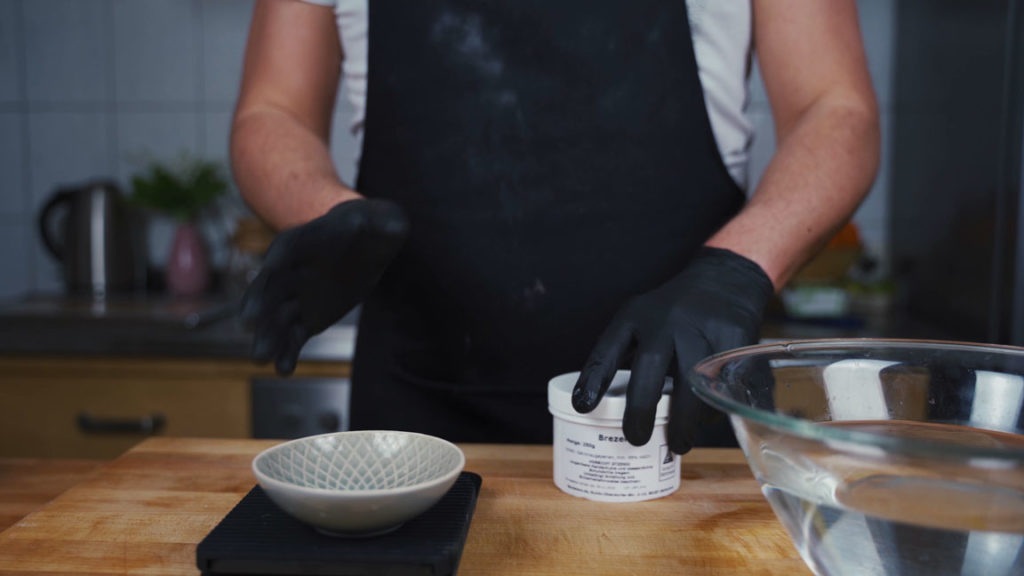
While the dough rests, prepare the lye solution. Put 1 l water in a glass bowl and dissolve 30 g sodium hydroxide in it. Important: Wear rubber gloves; the solution is caustic. You’ll find directions for the baking soda and sodium carbonate versions below.
Shape the pretzels
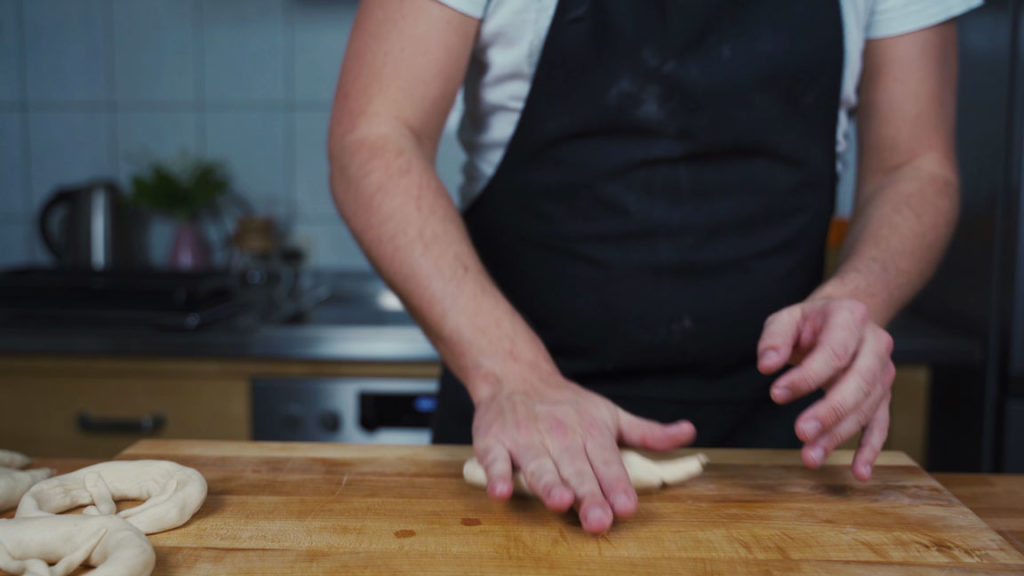
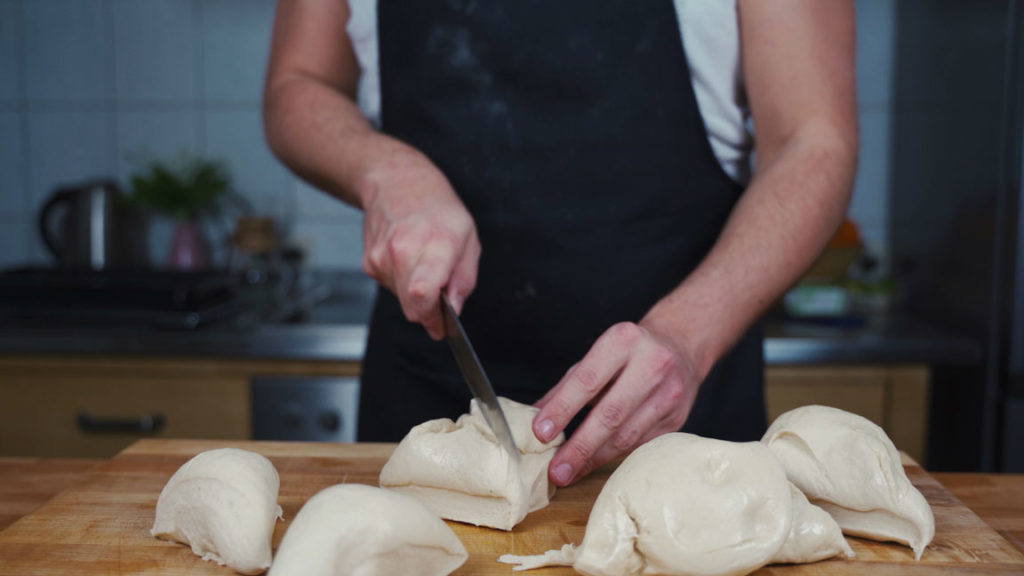
Repeatedly halve the dough to divide it into 16 equal pieces, about 80 to 90 g each. Shape each into a classic pretzel. There’s a detailed guide in the next section. Tip: Briefly chilling the dough first makes it easier to shape.
Dip the pretzels
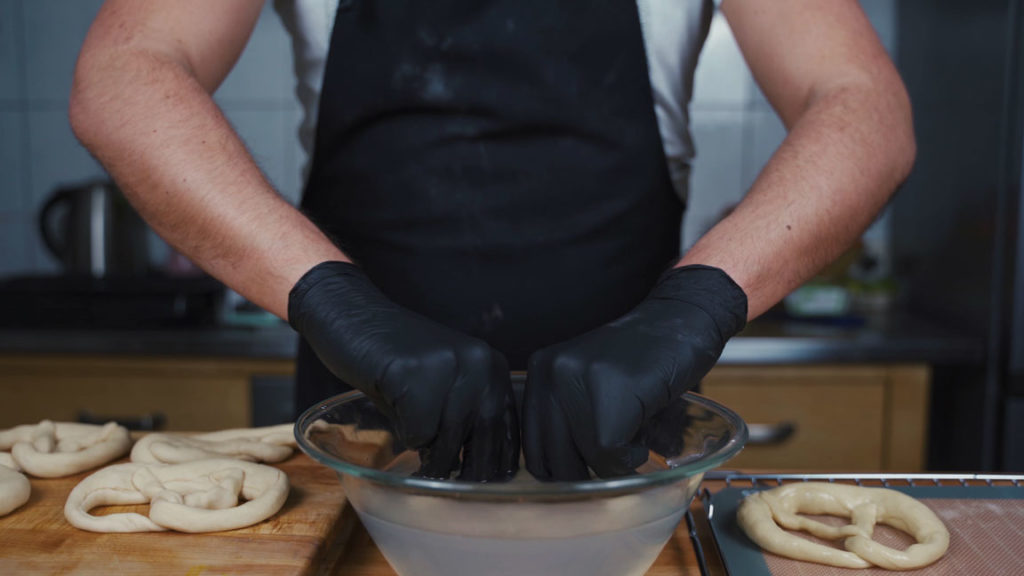
Wearing rubber gloves, dip each pretzel in the lye solution for 15 to 30 seconds, then place on a greased baking sheet or silicone baking paper. Important: Grease the baking paper so the pretzels release more easily after baking. A longer dip gives a darker color and stronger flavor.
Salt and bake
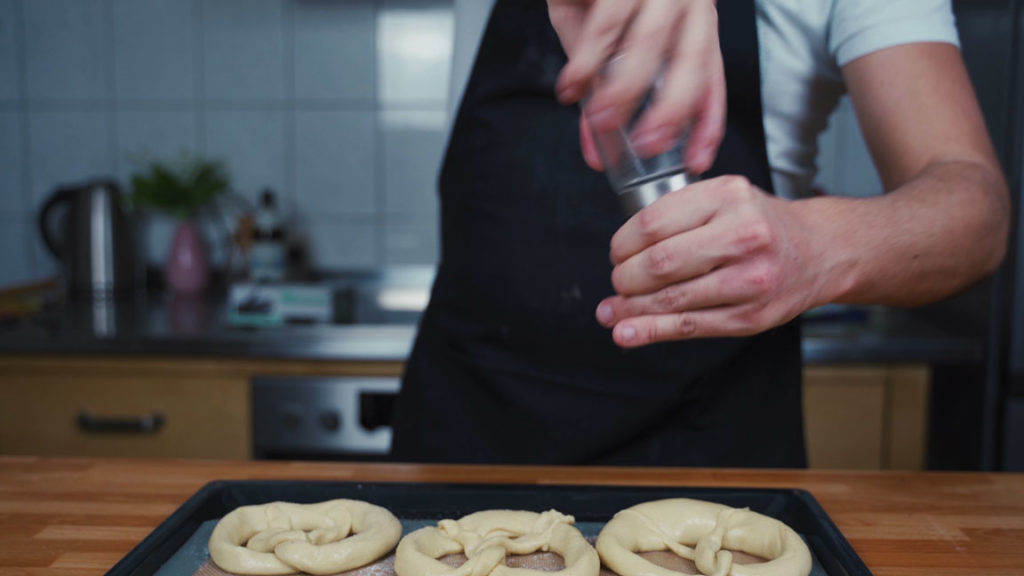
Sprinkle generously with coarse or fine salt. I prefer fine salt, but it’s a matter of taste. Bake at 200 °C (392 °F) with top and bottom heat for about 20 minutes, until golden brown.
Enjoy your pretzels
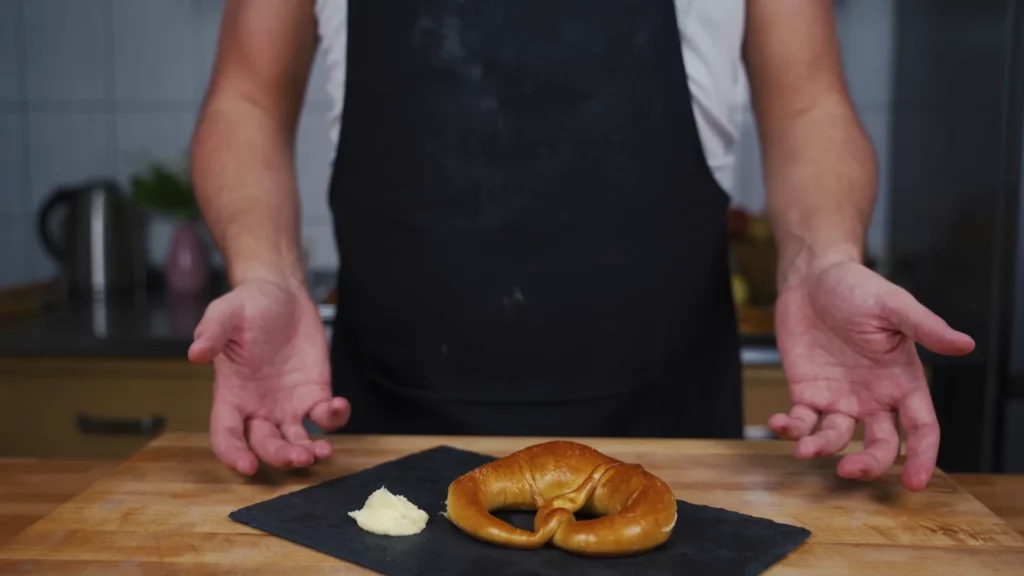
Your German pretzels are ready. They’re best still warm with a little homemade butter. Enjoy!
How to shape a pretzel
As you can see in the photos, I’m not yet a master pretzel shaper. But after the first 2 or 3, you’ll soon get the hang of it.
Step 1: Divide the pretzel dough into 16 equal pieces. You can also weigh them: aim for about 80 to 90 g each.
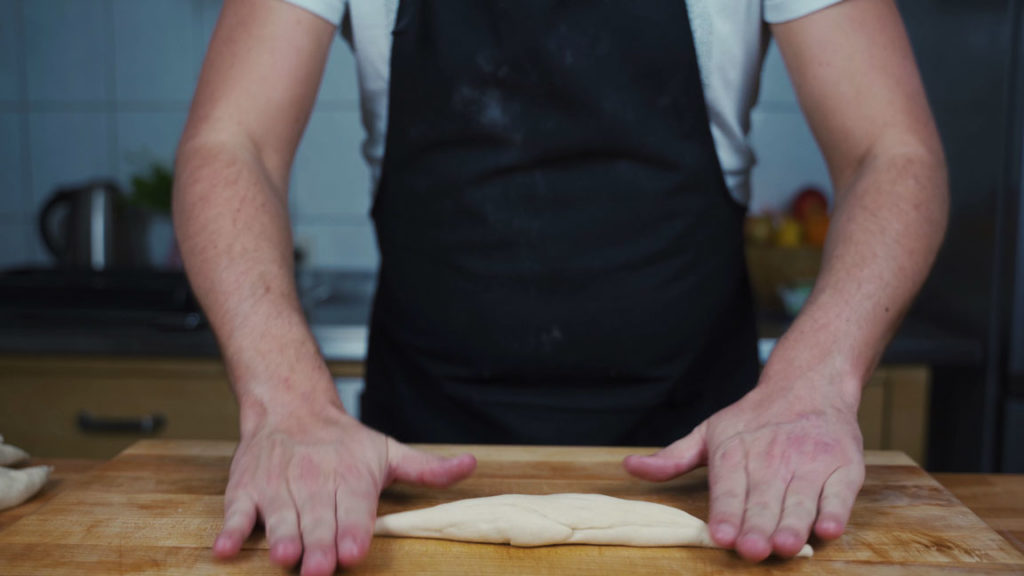
Step 2: Roll each piece into a rope about 60 cm long. Keep the middle thicker and make the ends noticeably thinner.
Step 3: Bring both ends forward and lay one over the other.
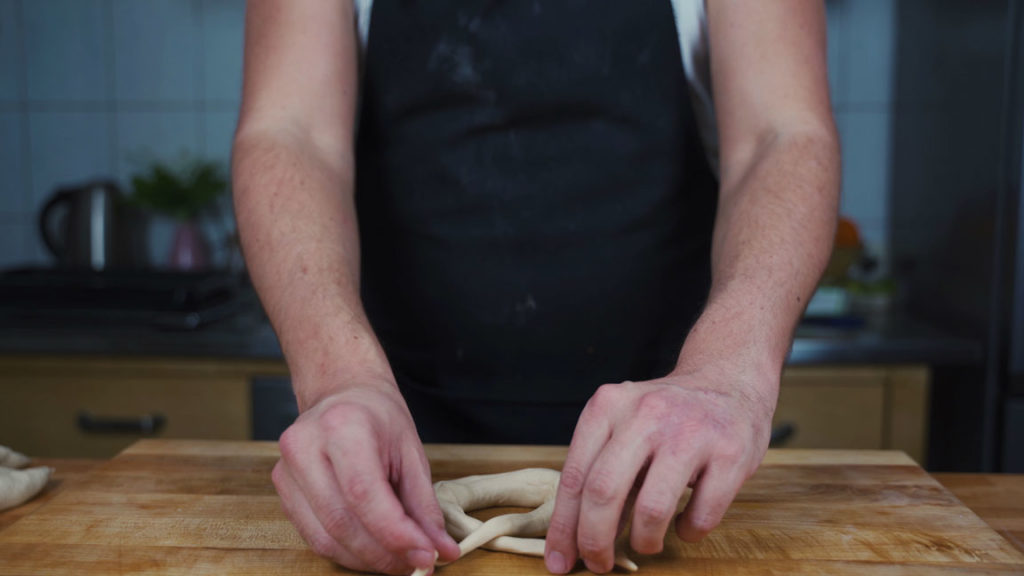
Step 4: Cross the ends once.
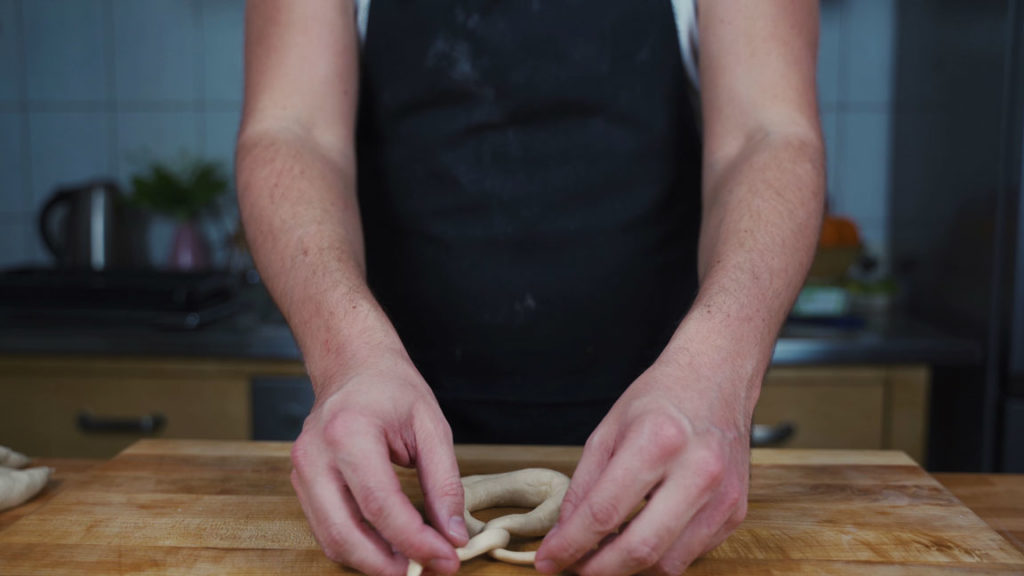
Step 5: Bring the ends back and press them firmly onto the upper curve of the pretzel.
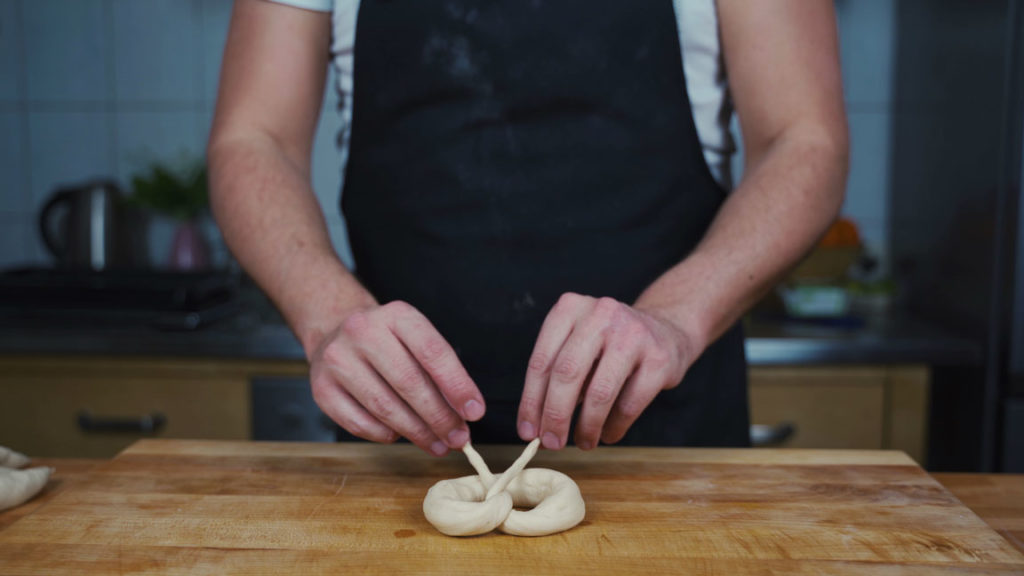
Your pretzel is shaped. You can also make pretzel sticks or rolls instead.
Pretzel dipping solutions: 3 variations
There are several ways to make a pretzel dipping solution. Here are the three most common.
Traditional lye: NaOH (sodium hydroxide)
This is the traditional pretzel lye used by bakers.
Important: The solution is caustic. Always wear rubber gloves and work carefully.
1. Put 1 l water in a glass bowl and dissolve 30 g sodium hydroxide in it (not the other way around).
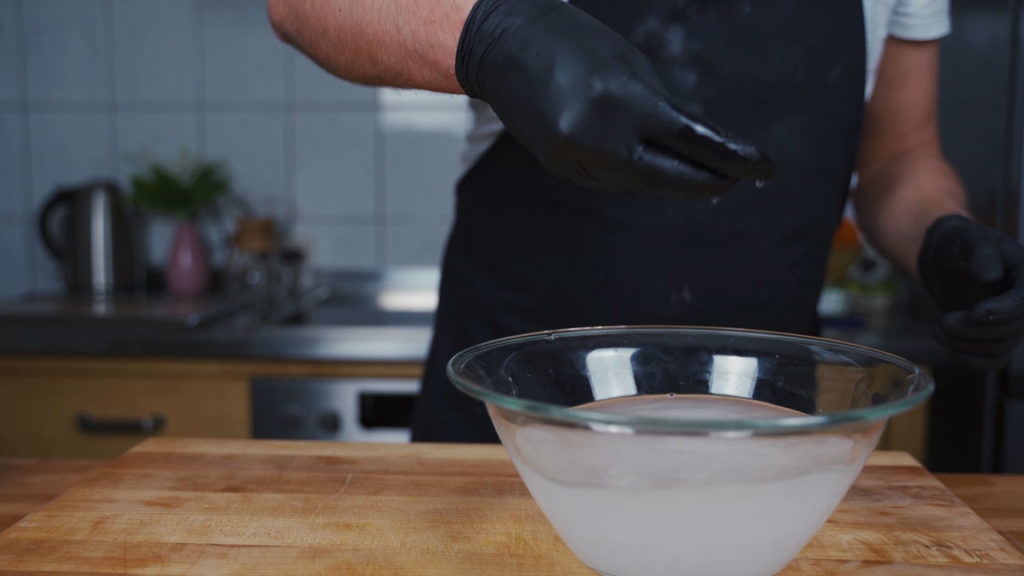
2. Stir thoroughly until the NaOH has completely dissolved.
3. Wearing rubber gloves, dip the shaped dough into the solution for 15 to 30 seconds.
4. You can reuse the prepared solution several times.
Alternative 1: baking soda (sodium bicarbonate)
Baking soda is milder and safe to handle. The flavor will be similar, but the surface won’t be as shiny as with true lye.
1. Bring 50 g baking soda and 1 l water to a boil.
2. Using a slotted spoon, dip the shaped dough into the boiling water for about 15 seconds.
Alternative 2: sodium carbonate
Sodium carbonate is a little stronger than baking soda and gives a better result than plain baking soda.
1. Bring 10 g sodium carbonate, 1 l water and 1 tbsp salt to a boil.
2. Use a slotted spoon to soak the shaped dough for about 1 minute. (The water should be just below boiling.)
Storing the dipping solution
After use, pour the cooled solution into a large screw-top jar and refrigerate it. You’ll have a ready-made dipping solution for next time.
Frequently asked questions
Can I use baking soda instead of lye for pretzels?
Can I use baking soda instead of lye for pretzels?
Yes, baking soda is a safe alternative to sodium hydroxide. The flavor is similar, but the surface won’t be as shiny or smooth. Bring 50 g baking soda and 1 l water to a boil, then dip the shaped dough for 15 seconds.
Why aren't my pretzels turning properly brown?
Why aren't my pretzels turning properly brown?
Usually, they weren’t in the lye solution long enough. Dip them for at least 15 to 30 seconds. The longer the dip, the darker and stronger they become. The solution also needs the right concentration: 30 g NaOH per 1 l water.
How long do homemade pretzels keep?
How long do homemade pretzels keep?
Eat your pretzels within 2 to 3 days, as they dry out more each day. Alternatively, freeze the dipped pretzels before baking and put them straight from the freezer into the oven when needed. That way, you always have fresh pretzels at home.
Can I make pretzels with baking powder?
Can I make pretzels with baking powder?
Baking powder contains sodium bicarbonate, or baking soda, and works similarly in principle, but the result is weaker. For a true lye-style finish, use pure baking soda or sodium hydroxide instead.
Can I freshen up an older pretzel?
Can I freshen up an older pretzel?
Yes, spray it with a little water and bake at 180 °C (356 °F) for about 5 minutes. Not quite as good as fresh, but still delicious.