Tomato Chutney Recipe

- Level
- Easy
- Rating
- Rate this recipe
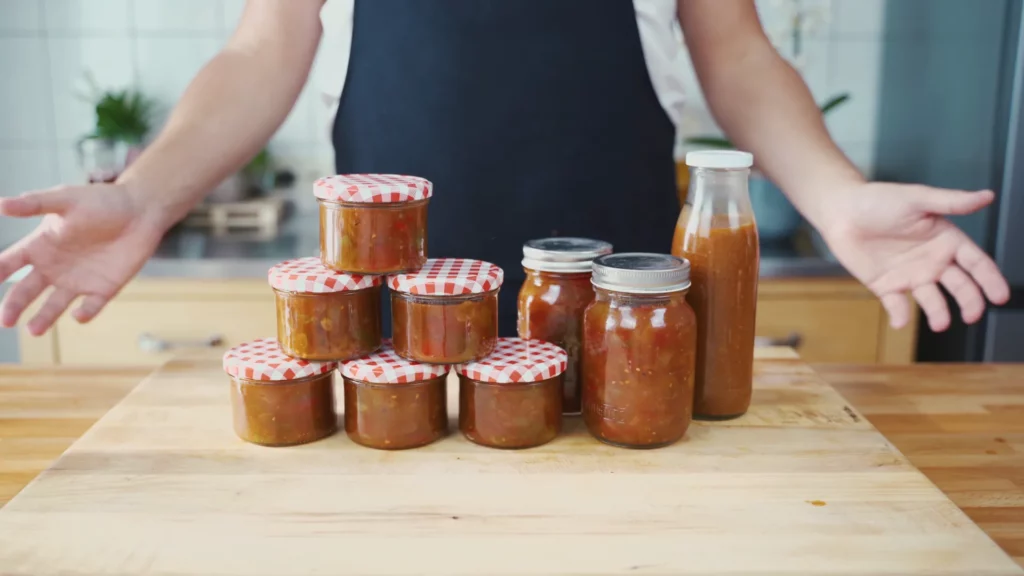
In this post, I’ll share my tomato chutney recipe and show you how to cook it down for storing. I think this version makes a lovely change from classic mango chutney. It’s perfect as a dip, a barbecue accompaniment or a fruity alternative to ketchup.
Store your tomato chutney in the refrigerator and use within 2-3 weeks. Preparation and cooking take about 2.5 hours, but you’re only actively working for about 45 minutes. The stove does the rest.
Here you’ll find the complete tomato chutney recipe. Have fun and good luck making it!
Tomato chutney – ingredients and equipment
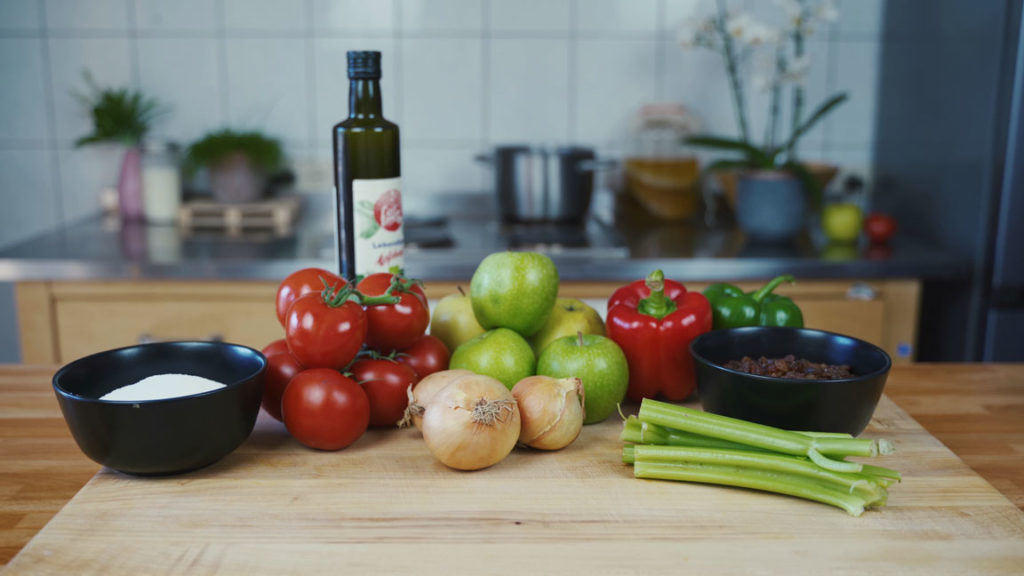
Ingredients
| Ingredient | Grams | Percent |
|---|---|---|
| Ingredients for about 8 jars | ||
| apple cider vinegar | 500 ml | |
| raisins | 200 g | |
| sugar | 130 g | |
| salt | 25 g | |
| large tomatoes about 1.5 kg | 8 piece | |
| green apples about 1.5 kg, the same amount as the tomatoes | 6 piece | |
| celery | 4 stalks | |
| onions about 250 g | 3 piece | |
| green bell peppers | 1 piece | |
| red bell peppers | 1 piece | |
Equipment
Large saucepan (at least 5 liters): This quantity of vegetables needs room. Choose a pan that’s a little too big rather than too small. From experience, a small pan gets crowded quickly.
Preserving jars with lids: Traditional preserving jars and Mason jars both work well. Make sure they’re clean and sterilized.
Filling funnel or ladle: For filling the jars neatly. Without one, things get messy quickly.
Making tomato chutney
Dice the fruit and vegetables
Cut the celery, tomatoes, bell peppers, apples and onions into small cubes. Keep the pieces no larger than 1 cm so they break down evenly during cooking. Cut the cores out of the tomatoes. For a smoother result, peel the tomatoes, bell peppers and apples first.

Boil the vinegar and sugar
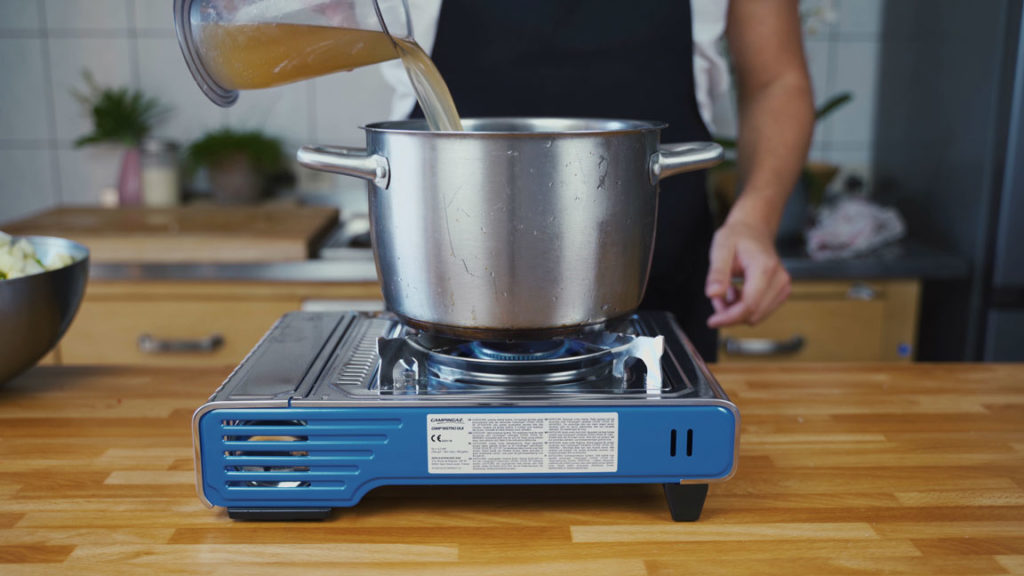
Put the apple cider vinegar, sugar and salt in a large saucepan. Heat over medium heat, stirring regularly until the sugar dissolves completely.
Add the chopped ingredients
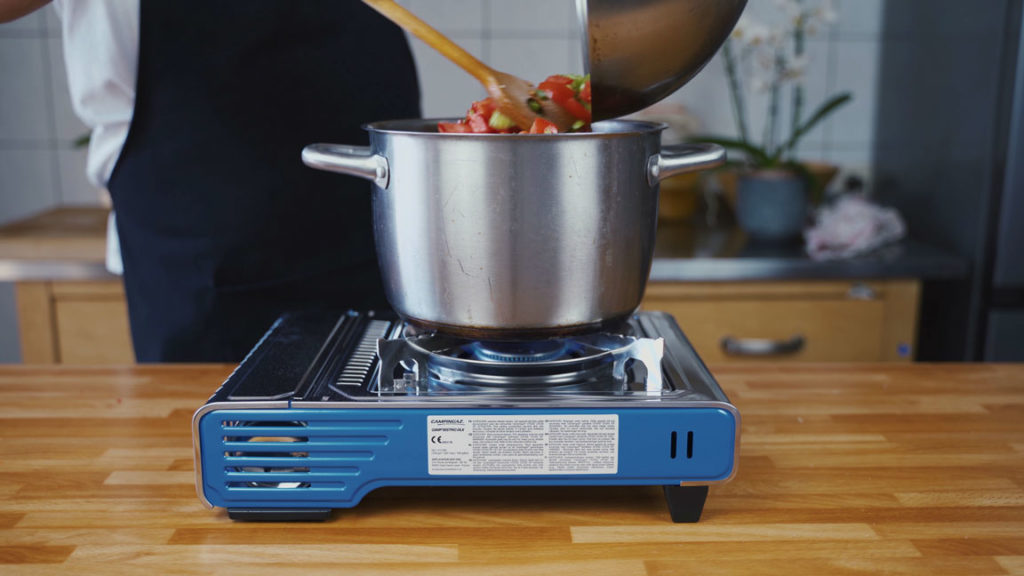
Add all the chopped ingredients (except the raisins) to the saucepan. Gently press the vegetables down so they’re covered with liquid as much as possible. Tip: Use a really large saucepan. Once everything is in, it can get crowded quickly.
Simmer for 1 to 1.5 hours
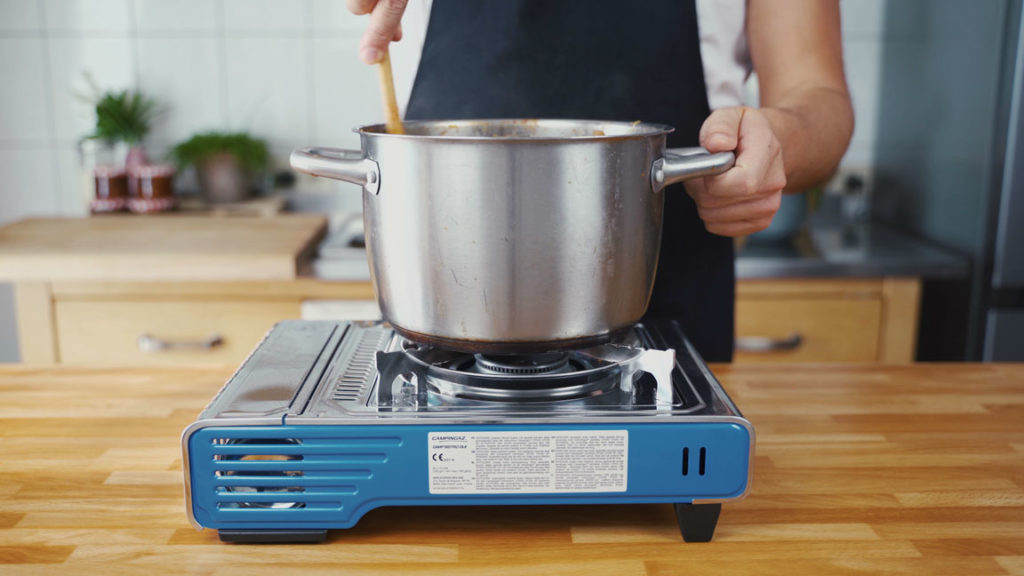
Simmer the mixture over low to medium heat for 1 to 1.5 hours. Important: Stir regularly so nothing burns on the bottom. You’ll see the mixture gradually thicken and the vegetable pieces soften.
Add the raisins
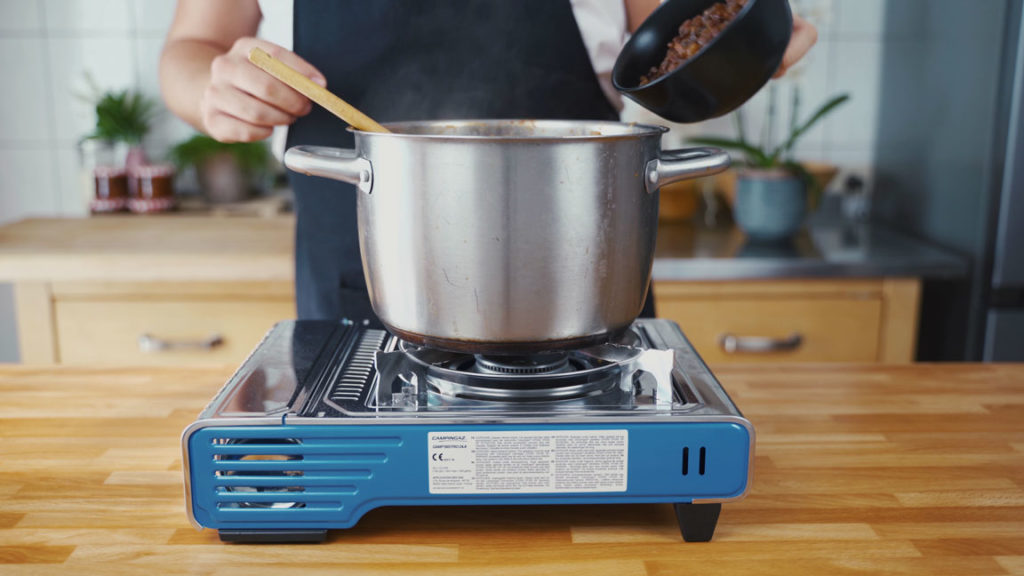
After 1 to 1.5 hours, add the raisins. They give the chutney a pleasant sweetness that really rounds it out. Personally, I wouldn’t leave them out.
Cook for another 30 minutes
Simmer the chutney with the raisins for another 30 minutes. Watch the texture: it should be thick but not dry. Take it off the heat a little earlier rather than later, as it will thicken further as it cools.

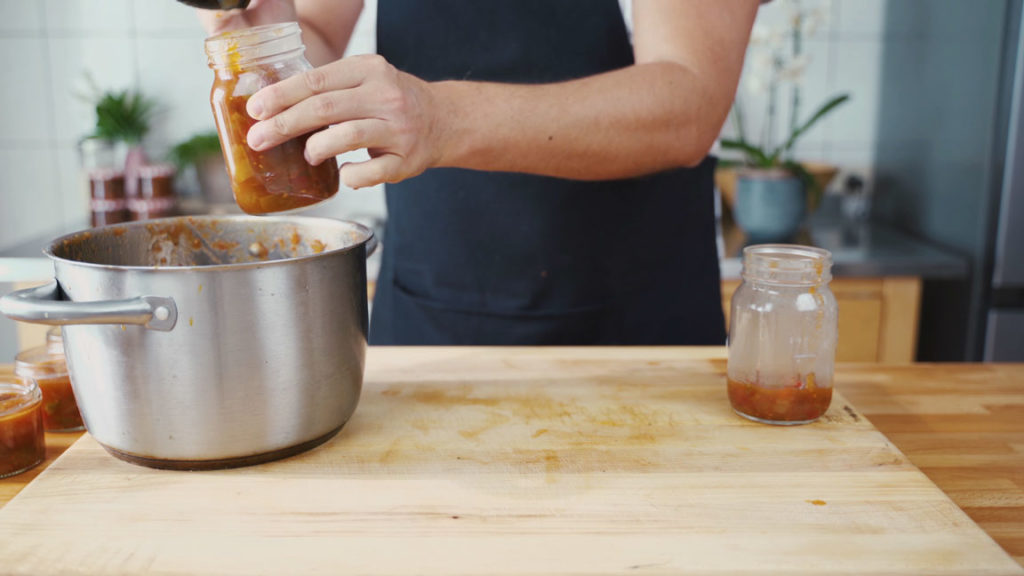
Fill the jars
Fill the prepared, sterilized jars with the hot chutney and seal them tightly straight away. Keep the chutney in the refrigerator and use within 2-3 weeks. Alternatively, blend and strain part of the mixture for a smoother, ketchup-like version.
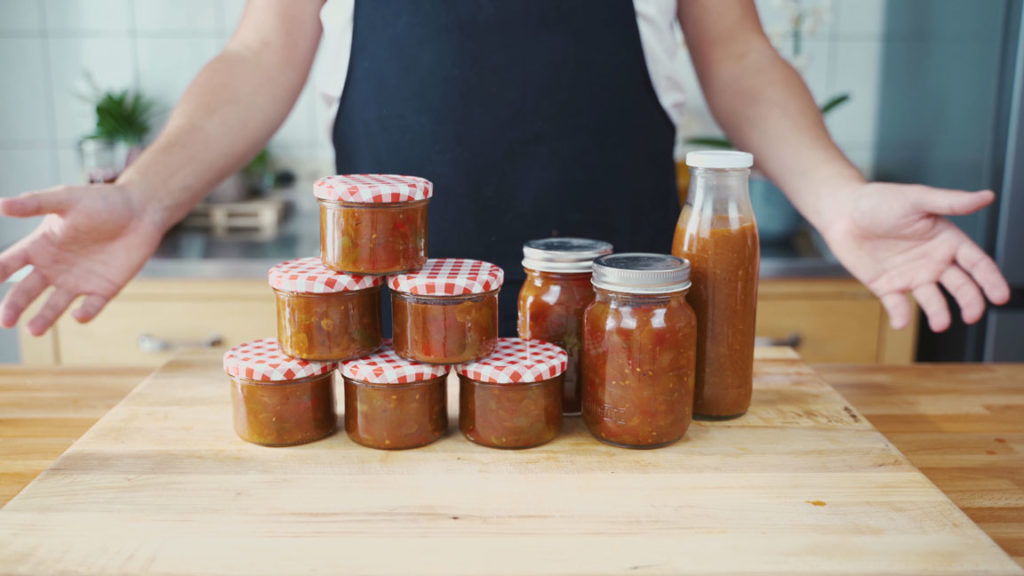
Your homemade tomato chutney is ready
Your tomato chutney is ready. Enjoy!
Ways to customize your tomato chutney
I’ve deliberately kept the basic recipe simple. If you’d like to experiment, here are a few ideas:
- Chili flakes or fresh chili: For a spicy version. You decide how much to add.
- Ginger: Freshly grated ginger adds pleasant heat and an Asian note.
- Pumpkin or strawberries: It sounds unusual, but it tastes really good and gives the chutney a distinctive fruity note.
- Blending: Blend and strain part of the mixture for a smoother, ketchup-like texture. That gives you two different chutneys from one batch.
Give it a try. In the end, it’s a matter of taste! For more homemade accompaniments, take a look at my fig mustard too.
Frequently asked questions
How long does tomato chutney keep?
How long does tomato chutney keep?
Keep your tomato chutney in the refrigerator and use within 2-3 weeks.
Use clean jars and lids for storing the chutney.
Always use a clean spoon in the jar.
Keep the jars refrigerated from the start. If the lid bulges upward or the chutney smells unusual, discard it.
Can I make tomato chutney in a Thermomix?
Can I make tomato chutney in a Thermomix?
Yes, this recipe works well in a Thermomix. Roughly chop the ingredients, then chop them in the mixing bowl at speed 4 to 5. Cook everything at 100 °C (212 °F) on speed 1 for about 45 minutes, adding the raisins after 30 minutes. The result will be slightly finer than the hand-cut version.
Can I use green tomatoes for chutney?
Can I use green tomatoes for chutney?
Yes, green tomato chutney is a classic. Unripe tomatoes are firmer and a little more sour, giving the chutney a different, tart and fruity flavor. The method is the same. Green tomatoes are especially useful if you still have unripe tomatoes in the garden at the end of the season.
What goes best with tomato chutney?
What goes best with tomato chutney?
Tomato chutney goes with almost anything: as a barbecue dip, with cheese, on focaccia, with fish or alongside cold cuts. Honestly, we eat it with everything. It’s especially good with strong cheese or as a fruity alternative to ketchup.
What's the difference between chutney and relish?
What's the difference between chutney and relish?
Both are cooked condiments, but chutney cooks longer and has a softer, jam-like texture. Relish is chunkier and cooks for less time, leaving more distinct vegetable pieces. Chutney often has a more complex flavor because its longer cooking time lets the flavors blend more fully.