
Homemade Coppa: Italian Dry-Cured Pork Neck


- Type
- Ham
- Level
- Medium
- Rating
- Rate this recipe
In this post I show you how you can make Coppa yourself. With a moderate effort you achieve a super tasty result.
Coppa is an air-dried Italian specialty and is made from a piece of pork neck.
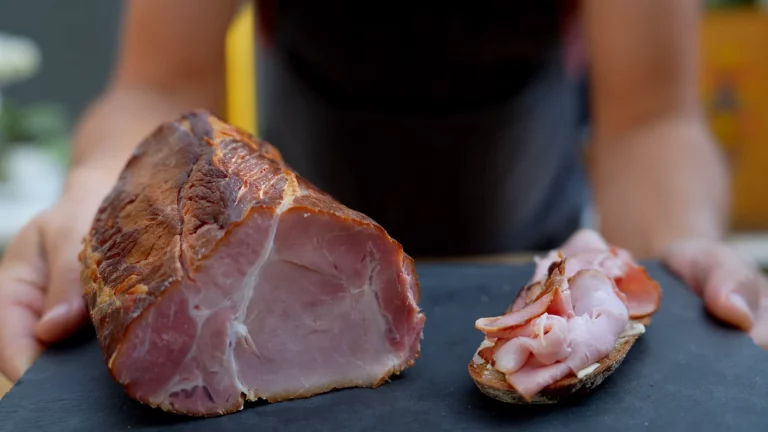
The special feature of this air-dried ham is that the meat is dried and matured in a beef casing. Wafer thin on a freshly baked loaf of bread, the coppa is a treat for the palate.
The recipe is from my ham book “Make Dry-Cured & Cooked Ham Easily At Home Step-By-Step Instructions & 28 Delicious Recipes”.
Here you can find the complete Coppa recipe as a video or to read through.
Have fun and good luck making it yourself!

Table of Contents
Coppa – What do you need to make it?
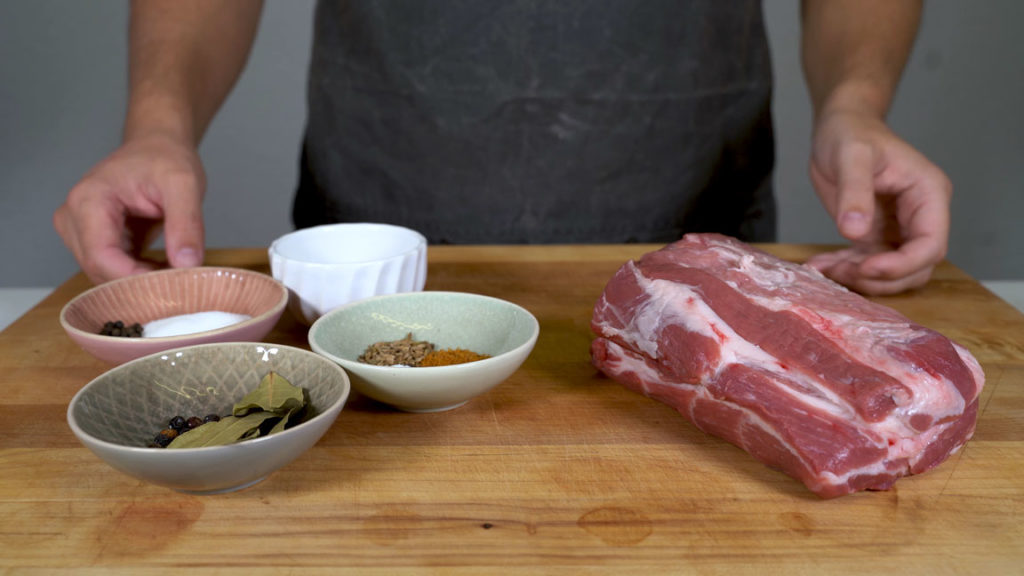
Ingredients per 1 kg
| Ingredient | Grams | Percent |
|---|---|---|
| pork neck | 1,000 g |
Spices per 1 kg
| Ingredient | Grams |
|---|---|
| salt | 31.5 g |
| black pepper | 3 g |
| sugar mixture (50% dextrose / 50% sugar – alternative sugar only) | 3 g |
| Cure #1 | 2.5 g |
| thyme | 1.5 g |
| bay leaves | 1.5 g |
| allspice | 1 g |
| mace | 1 g |
| fennel seeds | 1 g |
The equipment to make Coppa
Spice grinder / mortar
To grind your spices, it is best to use a spice mill. Alternatively, a mortar is also suitable. Or you can use already ground spices. I recommend to grind them yourself.
Sausage casings
The coppa is matured in a beef butt. I recommend you beef casing caliber 120/140.
Sewing needle or sausage pick
You need the needle when air has come between the casing and the meat.
Make Coppa – Step-By-Step Instructions
Remove any tendons, fibers and silverskins from the meat. Make sure there are no large cuts or “pockets” in the meat. Weigh the meat. Note the weight and then calculate how much salt and seasoning you need. Weigh all the ingredients afterwards.

Put all the spices in a mortar and grind coarsely.

Mix the salt and spices together and rub them evenly on all sides of the piece of meat.
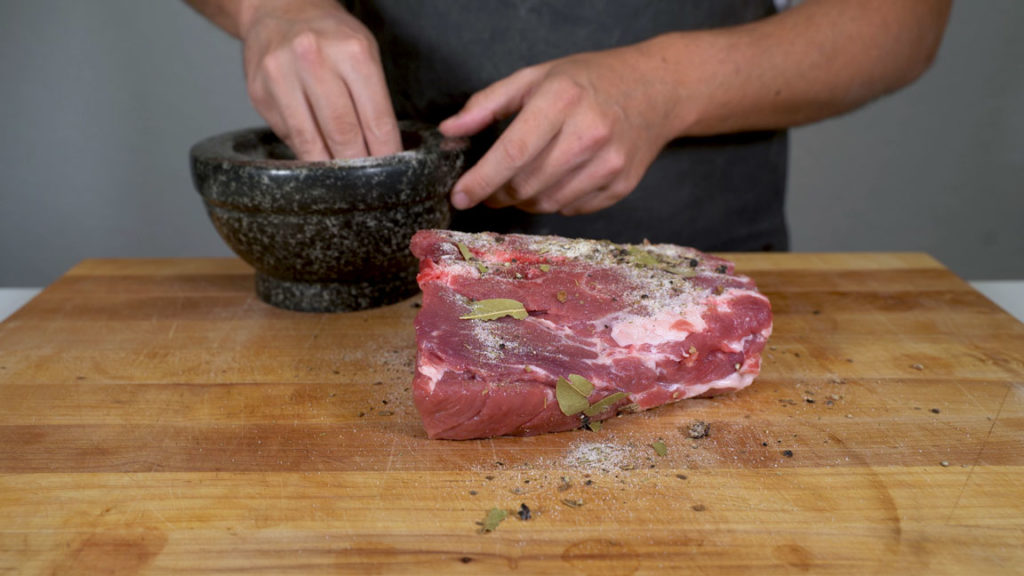
Put the meat in a bag with the remaining salt and spices.

Vacuum seal the meat.
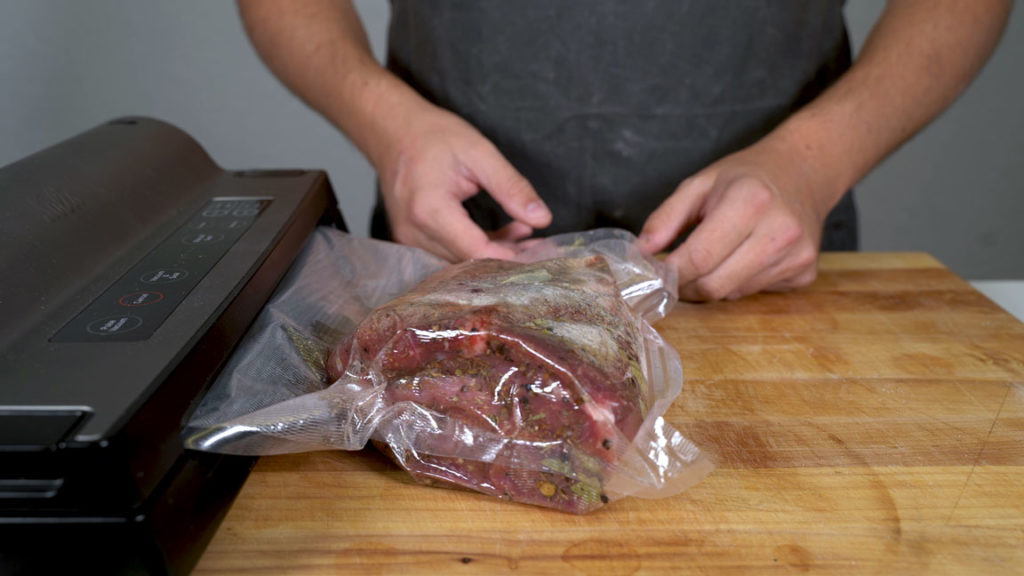
Place the bag in the refrigerator for the minimum curing time (1.5 days / cm of meat thickness). Turn the bag over occasionally. My piece was in the refrigerator for about 2 weeks.

After the curing time you can take the meat out of the bag and rinse it.
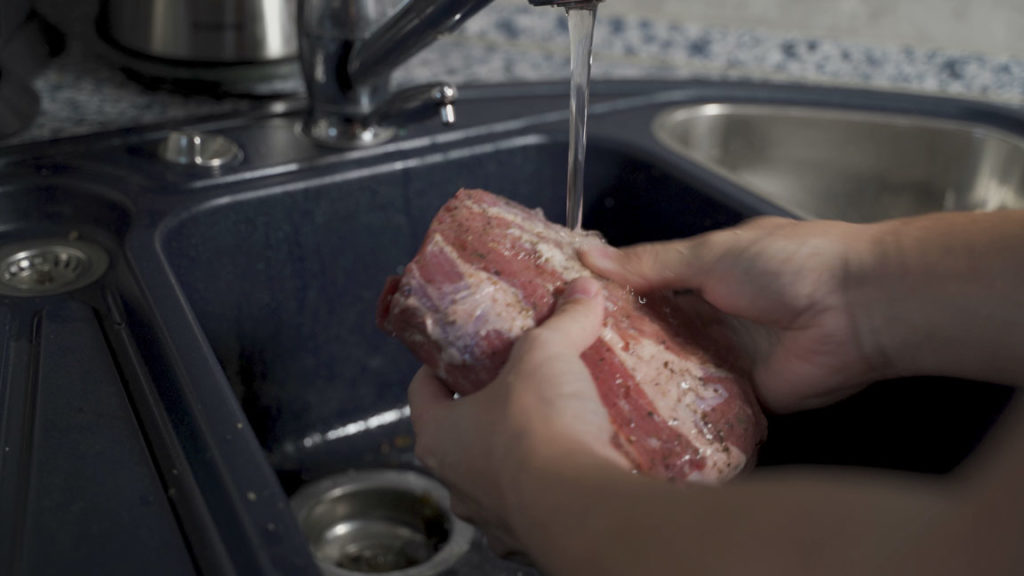
After that you can dry it with a kitchen towel.
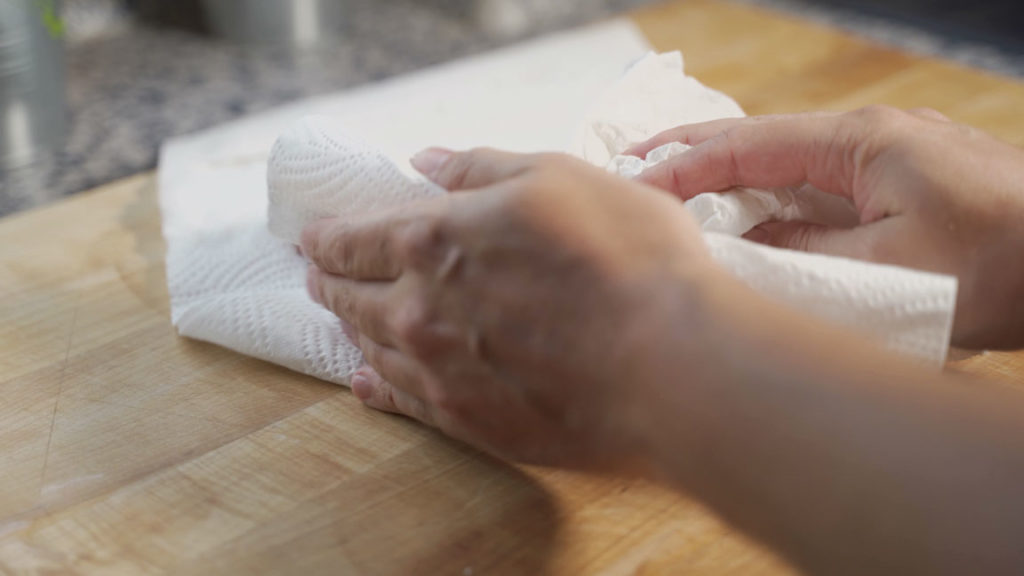
Put the meat in the beef casing and remove the air.

Knot the end.
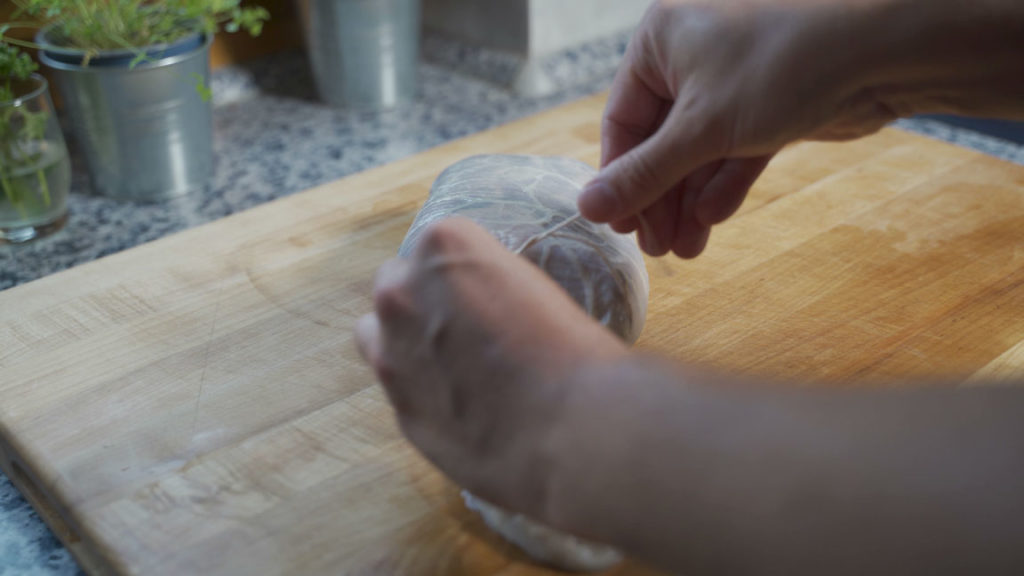
Tie a net around the piece of meat.

Pierce the air pockets with a needle.

Hang the meat in a dark place to dry. It should ideally be around 12 degrees Celsius (53.6 °F) and 75% humidity.

Leave the meat to dry and mature for 2-3 months. Check it regularly. It should lose about 30% of its weight during this time. If you lose weight too fast, you can vacuum the coppa again and let it ripen in the refrigerator.

Your Coppa is ready😄. Enjoy it.
Frequently asked questions
What is coppa, and why is it also called capocollo?
What is coppa, and why is it also called capocollo?
Coppa is a whole muscle rather than a sausage: the neck of the pig, cured, cased and then left to dry until it can be sliced wafer thin. That is the whole product. Everything this recipe does after the curing is about getting the drying even, which is why the meat goes into a beef casing and into a net before it is hung.
Coppa and capocollo are the same thing under two names. Northern Italy says coppa, the south says capocollo, and both mean the same air-dried cut of pork neck. The best known versions are named for where they are made, the Coppa di Parma and the Coppa Piacentina, and they differ mainly in how long they are left to mature. What you are making here is that product, on your own timetable.
What is the shelf life of Coppa?
What is the shelf life of Coppa?
The coppa can be kept for several months.
To prevent the ham from drying out or losing its flavor, it’s best to pack it in an airtight container in the refrigerator.
In general, I would also recommend consuming it sliced within 7 days. This should not be a problem because of the delicious taste ;).
Packed in one piece, you can store it in a cool place for several months.

Daniel, can I use a different cut of pork for this recipe (I.e. pork loin) ? If so would the same spice mix be used ?
Dankeschön
Peter
For me Loin would be dryer as it will not have the same fat content as a coppa.
1. I use a very similar recipe but I never used beef bangs/buts. I just put them in netting after spicing. One of my favourite meats. Also, one of the easiest to play with the spices you like.
2. How can I get my cured meats to develop healthy mold.
I have used pork loin, which more properly makes “lonzino”. Cured in a sealed bag, then spice rubbed and closely wrapped in linen cloth for drying and maturing on a grate in our fridge. Works well. Just close monitor for desired weight loss after some time (depends on size/weight) and voila! Delicious charcuterie.