Make cheese sausage (cold cut) yourself – super delicious

- Type
- Cooked sausage
- Level
- Medium
- Rating
- Rate this recipe
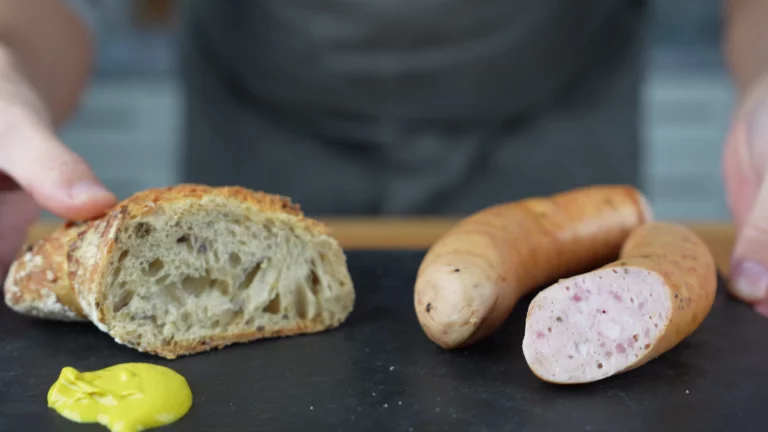
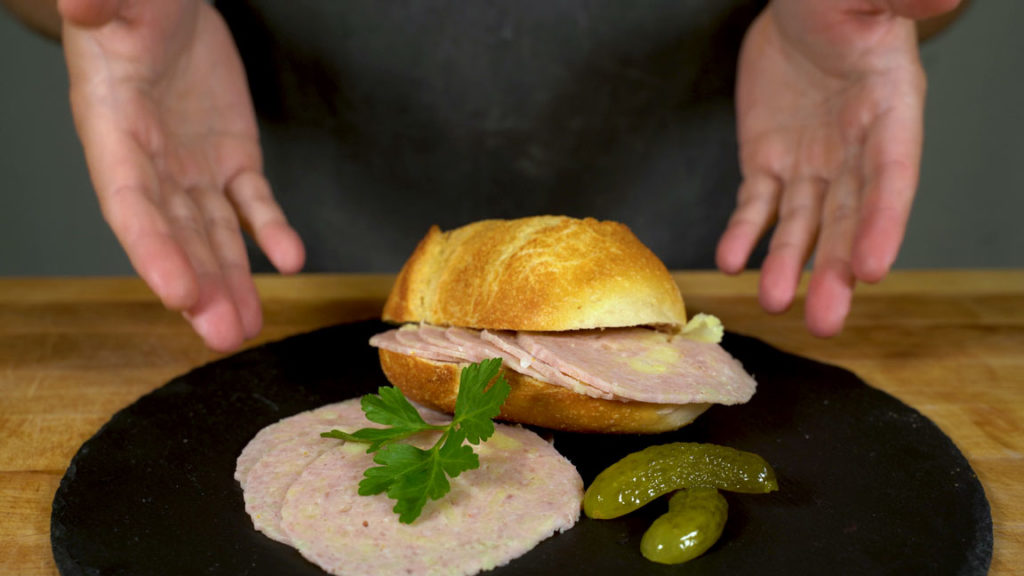
In this post I’ll show you how to make a cheese sausage in the form of a cold cut yourself. It is really super tasty and a great alternative to the classic Bologna (Schinkenwurst).
The cheese sausage is a cold cut. I use my Schinkenwurst recipe with pork and beef as the base meat here. But you can also make the ham sausage classically with 100% pork. You can also find this recipe in my Schinkenwurst post.
I use a bavarian mountain cheese. Emmentaler is also excellent. In the end, you can use any cheese of your choice. Just replace it in the recipe.
Here you can find the complete cheese sausage recipe as a video or to read through.
Have fun and good luck making it!

Table of Contents
Cheese sausage – What do you need to make it?
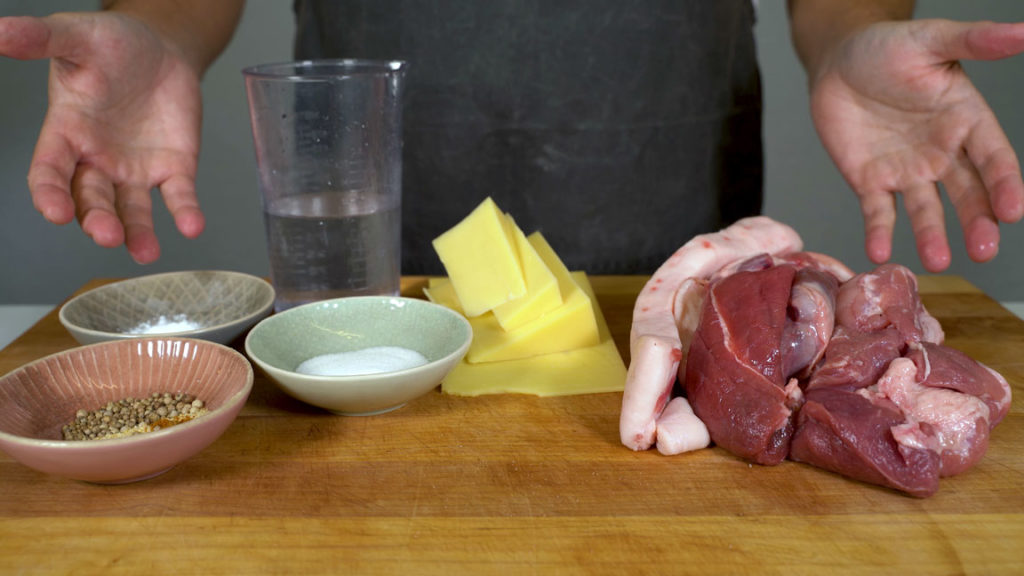
Ingredients per 1 kg
| Ingredient | Grams | Percent |
|---|---|---|
| basic ham sausage (my variation with beef) | ||
| lean pork | 300 g | 30 % |
| pork backfat | 225 g | 22.5 % |
| lean beef e.g. shoulder | 150 g | 15 % |
| crushed ice / ice water | 75 g | 7.5 % |
| favorite cheese (e.g. Gouda, Cheddar or mountain cheese) | 250 g | 25 % |
Spices per 1 kg
| Ingredient | Grams |
|---|---|
| salt | 16.4 g |
| Cutter Phosphate (e.g BRIFISOL 414, PhosThis!, Ames Phos) | 3 g |
| white pepper | 2 g |
| Cure #1 | 1.6 g |
| onion powder | 1 g |
| coriander | 0.5 g |
| ginger | 0.5 g |
| garlic powder | 0.5 g |
| mace | 0.5 g |
In addition, you add between 25% and 40% cheese. In this recipe I use 250 g.
The equipment to make cheese sausage
You need a meat grinder to “grind” the meat. The meat is chopped into small chunks with it.
You need a sausage stuffer to get your meat mass into the casing. If you are starting out you can also add an attachment to your grinder or use a modified plastic bottle or funnel.
Synthetic casing
The cheese sausage is filled in synthetic casings. I use synthetic casing caliber 90/40.
If you want to prepare cheese sausage without intestines, you can use jars and boil down the mass.
Food processor / Thermomix
In a food processor, the minced meat and ingredients are mixed into a very fine mass. If you have a Thermomix, you can also use it for this process.
Make cheese sausage – Step-By-Step Instructions
Cut your meat and the fat into strips. The size varies depending on how big your meat grinder is. The bigger the grinder, the bigger your pieces of meat can be.
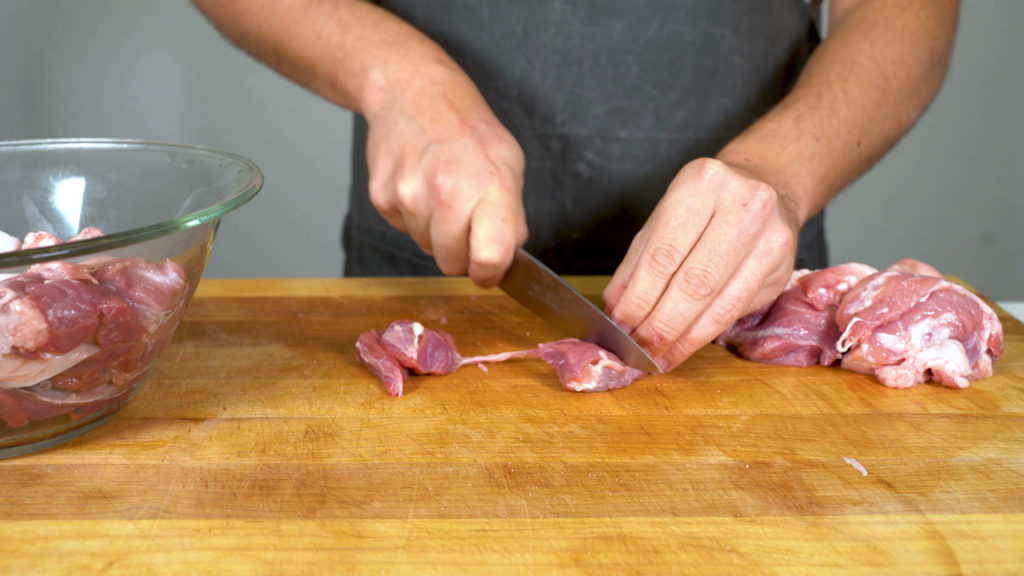
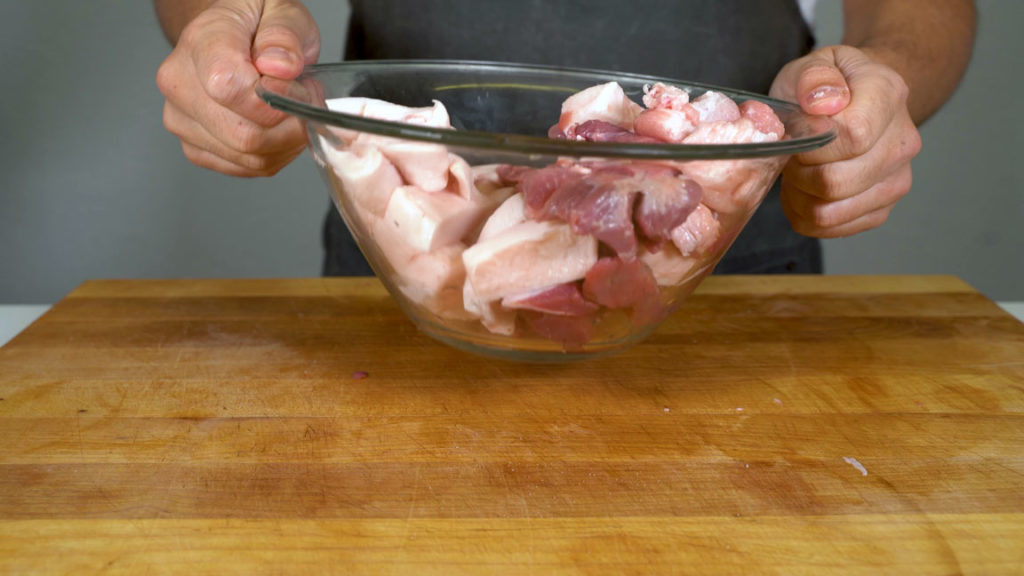
Put the meat in the freezer for 1-2 hours. This will help later on with the grinding process and the temperature.
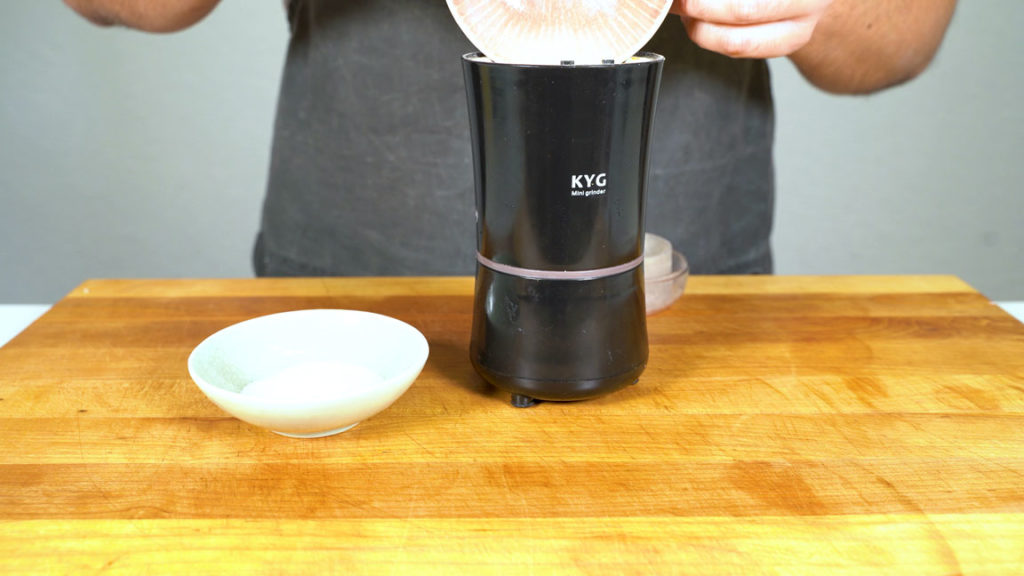
Grind the spices without the Cutter Phosphate to a fine powder.
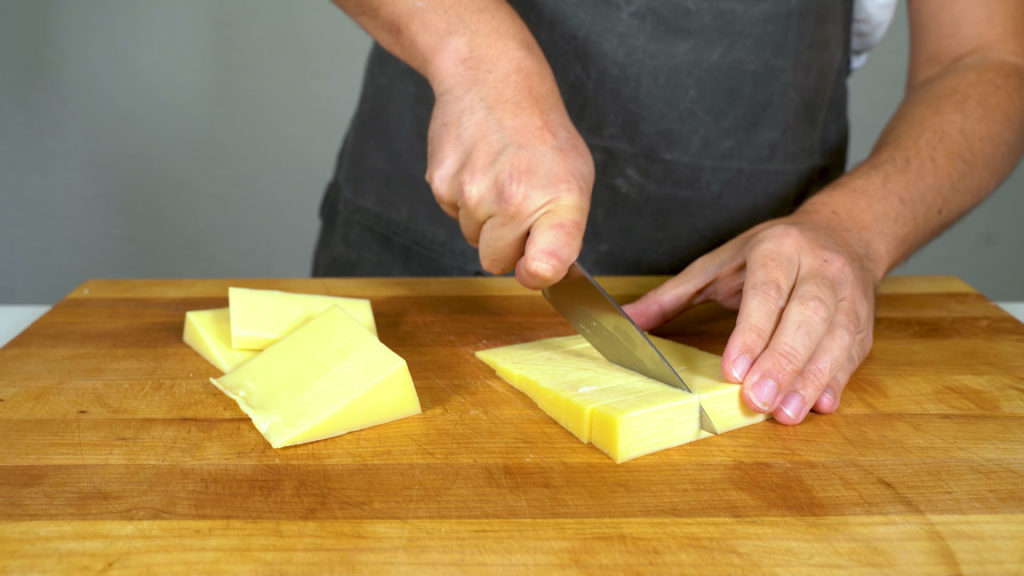
Cut the cheese into pieces.. Optionally, you can cut it into small cubes and add it to the meat after you grind it. If you grind it, you can also freeze it for a short time.
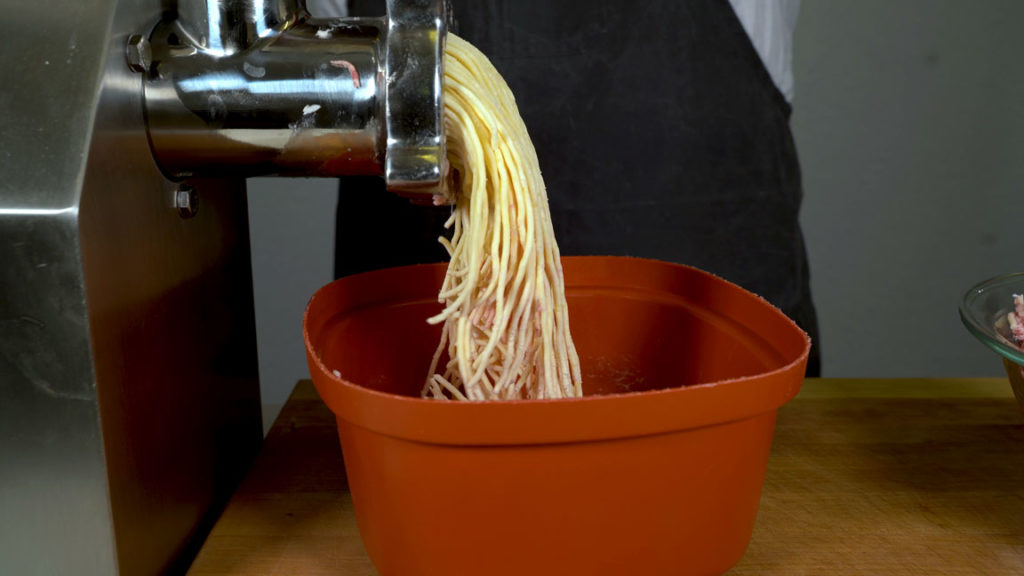
Now it’s time to grind the meat and fat separately through the finest perforated disc (3 mm). I run both through twice.
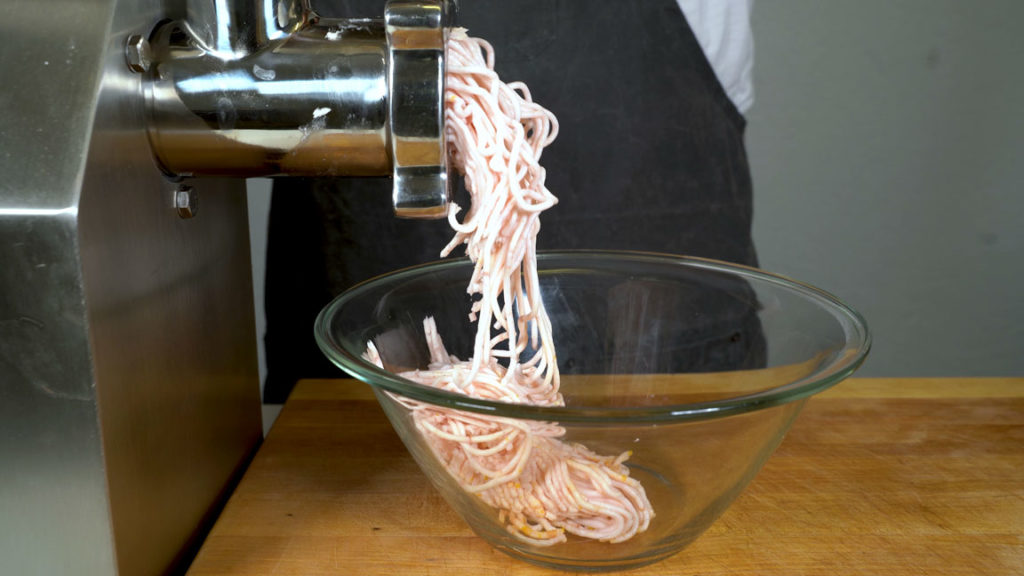
Grind the cheese.
Now put the meat into the cutter or your food processor.
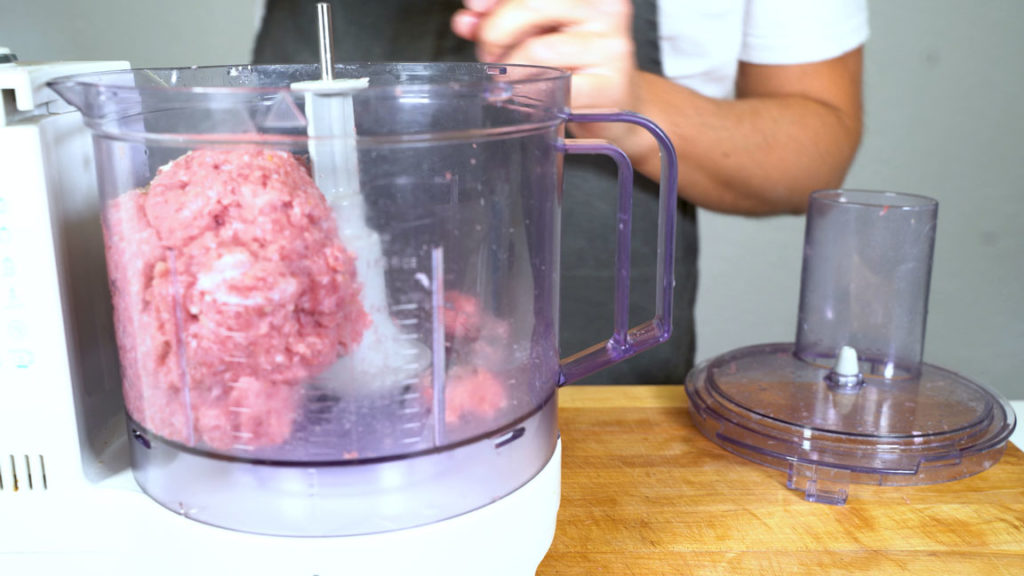
Put the spices and the Cutter Phosphat into the food processor and turn it on. Allow the mixture to blend on the highest setting and gradually add the bulk.
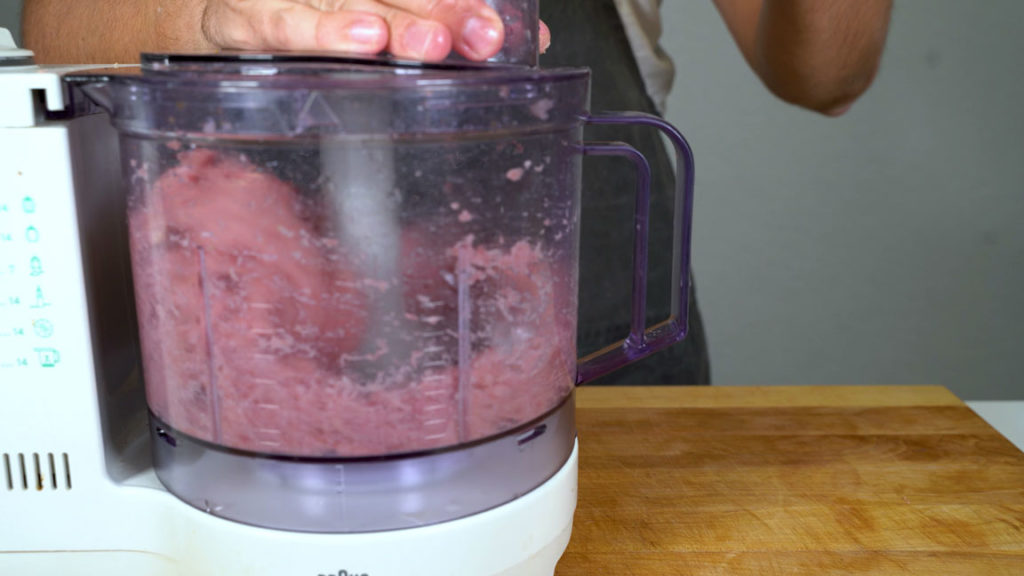
Now you can gradually add the fat. Make sure that the mixture does not get warmer than 12 degrees Celsius (53.6 °F).
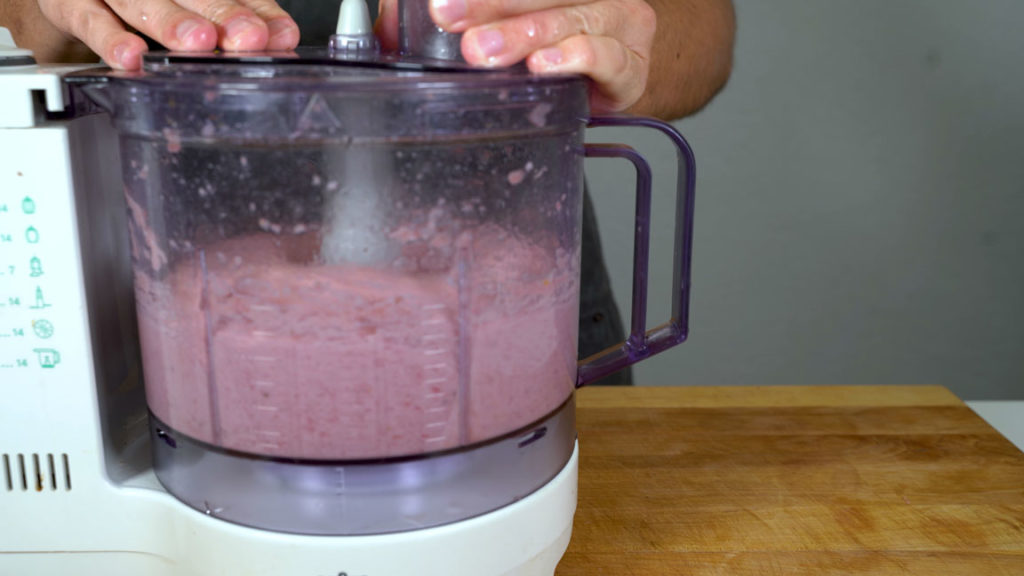
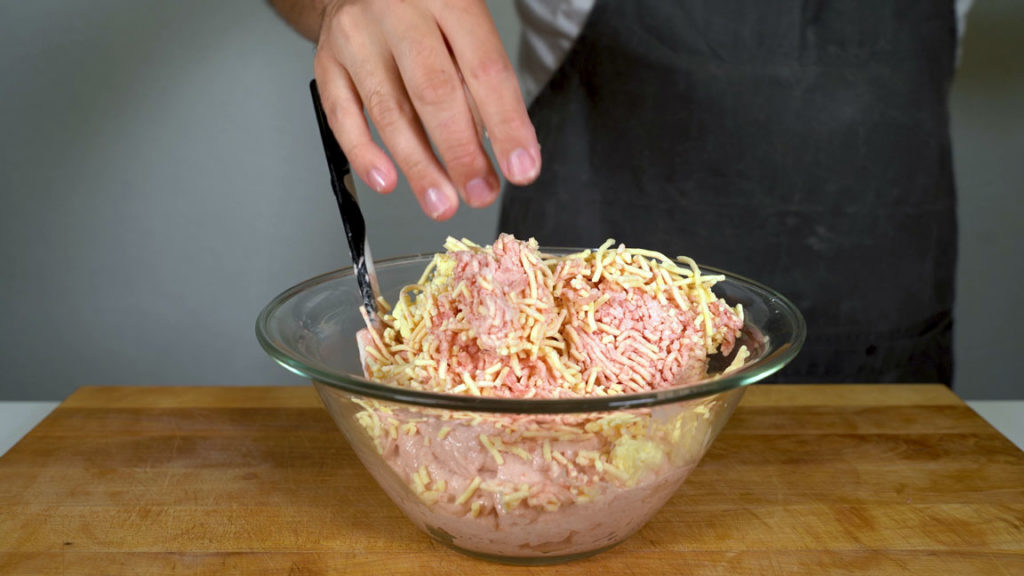
Mix the sausage meat with the cheese.
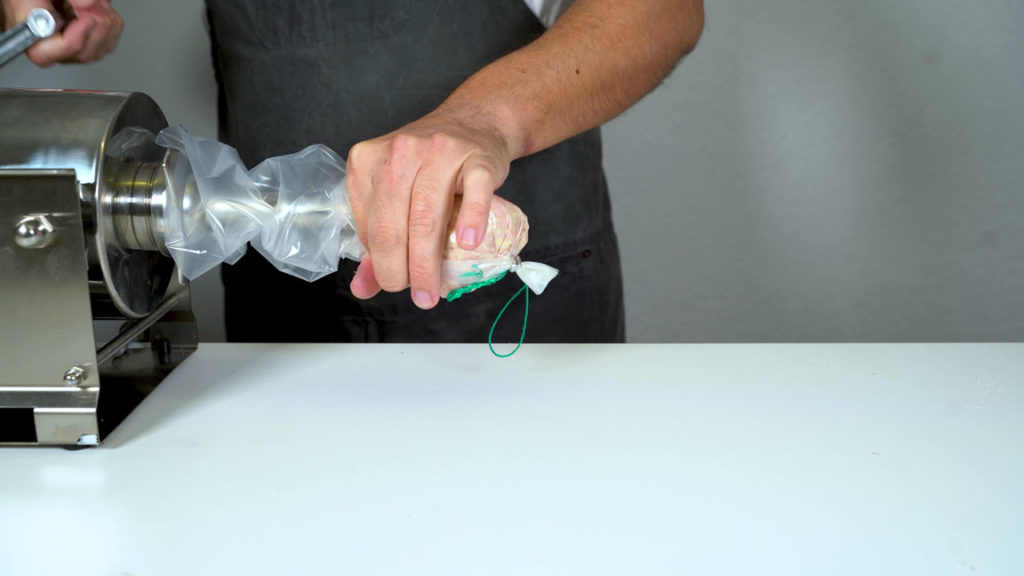
Fill the sausage meat into artificial casings or jars. For this you can use artificial casings or jars. I use a 90/40 caliber artificial casing.
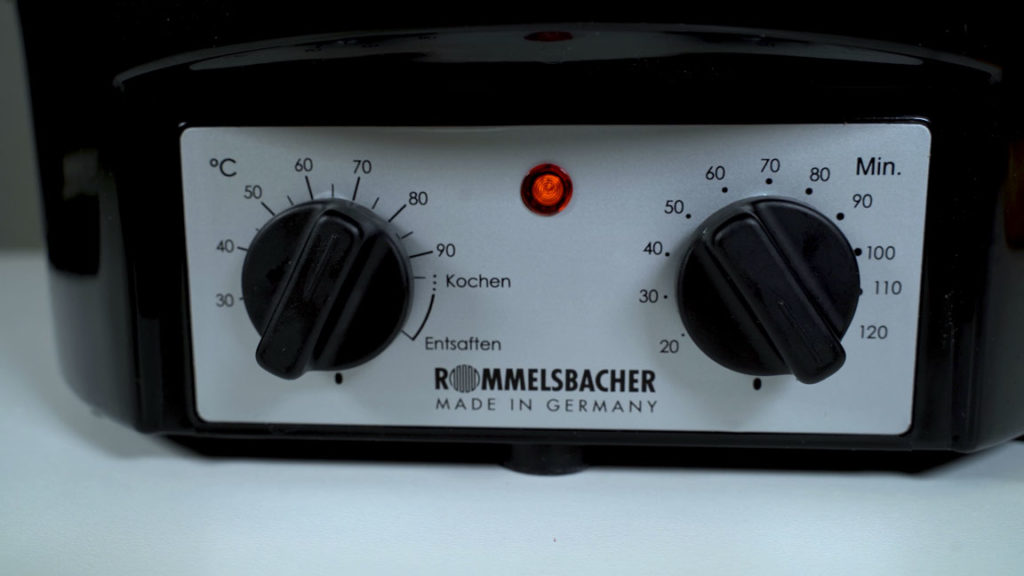
Cook the sausage at 75 – 78 °C (167 – 172.4 °F) for about 90 minutes. If you use a thinner casing, you can use the following rule of thumb. Scalding time: 1 minute per mm diameter of casing.
If you cook it in jars, the cheese sausage needs about 2 hours at 100 °C (212 °F).
Your cheese sausage is ready😄. Enjoy it.
Frequently asked questions
What is a cheese sausage?
What is a cheese sausage?
A cold cut with cheese in it. The base is a fine scalded sausage — the same Schinkenwurst mass I use for my bologna, here with beef in it as well as pork — and the cheese goes in at the very end, before the mass is filled and cooked. You cool it, you slice it, you eat it cold on bread, exactly like any other cold cut.
It is not a cheese bratwurst, and the difference is worth having straight before you start. A cheese bratwurst is a raw sausage you fry, and its cheese is meant to melt in the pan. This one is cooked once, cooled, and then eaten cold for days. The cheese in it stays where you put it.
Which cheese works in a cheese sausage?
Which cheese works in a cheese sausage?
The one you actually like, which is the honest answer — but a firm cheese behaves best. I use a Bavarian mountain cheese, Emmentaler is excellent, and Gouda or Cheddar both work. A firm cheese holds its shape through the grinder and through the cooking; a soft one tends to disappear into the mass instead of staying as pieces you can see.
How you cut it decides how the slice looks. Grind it and it spreads through the whole sausage; cut it into small cubes and you get clear pieces in the cut surface. Either way a short spell in the freezer first makes the job easier. And it goes in last, after the spices and the fat, so it is worked no harder than it has to be.
What is the shelf life of cheese sausage?
What is the shelf life of cheese sausage?
The cheese sausage can be stored in the refrigerator for approx. 4 – 5 days when cut. In one piece it can be kept refrigerated for about 14 days. Cooked in jars, keep it in the fridge and use it within 2–3 weeks.