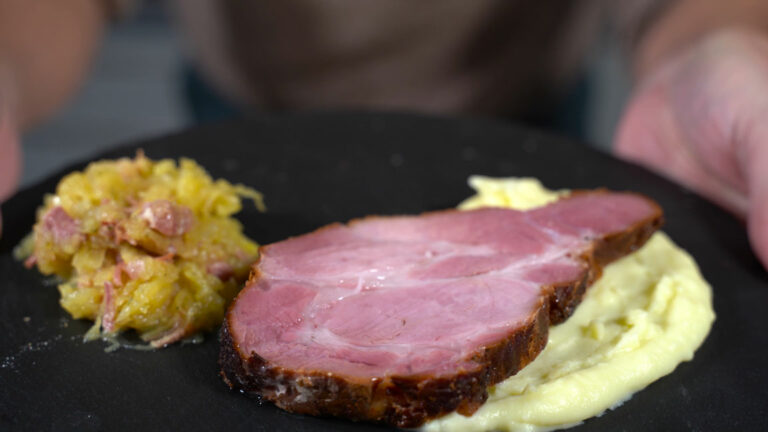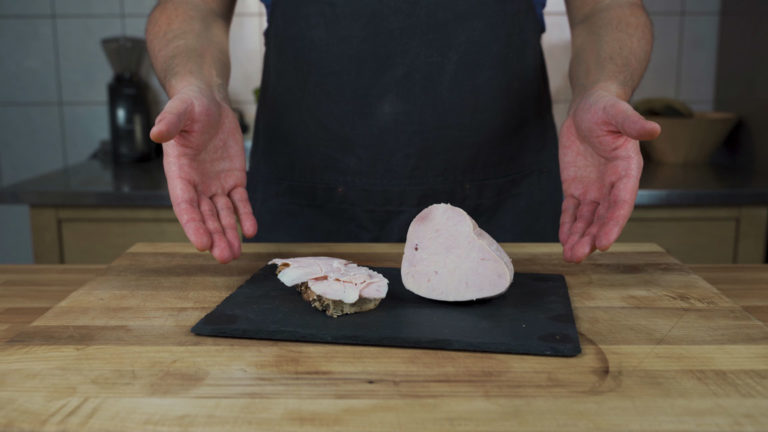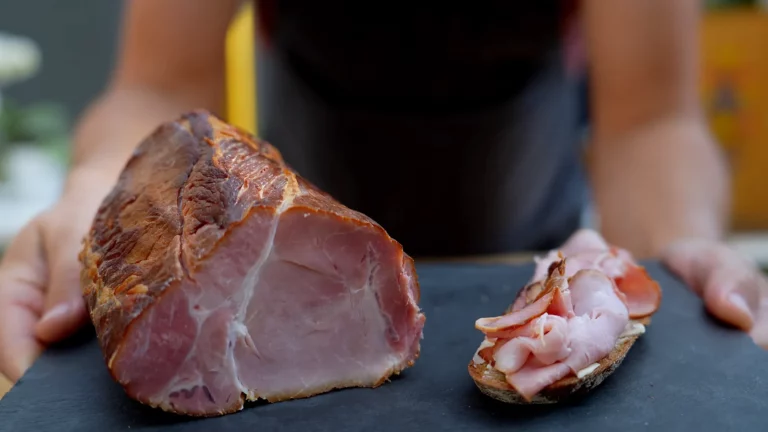
Beef ham (Rindersaftschinken) – Tasty, juicy, quick


- Type
- Ham
- Level
- Easy
- Rating
- Rate this recipe
In this post, I’ll show you how to make your own beef ham. You can achieve a super tasty result with little effort.
Beef ham is a cooked ham. It has a unique taste and the tender texture makes it a popular choice as an appetizer, on bread or in various dishes.
I also have other ham recipes on my website. For example, you can find my Christmas ham, whiskey ham or cooked beef ham here.
Want to learn more about ham? No problem, I wrote down all my knowledge in my ham book. Interested? Explore my ham book.
Here you can find the complete beef ham recipe as a video or to read through.
Have fun and good luck making it!

Table of Contents
Beef ham – What do you need to make it?

Ingredients per 1 kg
| Ingredient | Grams | Percent |
|---|---|---|
| beef nut | 1,000 g |
Spices per 1 kg
| Ingredient | Grams |
|---|---|
| brine | |
| salt | 110.5 g |
| sugar | 20 g |
| Cure #1 | 9.5 g |
| bay leaves | 2 |
| caraway seeds | 2 g |
| garlic granules | 2 g |
| coriander | 1.5 g |
| water | 1 liter |
| white pepper | 1 g |
| black pepper | 1 g |
Depending on the desired salt content of the final beef saffron ham, you will need between 20% and 30% of the meat weight in brine. I recommend starting with 20%.
The equipment to make beef ham
Injection Needle + Syringe
To inject the brine into the meat (the process ensures that the meat stays juicy), you will need a injection syringe. If you don’t have one yet, you can buy one inexpensively.
Thermometer & cooking pot / Sous Vide cooker
There are several ways to cook your meat.
The easiest way is to use a sous vide cooker. With it you can gently cook the meat at a constant temperature. This reduces the risk of the meat becoming too hot and therefore too dry.
Don’t have one at home? No problem! Use a saucepan and heat the water. To achieve the exact temperature, you still need a thermometer. Both methods achieve the same result. With the saucepan, you should always make sure that your water is consistently hot during the cooking time.
Make beef ham – Step-By-Step Instructions
Remove any sinew, fibers and silverskin from the meat. Make sure that there are no large incisions or “pockets” in the meat.

Put all the spices in a saucepan with the water.

Stir the brine well so that the salt and sugar dissolve

Bring the brine to the boil briefly. Leave to infuse for 20-30 minutes and then leave to cool.

When the brine is cold, you can pour it through a sieve so that there are no pieces in the brine.

Inject the 20-30% brine into the ham using a syringe. You can stop as soon as you notice that the brine is leaking out more and more.

Then place the ham with the remaining brine in a resealable bag.

Squeeze as much air out of the bag as possible. Try not to squeeze the ham too much (otherwise the brine will leak out again). You can then seal the bag.

The ham must now be cured in the fridge for approx. 3 – 4 days (if you have a larger piece of ham, you will need to cure it for longer). Important: Turn the ham once a day so that the brine can be absorbed from all sides and is well distributed.

Now you can separate the brine from the ham.

The beef ham is then cooked. Your ham needs approx. 3 hours at 67 C° (152.6 °F). Your aim is to achieve a core temperature of 64 (147.2 °F) to a maximum of 67 C° (152.6 °F). Otherwise the ham will become dry.
Important: Make sure that the ham is always sufficiently covered with water.

Your beef ham is ready. 😄 You can enjoy it warm or cold.
Frequently asked questions
What is beef ham?
What is beef ham?
Beef ham is a cooked ham made from beef instead of pork. The cut here is the beef nut, a lean, evenly shaped muscle out of the round, and the German name for the finished product is Rindersaftschinken. You cure it in a brine and then cook it gently, and it ends up sliceable, tender and pink rather than roast-beef red.
It is not a dry-cured product. Nothing hangs for months here: the brine goes into the meat with a syringe, the ham sits in the fridge for a few days, and then it is cooked. That is what makes it a quick ham compared with anything air-dried.
Why is it called ham if there is no pork in it?
Why is it called ham if there is no pork in it?
Because ham describes what was done to the meat, not which animal it came from. Cure a whole muscle and cook or dry it, and what you get is a ham. The pork version is simply the one most people meet first, which is why beef ham, turkey ham and every other one gets the animal put in front of the word.
How long is the shelf life of the beef ham?
How long is the shelf life of the beef ham?
Your beef ham will keep for about a week in the fridge. The alternative is to vacuum pack the ham in portions. It should keep for 2-3 weeks in the fridge if vacuum-sealed. You can also freeze it. This will increase its shelf life. As always: see it – smell it – taste it!